eNews
#03 2026
Tracking Water We Can’t See: Training in Isotope-Enabled Models to Improve Groundwater Recharge Estimates
By Mkholo Maseko, PhD Student, Grasslands Node, NRF-SAEON

#03 2026
By Mkholo Maseko, PhD Student, Grasslands Node, NRF-SAEON
Groundwater sustains millions of people, farms, ecosystems and rivers around the world, but how much of it we can rely on in future depends on something surprisingly difficult to measure accurately: how much rainfall actually makes it down through the soil to recharge our aquifers.
Groundwater recharge is the hydrological process by which surface water infiltrates the soil, moves through soil layers and rock, and eventually replenishes the groundwater store. It remains one of the most persistent uncertainties in hydrological, and especially groundwater, modelling. A recently completed Water Research Commission project (WRC Report No. 3132/1/24), focused on the Maputaland Coastal Plain, including Lake Sibaya, illustrated just how stark this uncertainty can be. The study found that the widely used ERA5 climate model underestimates rainfall in the Lake Sibaya area by 11%, an error that compounds into a 30% underestimation of groundwater recharge.
This gap between modelled and real-world recharge is what drew me into my current PhD research. I am a PhD student at Stellenbosch University, hosted by the SAEON Grasslands Node in Pietermaritzburg, and my research uses isotope-enabled climate and hydrological models to improve recharge estimates. My end goal is to validate these recharge estimates using a new groundwater model for the Lake Sibaya catchment.
Two of the three training components of my PhD kicked off this year with intensive workshops, one in Stellenbosch and one in Vienna, that gave me hands-on experience with the isotope-enabled models at the heart of my research.
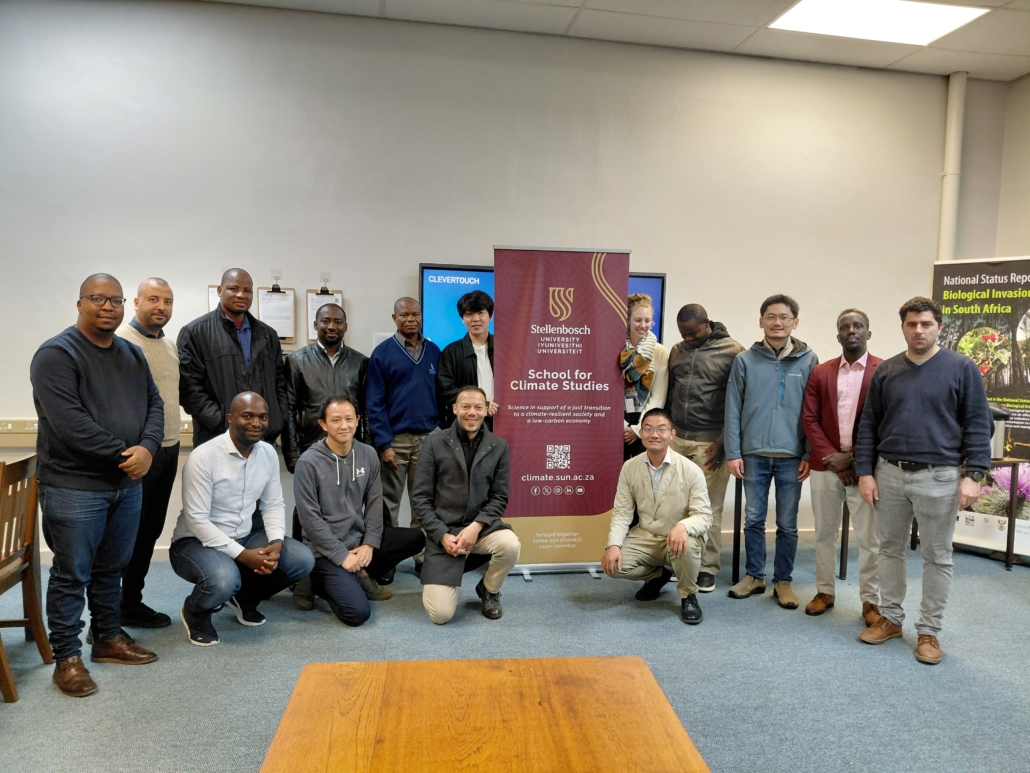
Participants of the 2026 Hydrobioscapes Workshop held at Stellenbosch University School of Climate Studies.
I began with an exhilarating Hydrobioscape Project Workshop held at Stellenbosch University from 11 to 15 May 2026. It was led by Prof Kei Yoshimura, lead developer of IsoGSM, together with Dr Xiaoyang Li, both from the University of Tokyo’s Institute of Industrial Science, and Dr Hayoung Bong, a NASA Postdoctoral Program Fellow. The workshop was organised by the Japan International Cooperation Agency (JICA) and Stellenbosch University’s School of Climate Studies, and brought together participants from across Africa involved in the Hydrobioscape project, which aims to extend the use of these climate models across the continent. Only two students, myself and Janekka Van der Steenhoven, participated in the training. What stood out most was that the majority of participants came from a groundwater hydrology background and, like me, identified better rainfall parameterisation as key to improving recharge estimates, a clear sign of just how widely this problem is felt.
The week started with background on Isotope-Enabled Global and Regional Spectral Models (IsoGSM and IsoRSM) and their various applications, followed by a steep introduction to coding: setting up Ubuntu Linux, Python and other software on our own computers, and then configuring IsoGSM itself. Although the modelling framework was largely pre-configured for beginners, there were still several steps we needed to complete precisely, to get the models running. After running IsoGSM at a coarse 200 km resolution, we tested IsoRSM at 10 km resolution; most of us kept the default settings for Japan, while a braver few adjusted the code to model their own regions of interest, a decision that produced a few good laughs along the way.
By the end of the week I had grasped the basics of both IsoGSM and IsoRSM, and even received an invitation from Prof Kei to be hosted at the University of Tokyo. The workshop also included a field excursion to the Cape Point Global Network of Isotopes in Precipitation site, guided by Dr Roger Diamond from the University of Cape Town. In the weeks that followed, and leading up to the JAMS/J2000 training in Vienna, I built substantially on the experience I gained so that I could put IsoGSM and IsoRSM to work for my own PhD research.
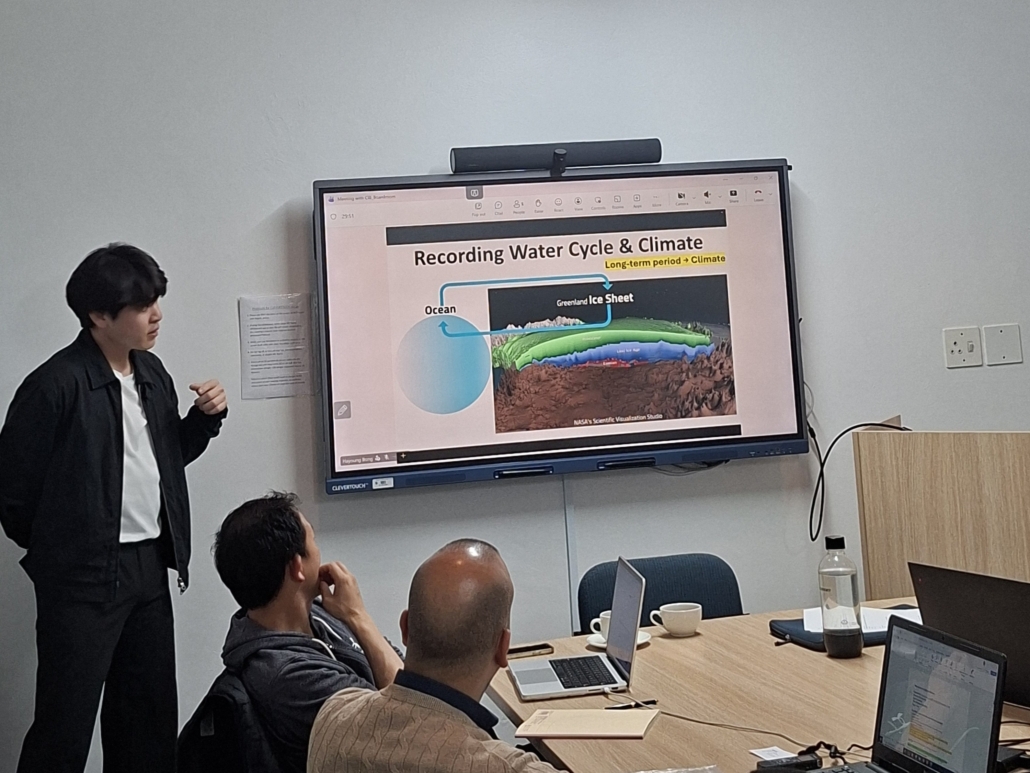
Dr Hayoung Bong presenting on the physics behind IsoGSM and IsoRSM models.
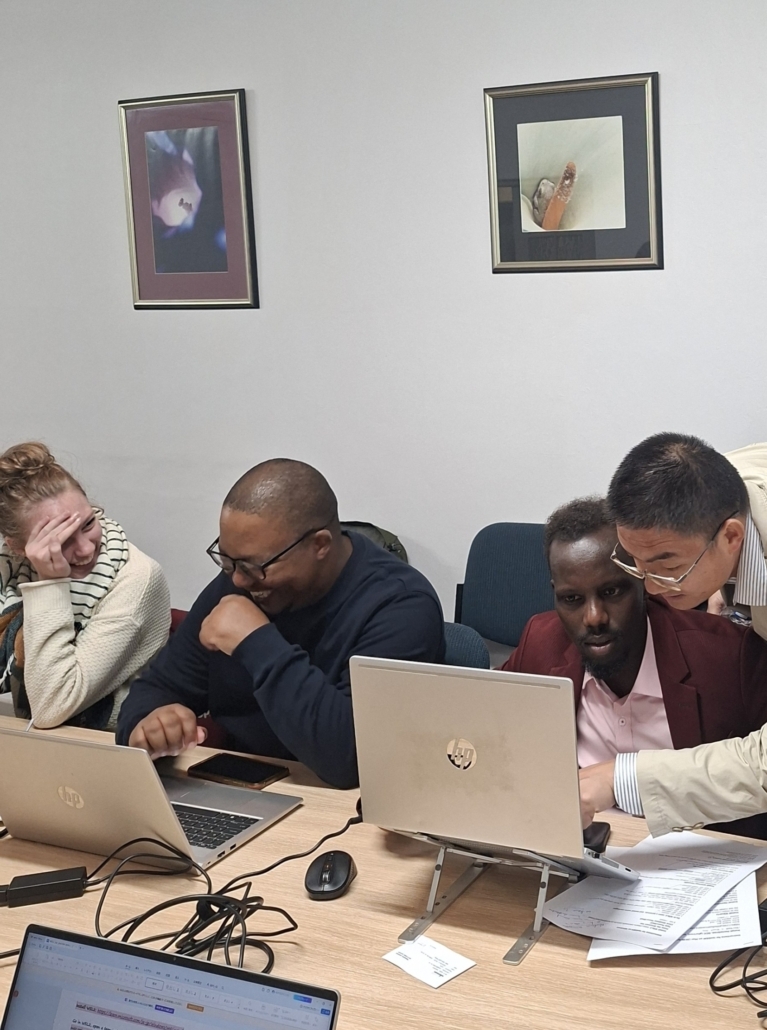
Janekka and Mkholo laughing at the errors they were getting in their code.
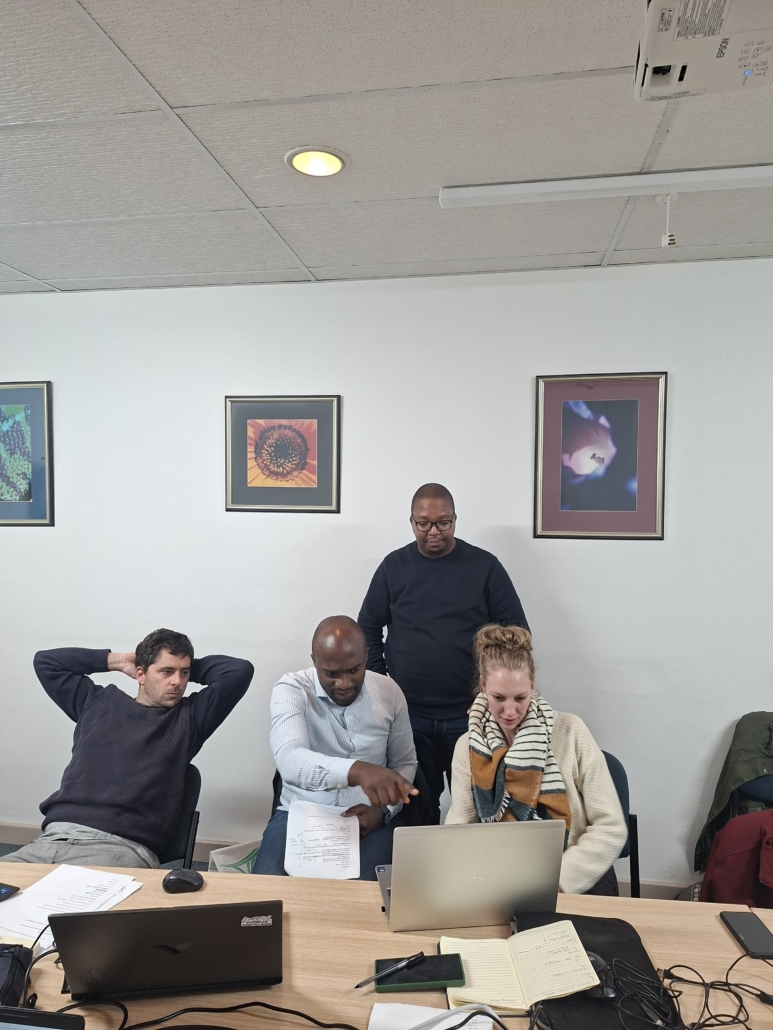
Dr Andrew Watson, Dr Kawawa Banda, Mkholo and Janekka working on IsoRSM.
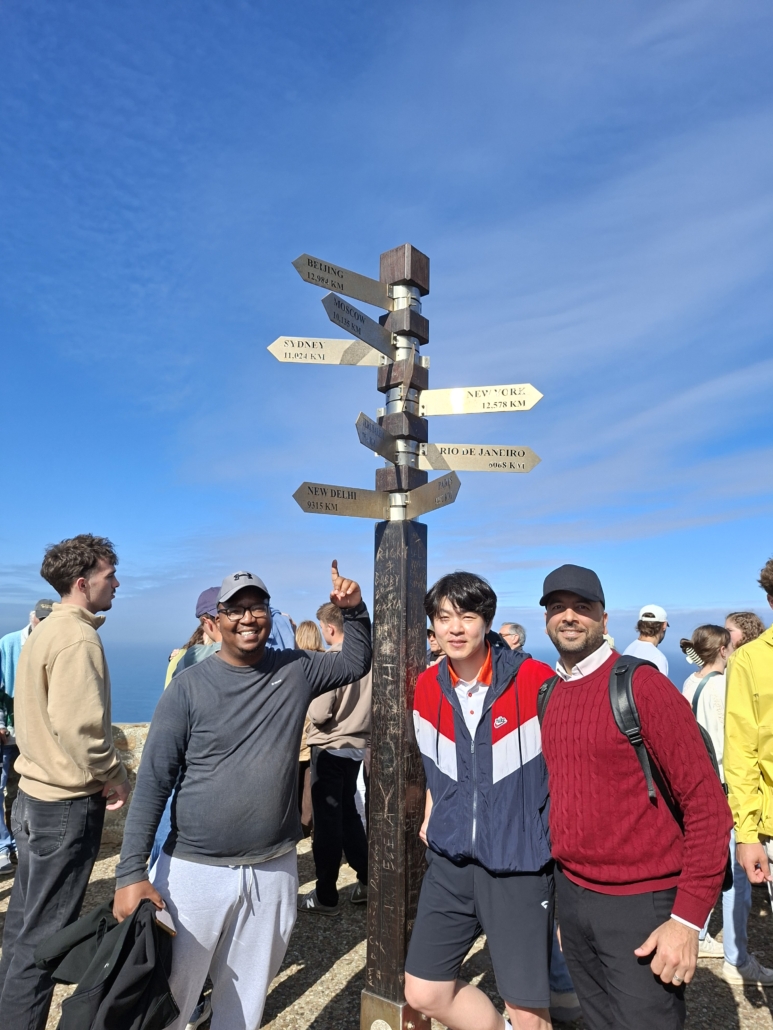
Mkholo, Hayoung Bong, and Mahmoud Sharaan at Cape point.
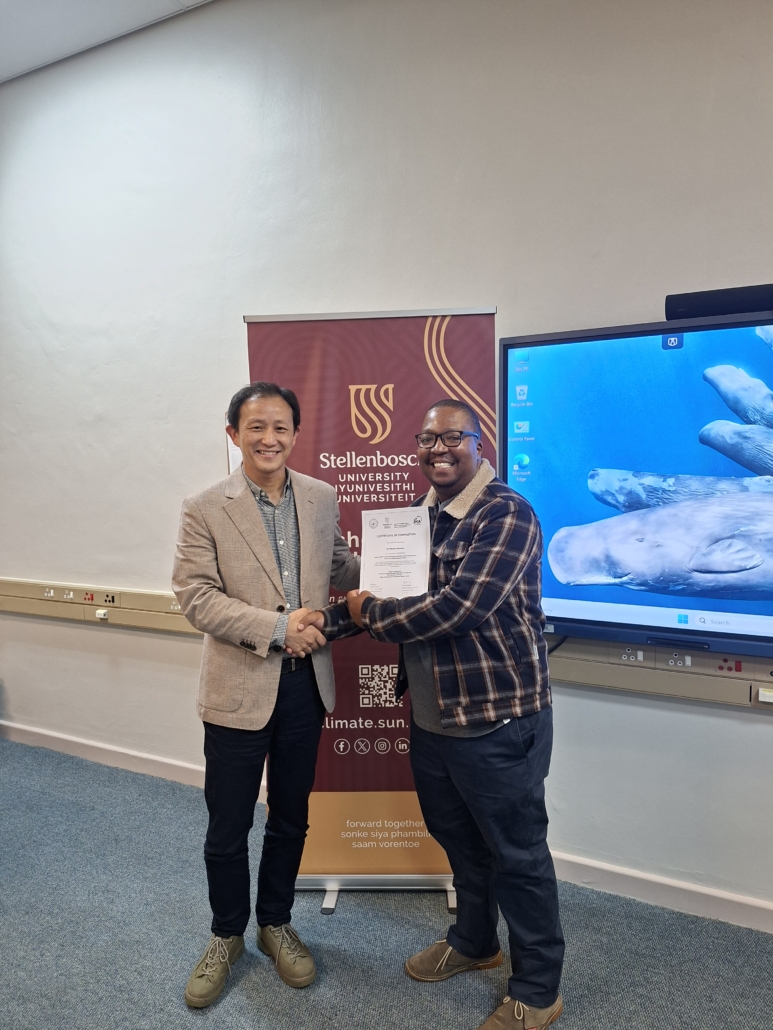
Prof Kei awarding Mkholo Maseko with a certificate of completion for the IsoGSM and IsoRSM training workshop.
I was then privileged to attend Part 1 of the JAMS/J2000 modelling training in Vienna, Austria, hosted at the IAEA headquarters and facilitated by Dr Andrew Watson and Dr Jan de Waal from Stellenbosch University. The training introduced participants to isotope-enabled modelling for water resources management using the JAMS/J2000iso code, covering the objectives and limitations of the models, available data sources, and getting a working model for each participant’s own study site up and running. Attendees included scientists from a range of African, European and Asian countries.
The training began with setting up the JAMS software environment, followed by an overview of how the models work using built-in test cases, and a look at the input data each model requires. Participants then each presented their own study sites and the data available to them. For this training, climate data came from ERA5 via Google Earth Engine, along with land cover and soils data from the same platform; other datasets, such as geology, had to be sourced from each country’s own databases. One particularly eye-opening moment was hearing how difficult and costly it can be for researchers to access data in their own countries, even for government researchers and students, who often have to pay for information that in many other countries is freely available.
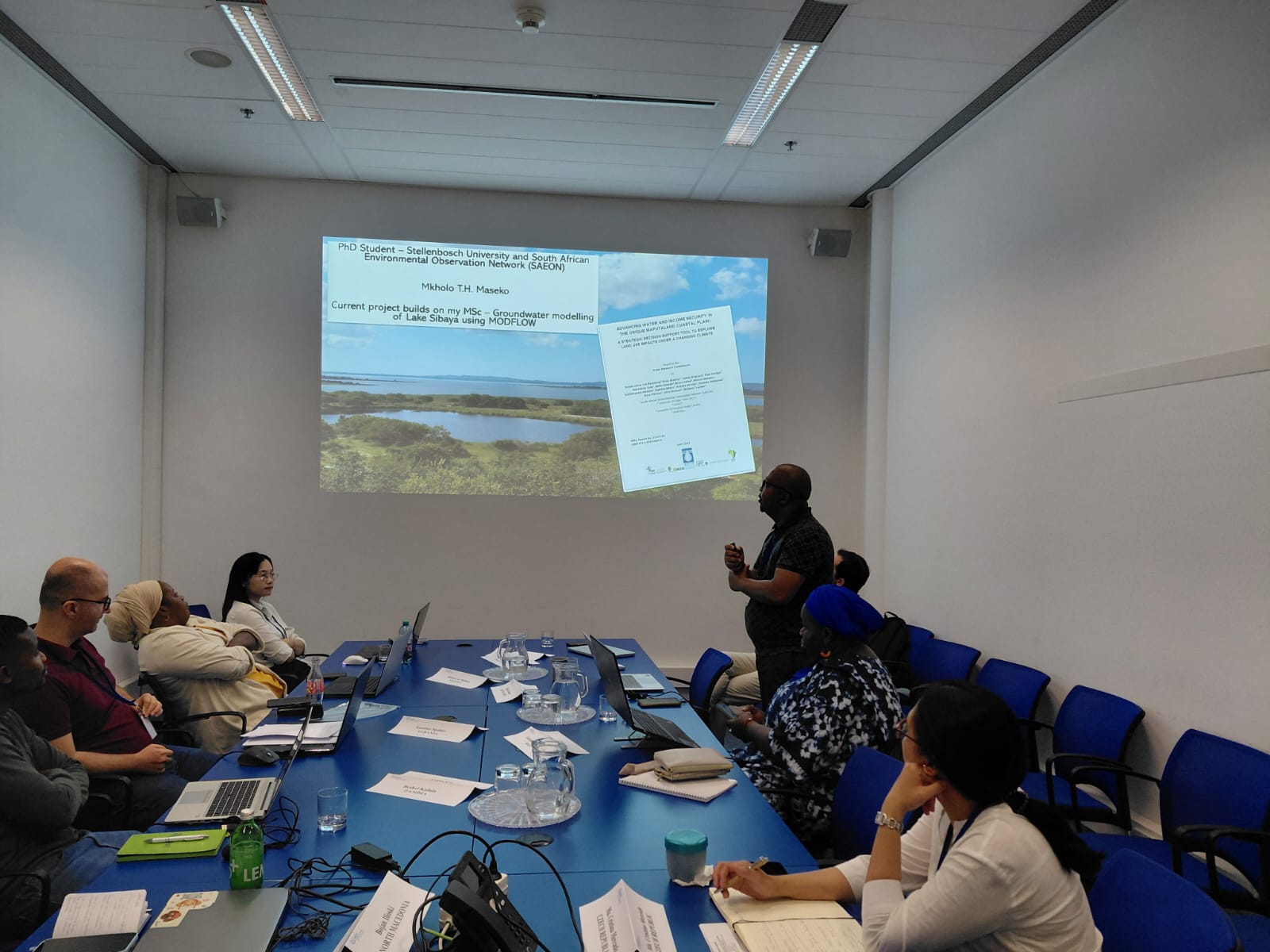
Mkholo Maseko presenting on the Lake Sibaya catchment and the data available for use in the JAMS/J2000 model.
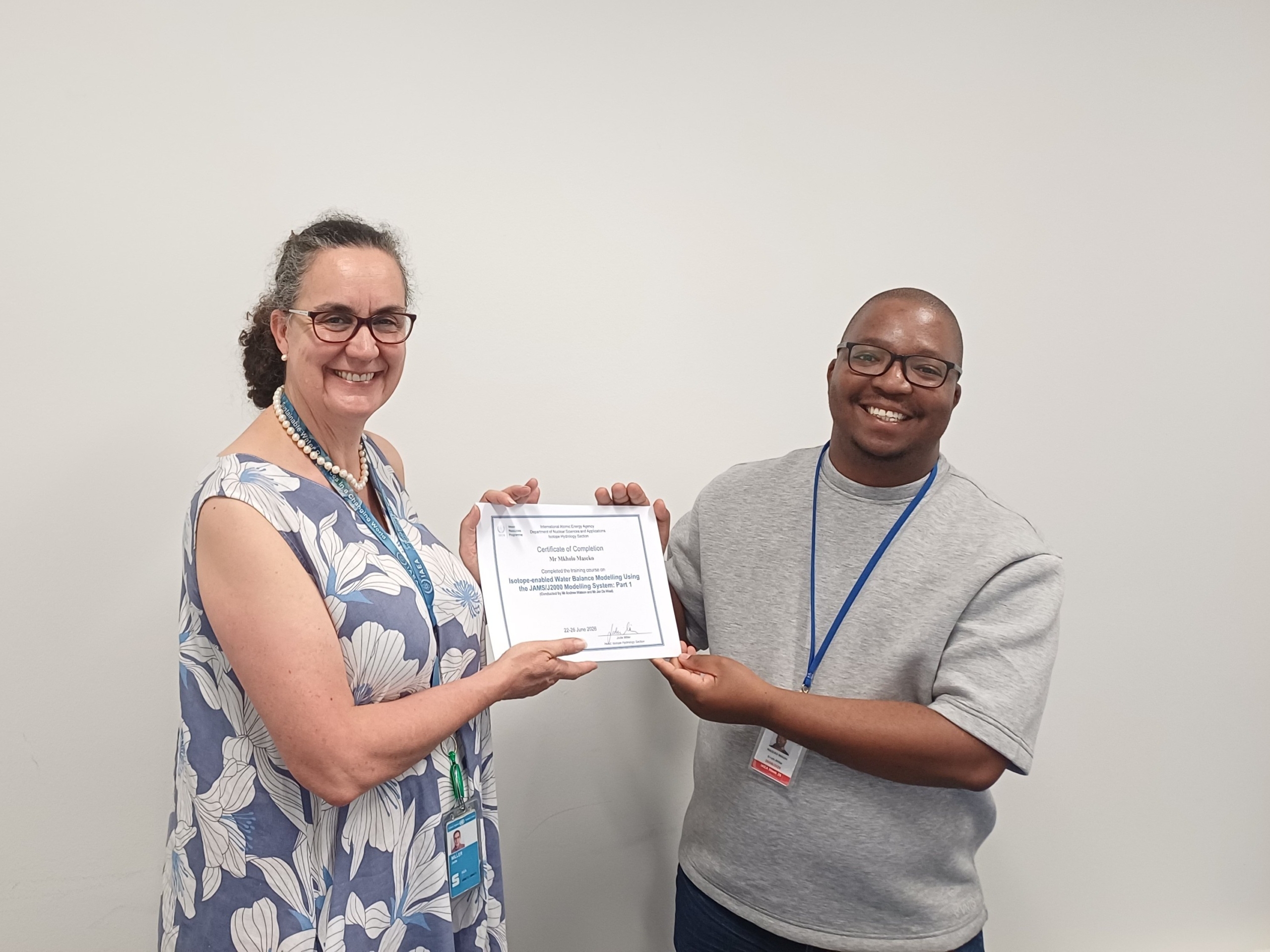
Dr Jodie Miller (Head of Isotope Hydrology at the IAEA) awarding Mkholo Maseko with a certificate of completion for Part 1 of the JAMS/J2Kiso training course.
I also had the privilege of meeting several IAEA staff members, including Dr Jodie Miller, Head of Isotope Hydrology, and of doing some sightseeing around Vienna with the workshop instructors. By the end of the training, most participants, myself included, had a working base model in hand and were ready for Part 2.
Together, these two workshops have equipped me with the modelling foundations I need to tackle the recharge uncertainty identified in the Lake Sibaya study and help close the gap between modelled and real-world groundwater recharge across Southern Africa.
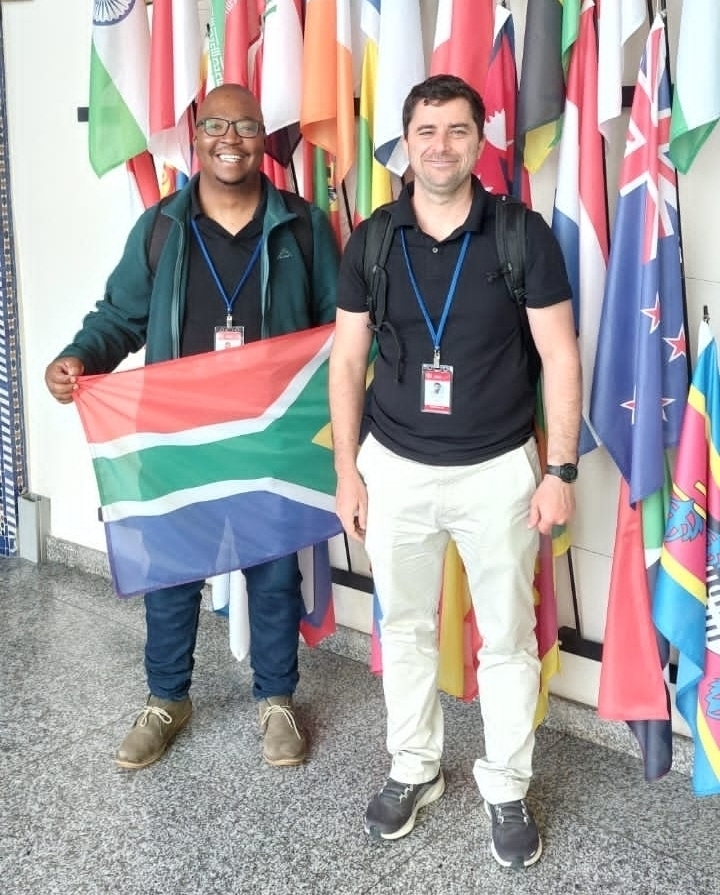
Mkholo Maseko with his co-supervisor, Dr Andrew Watson, at the Vienna International Centre.
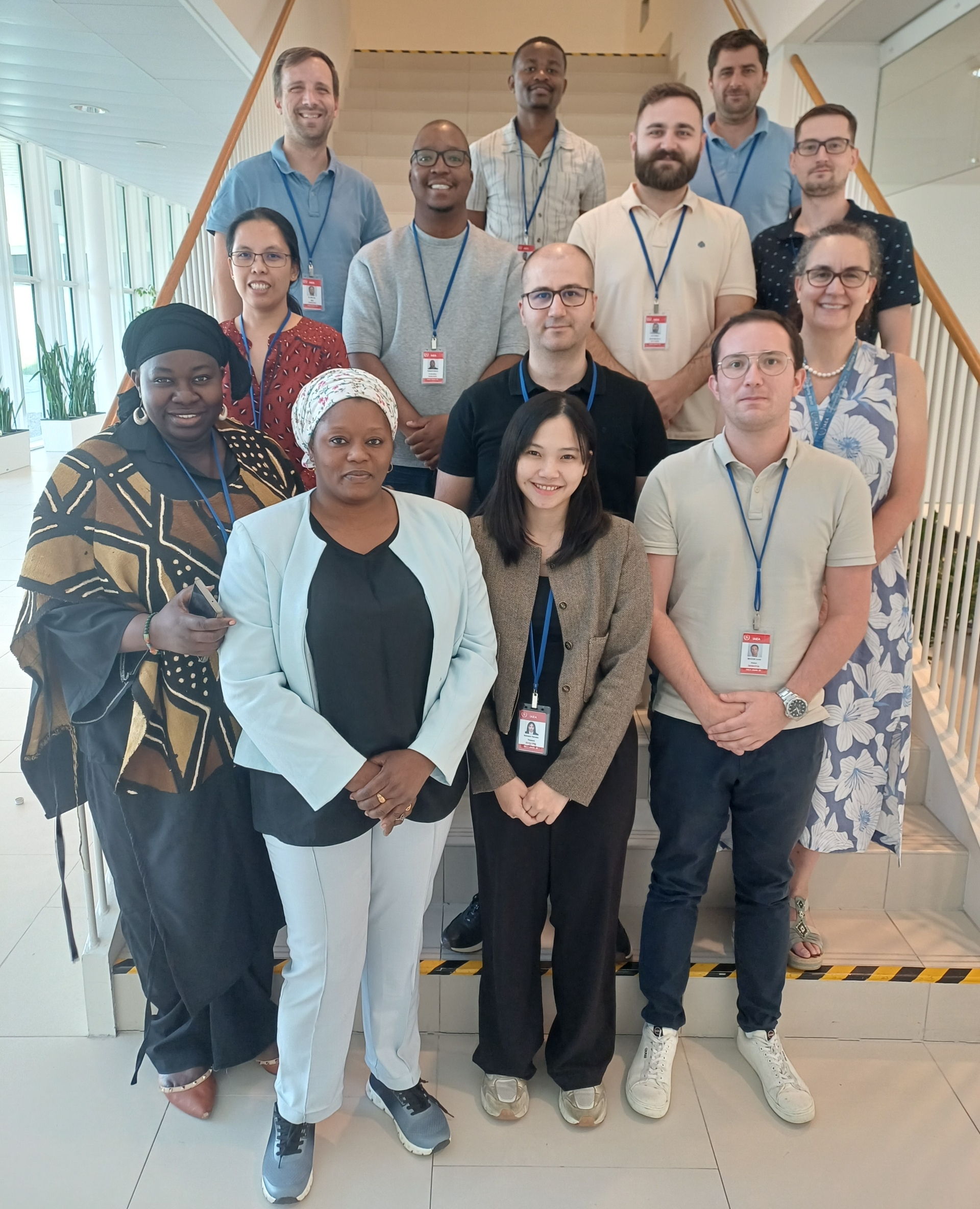
Participants of the 2026 Part 1 JAMS/J2Kiso training workshop at the IAEA in Vienna, Austria.
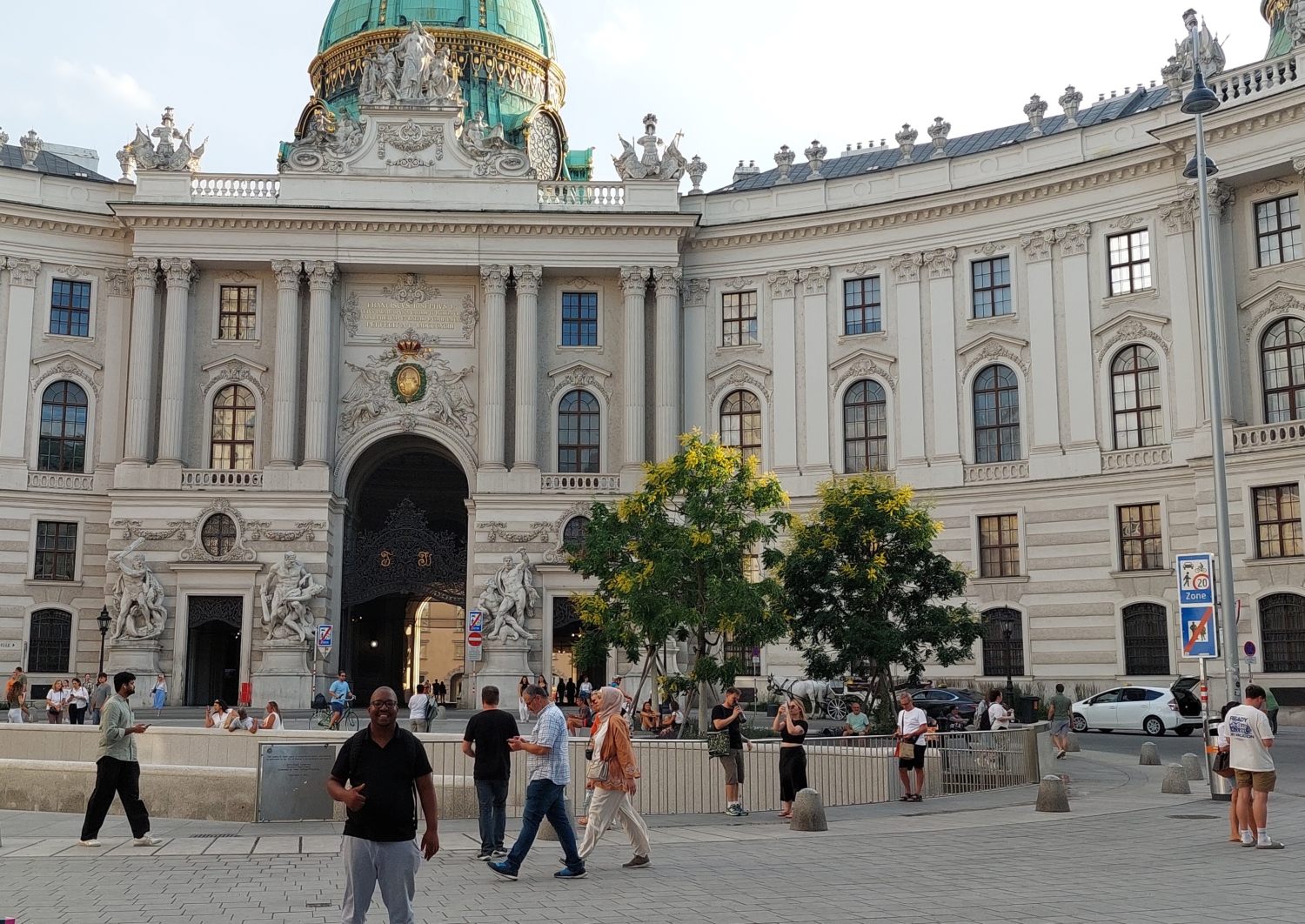
Mkholo Maseko outside the Michaelertor (St. Michael’s Gate) of the Hofburg Palace, Michaelerplatz, Vienna.
Click here to add your own text
