eNews
#03 2026
Society, Science and Management Policy: Aquatic Decision Makers Workshop
By Thapelo Kgomo and Tsumbedzo Ramalevha – EFTEON Biodiversity Technicians
#03 2026
By Thapelo Kgomo and Tsumbedzo Ramalevha – EFTEON Biodiversity Technicians
The Expanded Freshwater and Terrestrial Environmental Observation Network (EFTEON) biodiversity technicians (Thapelo Kgomo & Tsumbedzo Ramalevha) participated in the Aquatic Decision Makers Workshop, hosted by the Organization for Tropical Studies (OTS) from 22-26 June 2026 at Kruger National Park (KNP), Skukuza, Mpumalanga. The purpose of this workshop was to equip early professionals with practical decision-making frameworks; the ability to confidently make decisions under uncertainty; and the application of a systems-thinking approach/mindset when confronting conservation issues, particularly relating to aquatic ecosystems.
The five-day workshop began with a visit to the Blyde River Canyon, where Dr Laurence Kruger (Organisation for Tropical Studies) detailed the history and processes of the catchment, from the Grassland to indigenous forest and plantation landscapes. Day one was concluded by a walk at the Blyde Forever Resorts to view the entire catchment, and a discussion about stakeholder engagement and navigating the dilemmas thence. The second day was spent at the Blyde River Nature Reserve, where Nic Theron outlined the challenges encountered at the reserve and ecological pressures on the Sabie River (a strategic water source area) and broader catchment. One of the challenges included a plummeting condition of the Sabie River due to contaminants from illegal mining, untreated waste, and dumping of solid waste in the catchment. Furthermore, the spread of alien plants (Eucalyptus and Pine) escaping from the nearby plantations onto the indigenous forest and the broader catchment. Nic Theron (Kruger 2 Canyon) emphasised funding as a limiting factor in the fight against the spread of alien invasive species, however, alternative alien clearing methods were suggested together with the encouragement/recruitment of student projects.
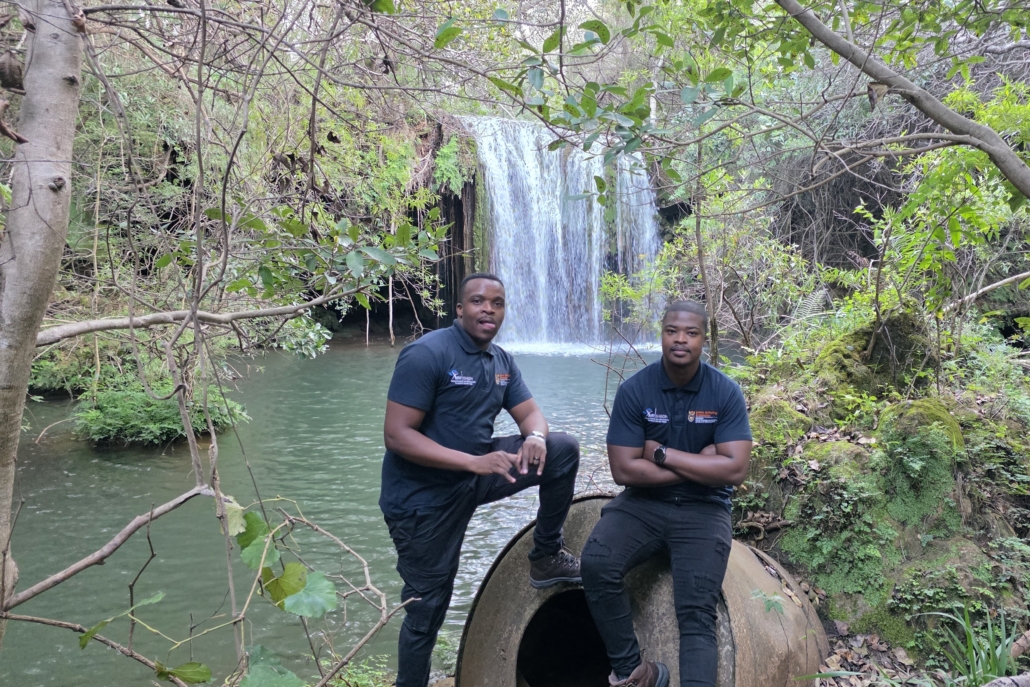
Tsumbedzo Ramalevha and Thapelo Kgomo at the Blyde Forever River Forest Resort.
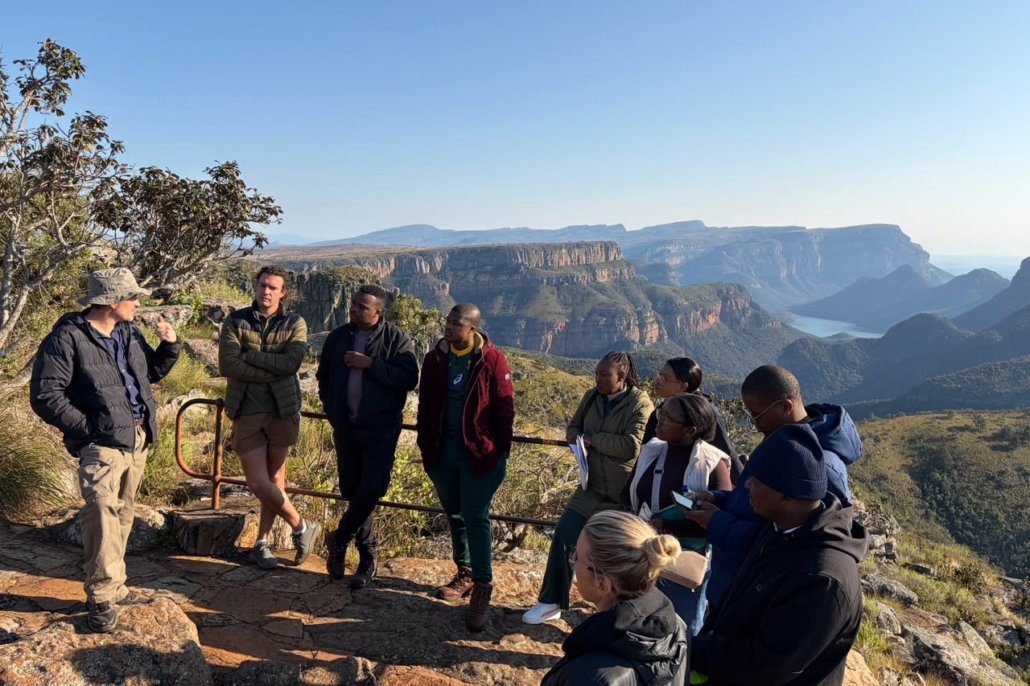
Discussion with Nic Theron at the Blyde River Nature Reserve.
The third day started with a trip to the Lower Sabie River (inside Kruger National Park), where Dr Dumisani Khosa (SanParks’ Freshwater Ecologist) presented the ecological monitoring work currently (2026) done by KNP on the river, and demonstrated the technique and technology of electrofishing. Furthermore, this was coupled with training on the basics of the South African Scoring System (SASS) Version 5 Rapid Bioassessment Method.
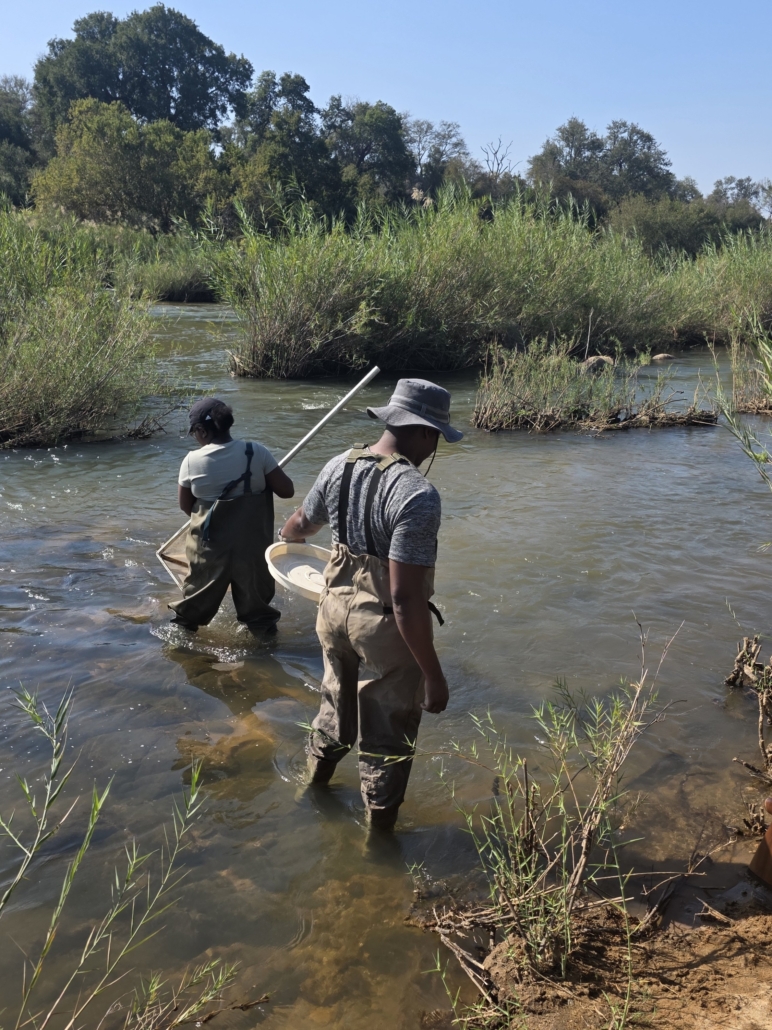
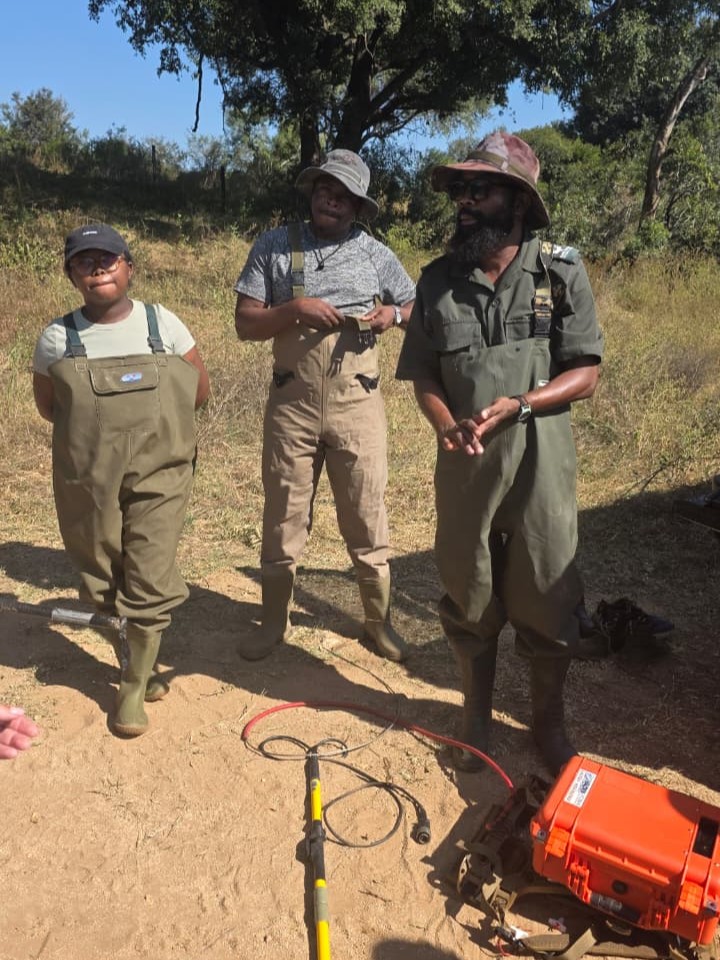
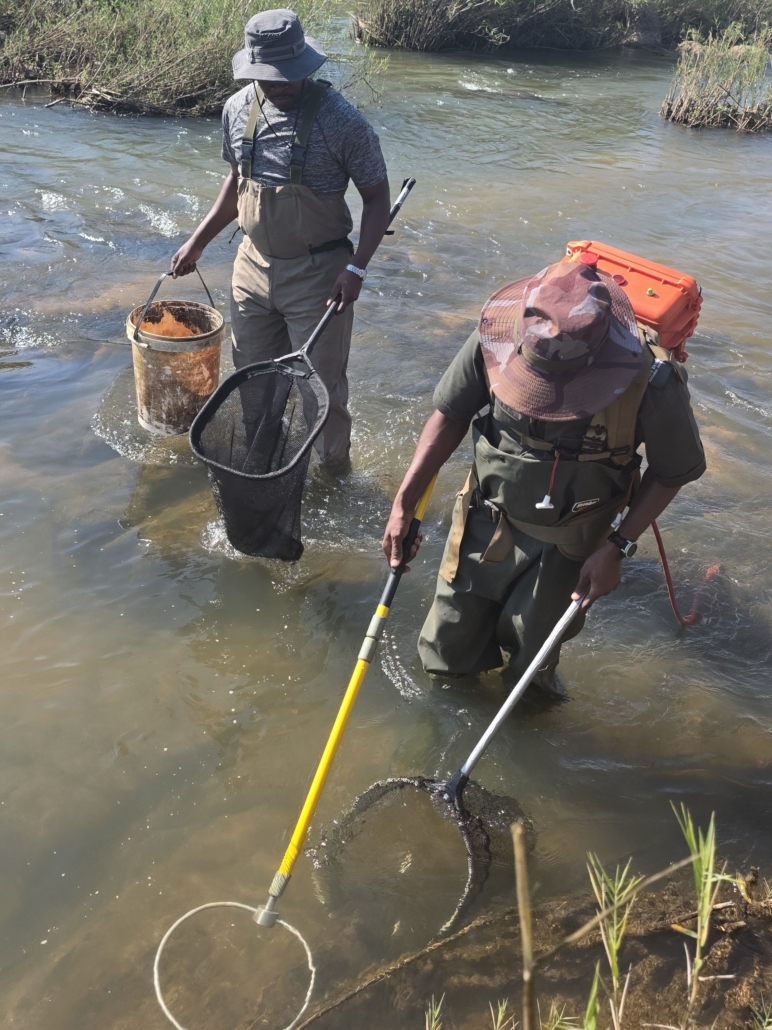
Tsumbedzo Ramalevha conducting SASS5 sampling with Zanele from DWS (left) and electrofishing sampling with Dr Dumisani Khosa (right).
Day four started with Dr Eddie Riddell outlining KNP’s water management and history to provide context for the long-term monitoring and research infrastructure along the Sabie River. This led to a discussion of the pressures on the Sabie River, including but not limited to pollution (from illegal mining), eutrophication, drought, and biodiversity loss. In addition, drivers of change in the dynamics (water quality, quantity, and biology) of freshwater ecosystems were narrowed to anthropogenic activities and climate change. To deal with these challenges, SANParks have adopted the Strategic Adaptive Management (SAM), a systematic approach of monitoring and addressing ecological issues to avoid irreversible ecological collapse of freshwater and terrestrial ecosystems. The system is guided by the desired state of ecosystems and the threshold of potential concern. This discussion was followed by a trip across Kruger National Park to Corumana Dam via the Sabie River and a discussion on the policies around cross-border water management and governance between South Africa and Mozambique. The day was concluded with a discussion on project management and why projects fail. The following biases were highlighted as the major contributors to project failure: (1)unique bias (thinking the project is uniquely yours); (2) optimism bias (overly optimistic of the project’s success and overlooking the realities), (3) political bias (conflicting political ideas in a workplace context & financial pressures).
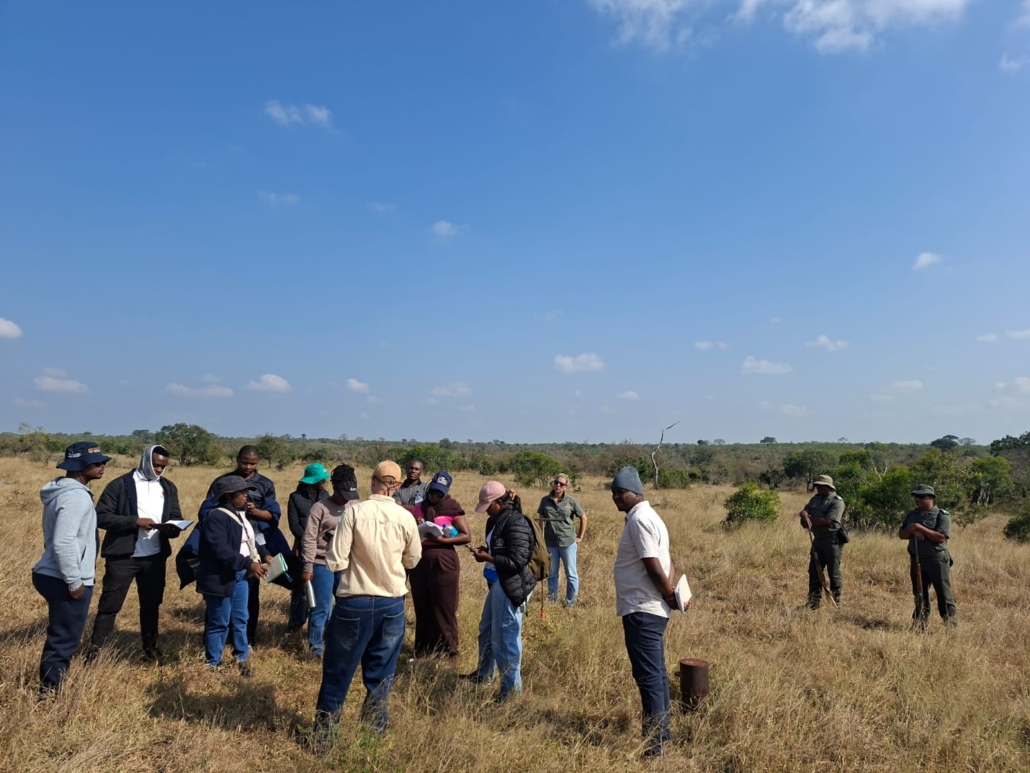
Dr Eddie Riddel engaging the young researchers on the aspect of eco-hydrology in the savanna system at one of KNP’s supersites.
Day five brought the entire workshop together by bridging ecological insight with the complex reality of our day-to-day role. The day focused on how to move beyond theory and translate catchment science into actionable, real-world solutions that align with institutional mandates, interdisciplinary stakeholder priorities, and ethical standards. The conclusion of the workshop focused on constructive peer review, personal reflection, and the creation of an individualised decision-making action plan so as to lead with confidence, transparency and strategic adaptability.
