eNews
#03 2026
Grasslands Grade 11 Science Camp Inspires the Next Generation of Scientists
By Nozipho Mahlanze, Science Engagement Officer, Grasslands Node, NRF-SAEON

#03 2026
By Nozipho Mahlanze, Science Engagement Officer, Grasslands Node, NRF-SAEON
Bringing Science to Life Through Experiential Learning
From 1-3 July, SAEON’s Grasslands Node hosted a Grade 11 Science Camp at Bonamanzi Game Reserve in Hluhluwe, providing learners with an immersive experience in inquiry-based learning and environmental science. The camp brought together 17 Grade 11 learners and four educators from four high schools across the Maputaland Coastal Plain (MCP), creating a dynamic environment where scientific theory was transformed into practical, hands-on discovery.
Designed to complement the school curriculum, the camp exposed learners to authentic scientific investigations while highlighting the importance of environmental observation and conservation. For many participants, it was their first opportunity to work in a laboratory setting and use scientific equipment, making the experience both exciting and transformative. By combining classroom concepts with field investigations, the programme encouraged learners to think critically, ask meaningful questions, and experience science as a process of exploration rather than memorisation.
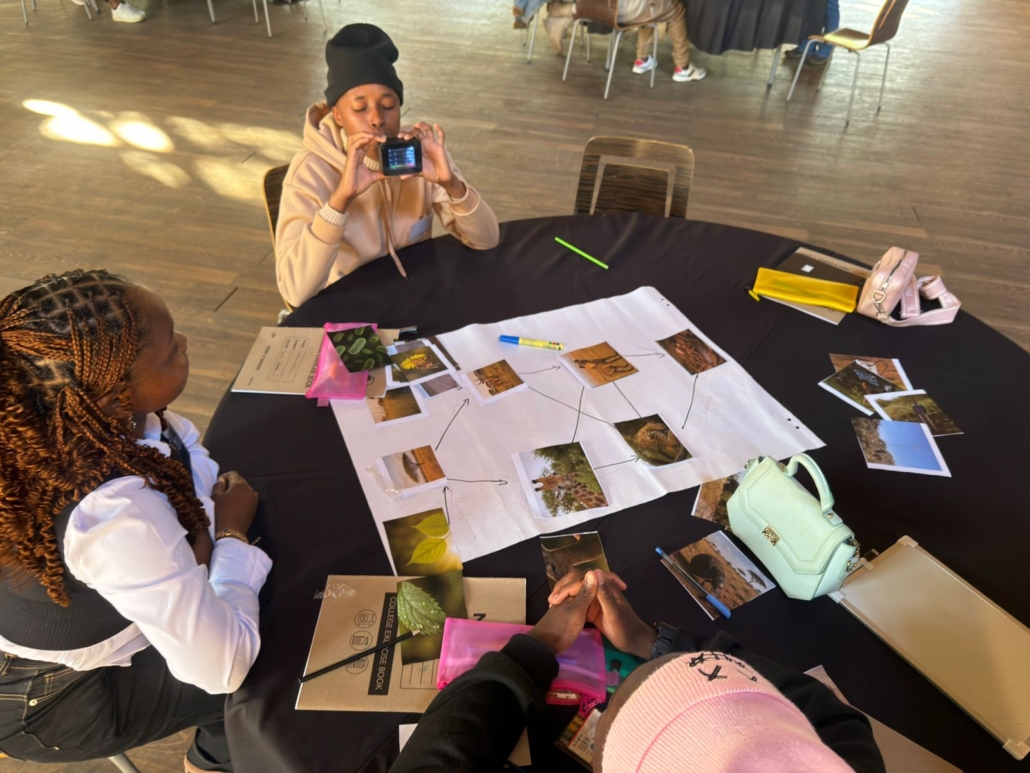
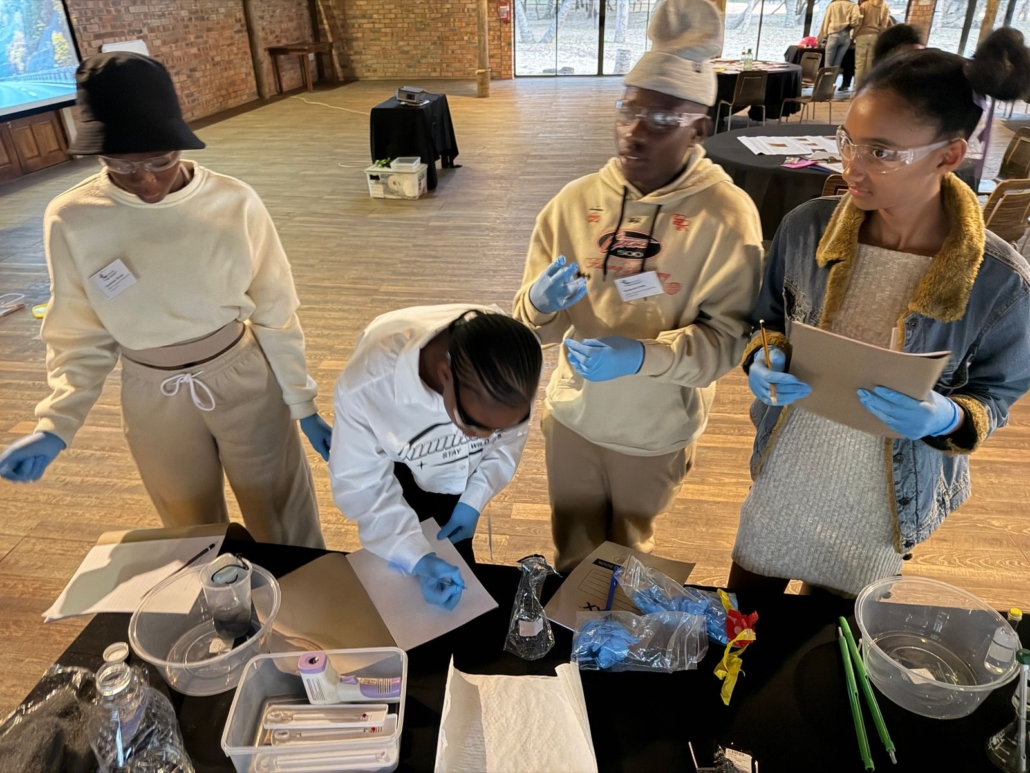
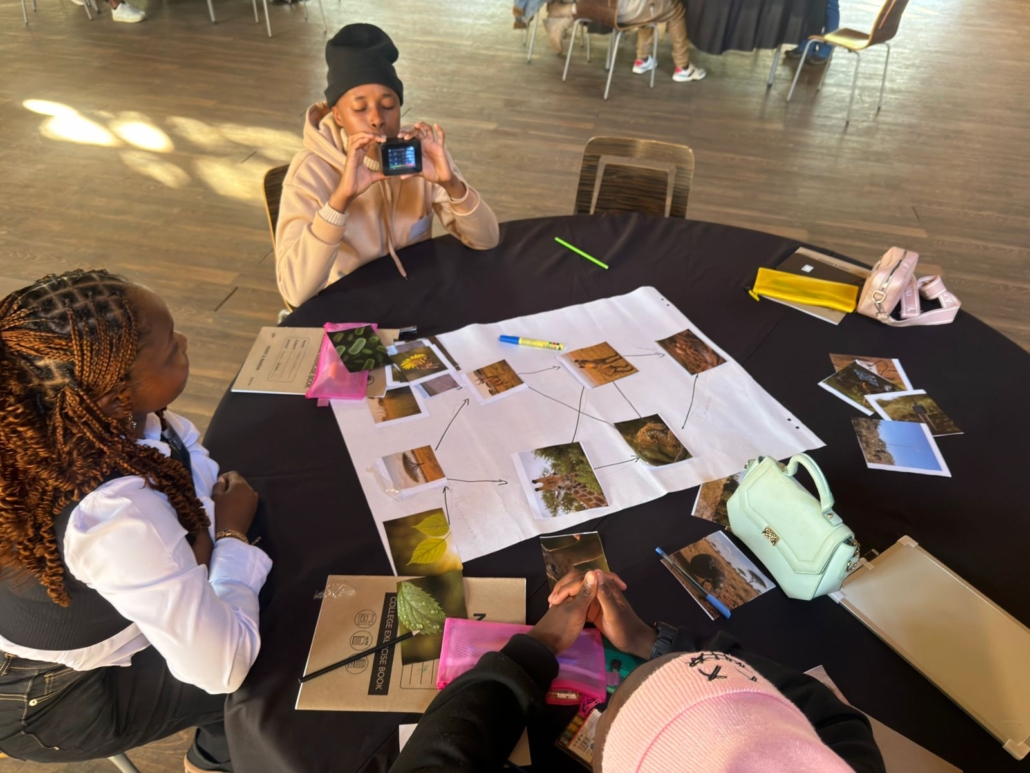
Left: Learners constructing ecosystem food webs using organism cards. Right: Learners dive into hands-on chemistry, investigating intermolecular forces during the interactive Round Robin
Understanding Carbon, Climate and Chemical Reactions
The first day focused on developing scientific inquiry skills while helping learners connect theoretical knowledge with practical application through a variety of interactive activities. Learners began by constructing food webs using organism cards to explore how energy and carbon move through ecosystems. This activity encouraged discussion around ecological relationships while illustrating how habitat loss and human disturbance can disrupt ecosystem functioning and carbon cycling.
The programme then shifted to climate science and respiration. Using a carbon dioxide (CO₂) monitor, learners observed the increase in CO₂ levels when breathing directly onto the sensor, demonstrating that humans release carbon dioxide during respiration. They further confirmed the presence of CO₂ by bubbling exhaled air through limewater, which turned milky as calcium carbonate formed. To reinforce their understanding of chemical reactions, learners generated carbon dioxide themselves by reacting baking soda with vinegar, linking observable changes to chemical processes studied in the classroom.
The afternoon featured an outdoor Carbon Walk, where learners investigated the role of different ecosystems in storing carbon. They discovered that forests store much of their carbon above ground in trunks, branches, and leaves, while grasslands store significant carbon reserves underground within their extensive root systems and soils. This activity highlighted the often-overlooked role of grasslands in climate regulation and emphasised why these ecosystems are important for long-term carbon storage.
Learning continued through a Round Robin Science Fair, where learners rotated through four practical stations exploring different scientific concepts. One station demonstrated how light travels through water using lasers. Another investigated endothermic and exothermic reactions using steel wool, vinegar, and bicarbonate of soda, allowing participants to observe temperature changes associated with chemical reactions. At another station, learners explored intermolecular forces by comparing evaporation rates of different liquids, while a fourth station challenged them to construct a simple lemon battery to demonstrate how chemical energy can be converted into electrical energy.
The day concluded with a UV Night Safari. As darkness fell, learners ventured into the surrounding environment equipped with UV lights, observing the night shift ecosystem in action. Arthropods were attracted using UV sheets, while scorpions revealed their remarkable ability to shine, glowing blue-green after absorbing UV light. The activity offered learners a unique opportunity to experience night biodiversity while appreciating the hidden adaptations of wildlife.
Thami engages learners with Arduino microcontrollers, demonstrating how photoelectric sensors are used to quantify unseen environmental data.
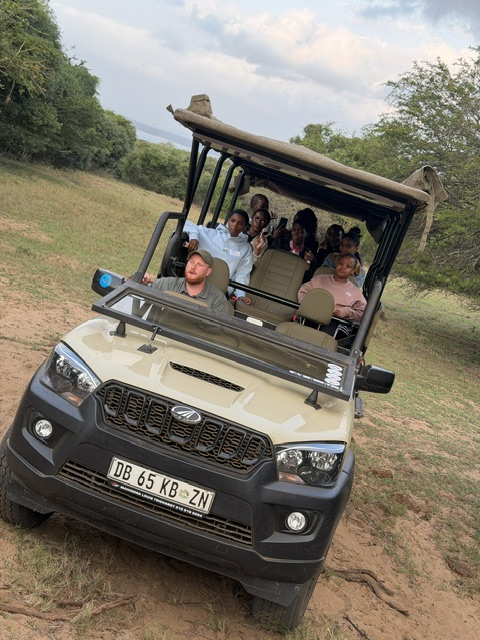
Learners enjoying the game drive at Bonamanzi Game Reserve.
Measuring the Invisible
Building on the previous day’s activities, the second day focused on transforming abstract scientific concepts into measurable observations through experimentation, technology, and field investigations.
Stoichiometry, often regarded as one of the more challenging chemistry topics, was brought to life through a balloon inflation experiment. Learners explored concepts such as moles, molar mass, balanced chemical equations, and limiting reagents by measuring the amount of gas produced during a chemical reaction. The activity demonstrated how mathematical calculations can accurately predict chemical outcomes and linked these concepts to fuel combustion equations.
Learners then investigated ocean acidification through a practical experiment using red cabbage indicator solution. By bubbling carbon dioxide from their breath into the solution, they observed the indicator change from purple to pink as carbonic acid formed and the pH decreased. This simple but powerful demonstration illustrated how increasing atmospheric carbon dioxide affects aquatic environments and connected chemistry to global environmental challenges.
The programme also explored ecohydrology and microclimates through field observations. Learners investigated plant transpiration and examined how plants influence local environmental conditions by creating cooler, moister microclimates that help regulate soil temperature and stabilise soil carbon. These observations reinforced the interconnectedness of plants, water, climate, and ecosystem functioning.
Technology formed another important component of the day’s learning. Learners were introduced to Arduino-based environmental sensors, discovering how variables that cannot be seen with the naked eye, such as temperature, humidity, and carbon dioxide, can be measured, recorded, and visualised as scientific data. This activity provided valuable insight into how environmental scientists monitor ecosystems and collect long-term observational data. The afternoon concluded with an educational game drive through Bonamanzi Game Reserve. Beyond providing an enjoyable outdoor experience, the drive allowed learners to observe wildlife within their natural habitats.
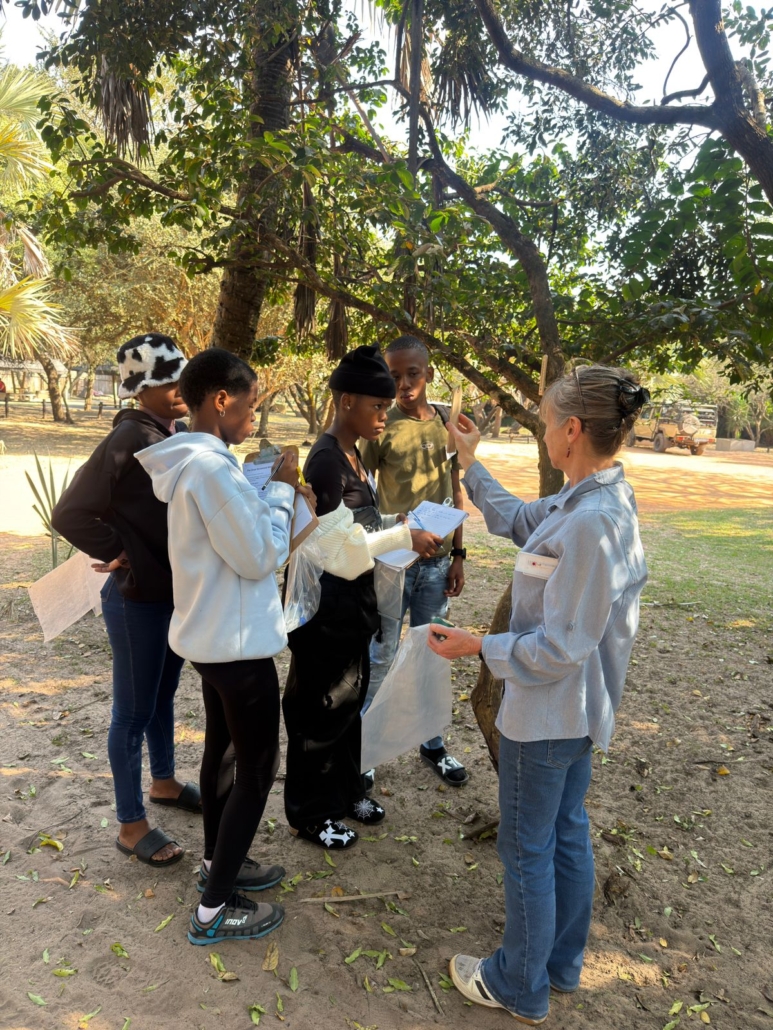
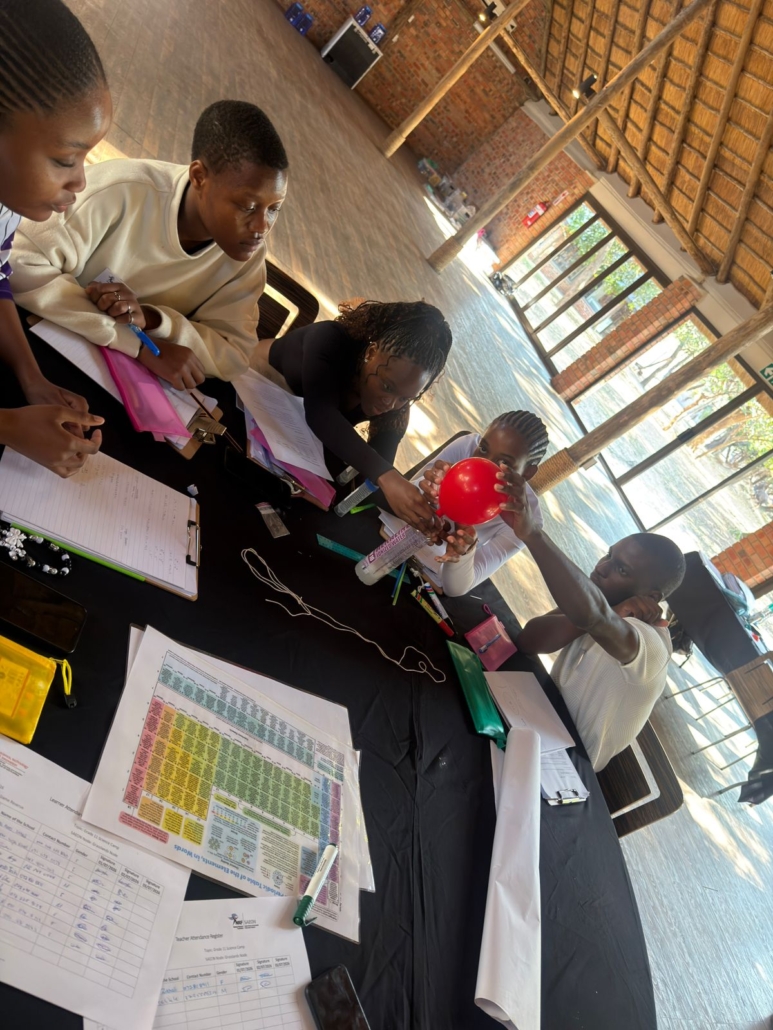
Left: Sue guides learners through the eco-hydrology activity. Right: Learners explore stoichiometry through a hands-on balloon inflation experiment.
Becoming Young Researchers
The final day challenged learners to apply everything they had learned by designing and presenting their own scientific research proposals. Working collaboratively in groups, learners identified research questions based on observations made during the camp. They developed testable hypotheses, selected appropriate environmental sensors for data collection, and designed fair investigations by clearly identifying their independent, dependent, and controlled variables. Each group then presented its proposal, explaining the scientific rationale behind its investigation and demonstrating an understanding of the scientific method.
The presentations reflected significant growth in learners’ confidence, communication skills, and scientific reasoning. More importantly, they illustrated that participants had moved beyond simply performing experiments to thinking like scientists, asking questions, designing investigations, and considering how evidence can be used to answer real-world environmental problems.
The camp concluded with a reflection session, during which learners shared their experiences and celebrated their enthusiasm, growth, and commitment throughout the programme.
Over the three days, learners deepened their understanding of chemistry, biology, ecology, climate science, and environmental monitoring through practical, inquiry-based learning. The hands-on activities reinforced key scientific concepts, strengthened critical thinking and problem-solving skills, and provided valuable exposure to field-based research methods and environmental monitoring technologies that are often inaccessible in many schools. By connecting classroom theory with real-world scientific practice, the camp inspired learners to explore future opportunities in science and environmental research.
Beyond the scientific knowledge gained, the camp inspired curiosity, collaboration, and confidence. By providing opportunities to investigate real environmental questions, use scientific equipment, and experience nature as an outdoor classroom, the programme demonstrated that science is not confined to textbooks or laboratories. Instead, it is a powerful tool for understanding the natural world and developing solutions to environmental challenges.
