eNews
#04 2026
SAEON Contributes to SAHS Conference in the Drakensberg
By Ameera Yacoob, an NRF-SAEON-hosted PhD candidate at the Grasslands Node

#04 2026
By Ameera Yacoob, an NRF-SAEON-hosted PhD candidate at the Grasslands Node
The South African Hydrological Society (SAHS) held its 2026 conference at the Champagne Sports Resort in the Central Drakensberg from 1 to 3 September. Accompanied by pre-conference training courses and post-conference field visits, the event drew roughly 200 delegates, far exceeding the initial target of 120 and making it the largest conference in the Society’s history. Researchers, research associates and students from NRF-SAEON played a prominent role throughout, delivering the opening address, two keynotes and multiple oral and poster presentations, and leading the post-conference field tours.
Keynotes and Opening Discussions
The opening session was chaired by Dr Alanna Rebelo of the Agricultural Research Council (ARC). Dr Michele Toucher, then SAHS Vice-President, Chair of the Local Organising Committee and NRF-SAEON scientist, welcomed delegates and encouraged open scientific debate and new inter-institutional collaboration. The opening addresses set a strong national context. Dr Shafick Adams of the Water Research Commission noted that institutional friction and fragmented, unshared monitoring data, rather than scientific complexity, are what hinder effective decision-making. Dr Moloko Matlala of the Department of Water and Sanitation (DWS) pointed to the strong El Niño forecast for 2026/27 and called for closer links between science, policy and implementation. Prof Simon Lorentz of SRK Consulting delivered the Des Midgley Memorial Lecture, tracing how process understanding has shaped hydrological modelling. Jason Hallowes of Ekosource followed with coupled hydrological and hydrodynamic modelling for eutrophication management in the uMngeni system.
Keynote lectures on subsequent days delivered by NRF-SAEON research associates further expanded on regional environmental challenges. Prof Fhumulani Mathivha of the University of Limpopo spoke on hydrological extremes under South Africa’s changing climate, while Dr Julia Glenday of Rhodes University delivered the Early Career Keynote, addressing catchment modelling strategies amidst an “info-flood.”
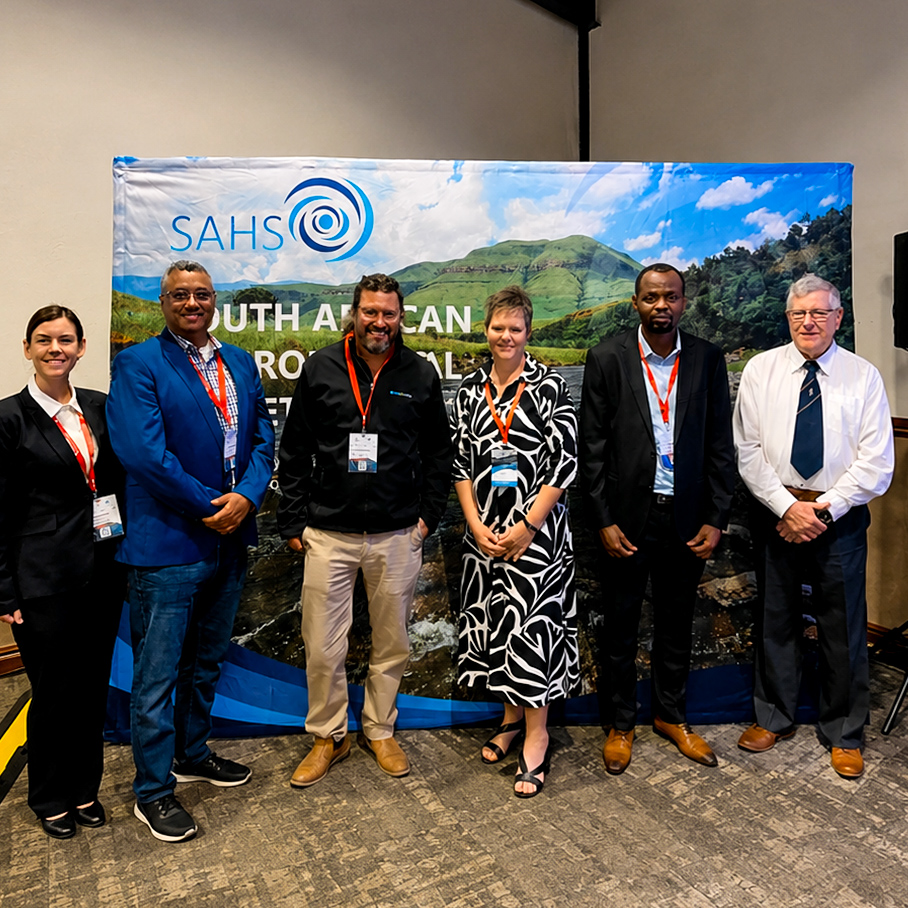
Figure 1: Opening session of the SAHS 2026 Conference. Left to right: Dr Alanna Rebelo (ARC), Dr Shafick Adams (WRC), Dr Jason Hallowes (Ekosource), Dr Michele Toucher (SAEON), Dr Moloko Matlala (DWS) and Prof Roland Schulze (UKZN).
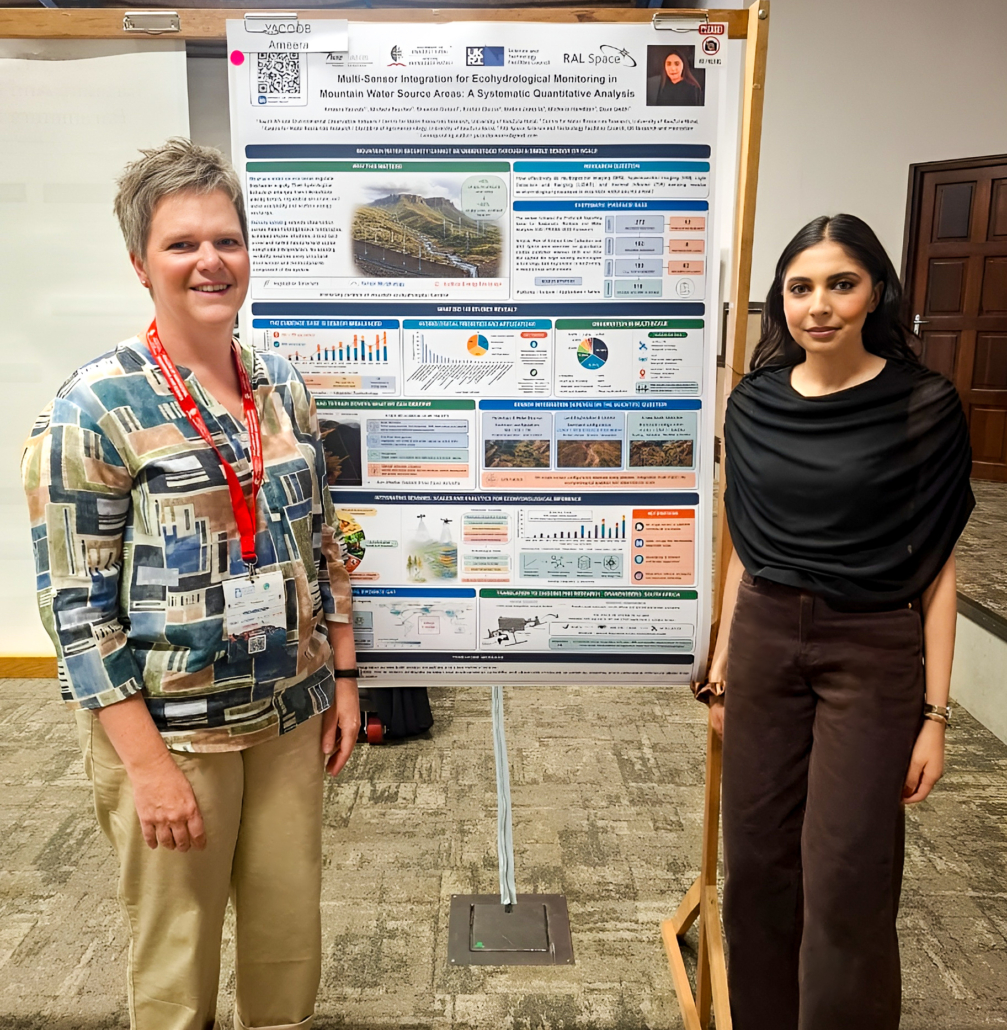
Figure 2: Ameera Yacoob with her supervisor, Dr Michele Toucher, at her First Prize–winning poster.
Staff and Research Presentations
NRF-SAEON staff, collaborators, and research associates demonstrated broad expertise across environmental observation, long-term monitoring, and water resource management during the oral sessions. Dr Michele Toucher presented two papers: the first evaluated how gauge design influences a decade of rainfall records at Cathedral Peak, while the second examined the impacts of degradation and restoration on grassland ecohydrology. Dr Nolusindiso Ndara detailed the establishment of an instrumentation network for long-term landscape monitoring across South Africa, and Dr Mary Nkosi evaluated how future urbanisation will affect hydropedological units in the Crocodile Catchment.
In addition, Nosihle Mkhize presented on water quality and macroinvertebrate assemblages in the Northern Drakensberg Strategic Water Source Area (SWSA), while Dr Shaeden Gokool of the University of KwaZulu-Natal (UKZN) reported on hemp water use and productivity in the KwaZulu-Natal Midlands.

Figure 3: Dr Michele Toucher, SAHS President (2026–2028), at the SAHS General Meeting.

Figure 4: SAEON and EFTEON staff at the exhibition stand. Left to right: Jeremy Moonsamy (EFTEON), Dr Nolusindiso Ndara (EFTEON), Malekeng Selala (EFTEON), Dr Sagwati Eugene Maswanganye (EFTEON) and Nosihle Mkhize (SAEON).

Figure 5: The STFC RAL Space UAS hyperspectral payload, spectrometer and LiDAR sensor on display at the SAEON/EFTEON stand.
NRF-SAEON Student Contributions and Accolades
Student presentations featured strongly in the programme. Mkholo Maseko of Stellenbosch University detailed isotope-enabled models of episodic groundwater recharge at Lake Sibaya. Tasmiyah Peerbhai of UKZN reviewed a decade (2015–2025) of streamflow simulation studies using satellite and reanalysis data, noting that while physics-based models like SWAT dominated, data-driven approaches grew rapidly after 2020. She advocated for hybrid models that constrain deep learning with physically based process representations.
More than 50 posters were featured during an interactive two-hour session. Ameera Yacoob, an NRF-SAEON-hosted PhD candidate at UKZN, received First Prize for the best student poster for her work titled Multi-sensor integration for ecohydrological monitoring in mountain water source areas: A systematic quantitative analysis. Her review evaluated how multispectral, hyperspectral, LiDAR, and thermal infrared observations reduce uncertainty in mountain catchments—research that directly underpins her doctoral study linking in situ measurements with satellite data in the Northern Drakensberg SWSA. At the joint NRF-SAEON/EFTEON display stand, she demonstrated these technologies using an unmanned aerial system (UAS) equipped with a LiDAR sensor and a hyperspectral imaging payload developed by STFC RAL Space.
Two additional NRF-SAEON-linked posters were showcased during the session: Sbonelo Mtetwa of UKZN evaluated gridded rainfall products against ground-based observations at Cathedral Peak, and Dr Faith Jumbi used stable isotope tracers to investigate storm dynamics in the Jonkershoek catchment.
Capacity Building and Field Excursions
Hands-on training sessions took place on 31 August prior to the main proceedings. Dr Toucher, Mziwakhe Ngcobo, Siphiwe Mfeka, Jeremy Moonsamy, and Ameera Yacoob attended a course on eddy covariance theory and flux measurement presented by LI-COR Environmental and EUCA Technologies. In parallel, Dr Nkosi, Nosihle Mkhize, and Tasmiyah Peerbhai trained on the open-source HYPE hydrological and water quality model with the Swedish Meteorological and Hydrological Institute. Following the conference on 4 September, delegates toured key long-term monitoring infrastructure during field trips to the SAEON-Grasslands Node Cathedral Peak Long-Term Ecological Research (LTER) platform and the EFTEON Northern Drakensberg site.
Leadership of the Society
During the conference, Dr Michele Toucher officially assumed the SAHS presidency for the 2026–2028 term. In her closing address, she outlined her term’s priorities, which include an early-career mentorship programme, quarterly webinars, and technical short courses between national conferences. Dr Shaeden Gokool and Ameera Yacoob were also elected to the incoming Council.
Looking ahead, the next SAHS conference will take place from 4 to 8 September 2028 in Limpopo, co-hosted by the University of Limpopo, the University of Venda, and NRF-SAEON’s Ndlovu Node.

Figure 6: The 2026–2028 SAHS Council. Back row, left to right: Wandile Nomquphu (WRC), Liezl Janse van Rensburg (SAHS Secretariat), Tinisha Chetty (UKZN), Dr Katelyn Johnson (Stellenbosch University) and Joshua Rasifudi (DWS). Front row, left to right: Dr Michele Toucher (SAEON; SAHS President), Dr Julia Glenday (SAEON/Rhodes University) and Dr Alanna Rebelo (ARC). Absent: Dr Shaeden Gokool (UKZN/SAEON) and Ameera Yacoob (UKZN/SAEON).
