eNews
#04 2026
Blue Schools 2026 Showcases South Africa’s Next Generation of Environmental Researchers
By Dipuo Masebe, NRF-SAEON Science Engagement Intern
#04 2026
By Dipuo Masebe, NRF-SAEON Science Engagement Intern
Fifteen learners from across South Africa presented their environmental research at the National Blue Schools Conference 2026, held on 14 October at the aha Gateway Hotel in KwaZulu-Natal. Their projects explored issues ranging from water quality and pollution to marine biodiversity and the effects of flooding. The conference gave learners an opportunity to share their findings, receive feedback from science professionals and learn more about environmental research beyond their schools.
Hosted by the National Research Foundation’s South African Environmental Observation Network (NRF-SAEON), with funding from the Department of Science, Technology and Innovation (DSTI), the conference formed part of the National Blue Schools Programme, which encourages learners to investigate environmental issues and develop their scientific research skills.
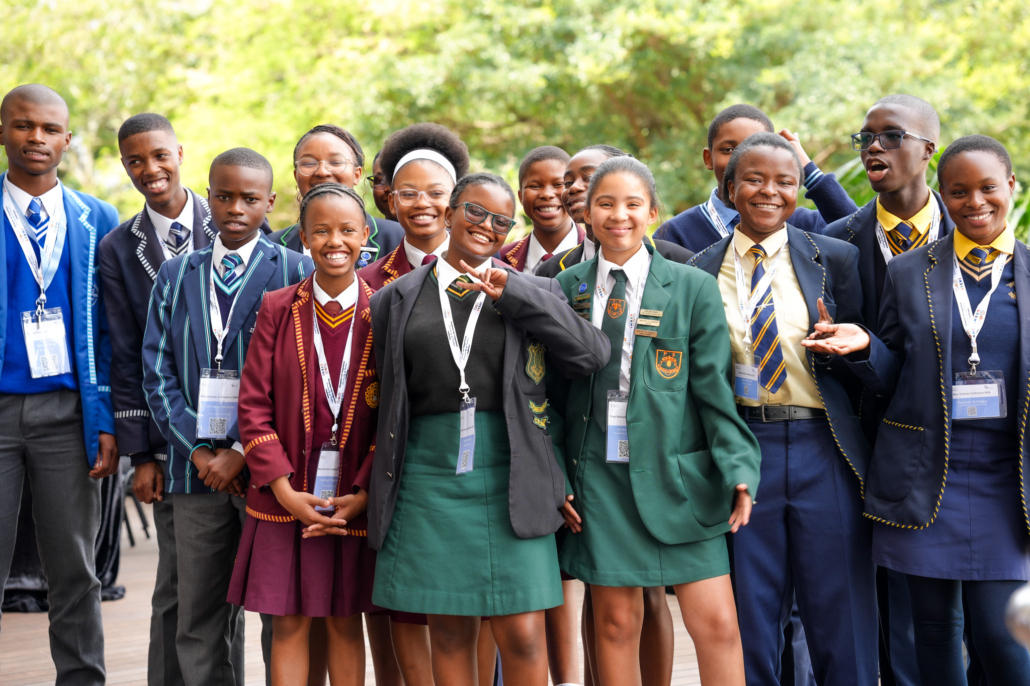
The 15 learners selected to present their research at the National Blue Schools Conference 2026 in KwaZulu-Natal.
Learners investigate environmental challenges.
The projects presented at the conference reflected the different environmental questions learners had explored in their communities and surrounding areas. Topics included phytoplankton in the Nenga Estuary, seasonal changes in zooplankton in Algoa Bay, fish diversity in the rock pools of Coffee Bay and blue carbon in the Swartkops Estuary. Other learners investigated ocean acidification, plastic pollution, acid mine drainage, flooding and water filtration.
Some projects focused on concerns learners could observe in their own communities, while others examined processes affecting aquatic ecosystems and marine life. These investigations showed how scientific research can be used to explore environmental questions and understand the factors affecting water bodies and coastal environments.
Preparing for the national conference involved several stages. Learners submitted their research proposals in April and worked towards completing their reports and portfolios in July. Those shortlisted presented their projects online, after which 15 learners were selected to attend the conference. Practice sessions helped them prepare their presentations before taking the stage in KwaZulu-Natal.
Sharing research and receiving feedback
Dr Ashley Naidoo, Managing Director of NRF-SAEON, opened the conference and welcomed the learners and other participants. The programme allowed learners to present their investigations and explain the questions, methods and findings behind their work.
Dr Gilbert Siko delivered the keynote address. Having reviewed the learners’ abstract booklet, he congratulated them on the quality of their scientific projects and highlighted the importance of research in understanding the marine environment. His address also drew attention to the need to strengthen the connection between people and the oceans.
Koki Selepe, Deputy Director: Science Promotion at DSTI, provided feedback on the learners’ presentations. He highlighted areas where they could strengthen their work, including their research questions, methods, interpretation of findings and presentation skills. This gave learners practical guidance they can use to improve their investigations and communicate their results more effectively.
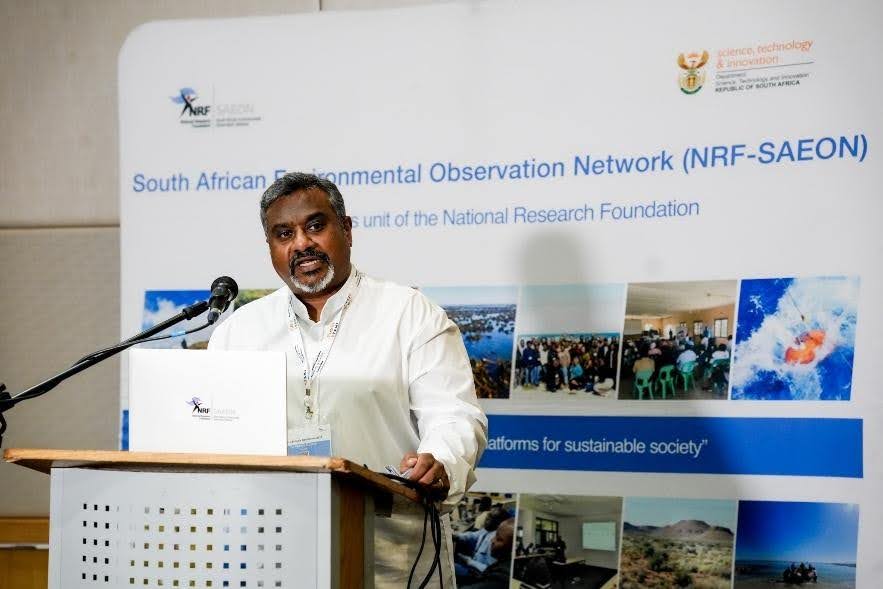
NRF-SAEON Managing Director Dr Ashley Naidoo welcomes learners, educators, guests and partners to the 2026 National Blue Schools Conference.
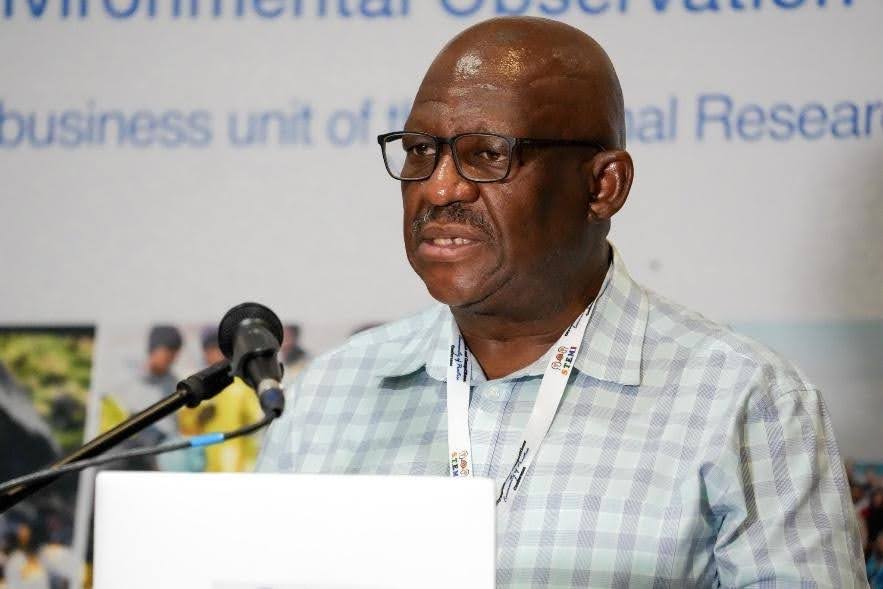
Dr Gilbert Siko delivers the keynote address at the 2026 National Blue Schools Conference, highlighting how learner research strengthens understanding of the marine world and helps bridge the gap between oceans and people.
Recognising the top projects
Three learners received awards for their research projects.
First place went to Sikhusele Nkotobe, a Grade 8 learner from Ndzondelelo High School, for a project investigating the potential of Carbo-S Polymer for water filtration and soil water retention. The project addressed questions relevant to water management and the challenge of retaining water in soil.
Ju-ane Morris, a Grade 7 learner from Touwsrivier Primêre Skool, received second place for investigating water quality at three local schools after concerns were raised about brownish tap water. Her project focused on a concern affecting her community and used research to investigate water quality.
Third place was awarded to Netshikovhela Ndamulelo, a Grade 11 learner from Thengwe High School, for a project examining flooding, runoff, erosion and nutrient movement in relation to water quality at Nandoni Dam.
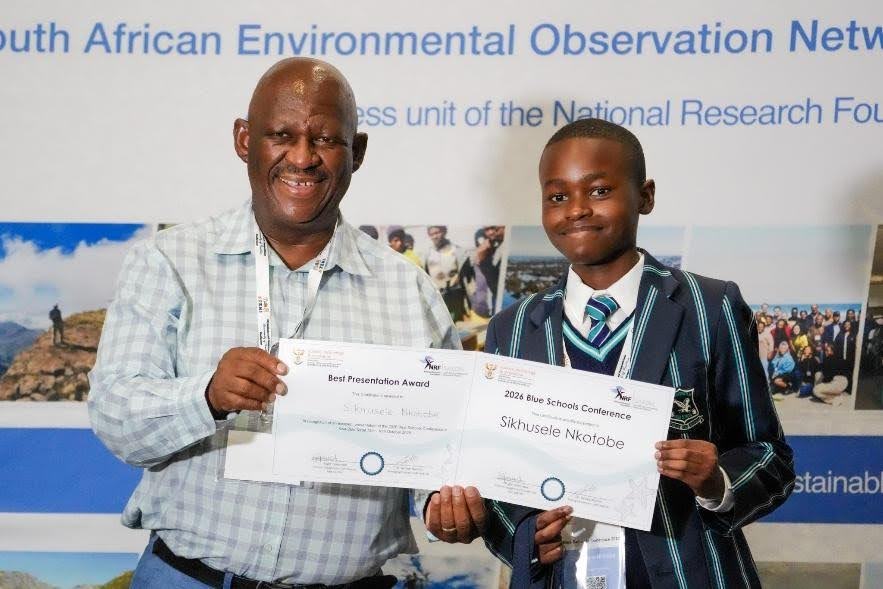
First-place winner Sikhusele Nkotobe of Ndzondelelo High School receives the Best Presentation Award at the 2026 National Blue Schools Conference.
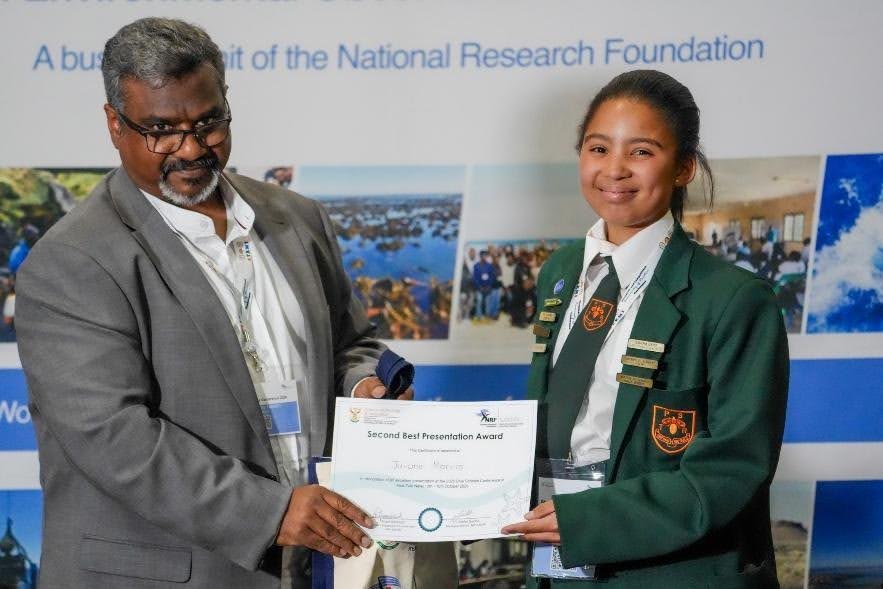
Second-place winner Ju-ane Morris of Touwsrivier Primêre Skool receives the Second Best Presentation Award at the 2026 National Blue Schools Conference.
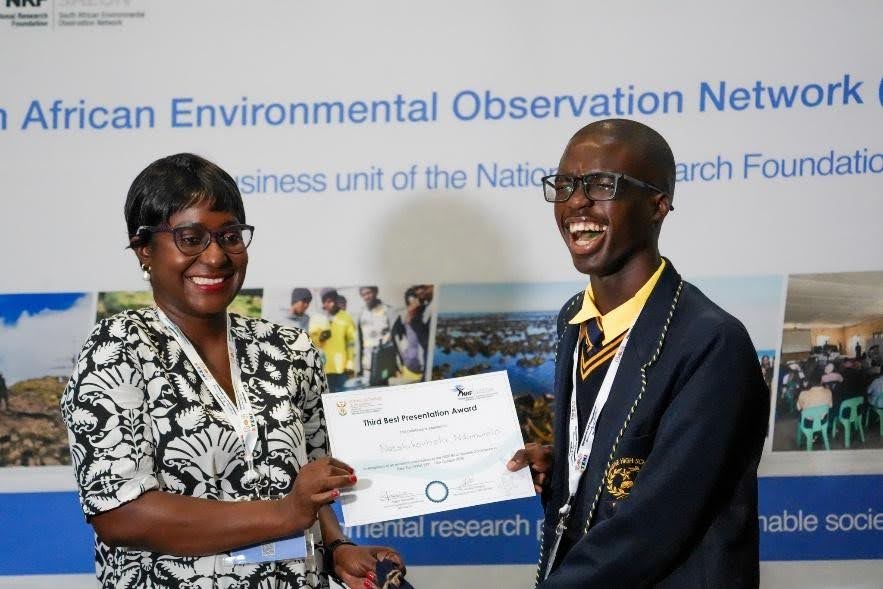
Third-place winner Netshikovhela Ndamulelo of Thengwe High School celebrates receiving the Third Best Presentation Award at the 2026 National Blue Schools Conference.
Kogie Govender, Science Engagement Coordinator at NRF-SAEON, closed the conference by thanking the learners, educators, adjudicators, media representatives, partners, DSTI and the NRF-SAEON team for their contributions to the programme and event.
Learning beyond the conference
The programme continued with educational visits around KwaZulu-Natal, giving learners opportunities to explore marine life, conservation and natural environments outside the conference venue. These visits were part of the learning experience, connecting environmental topics with places, organisms and activities learners could observe first-hand.
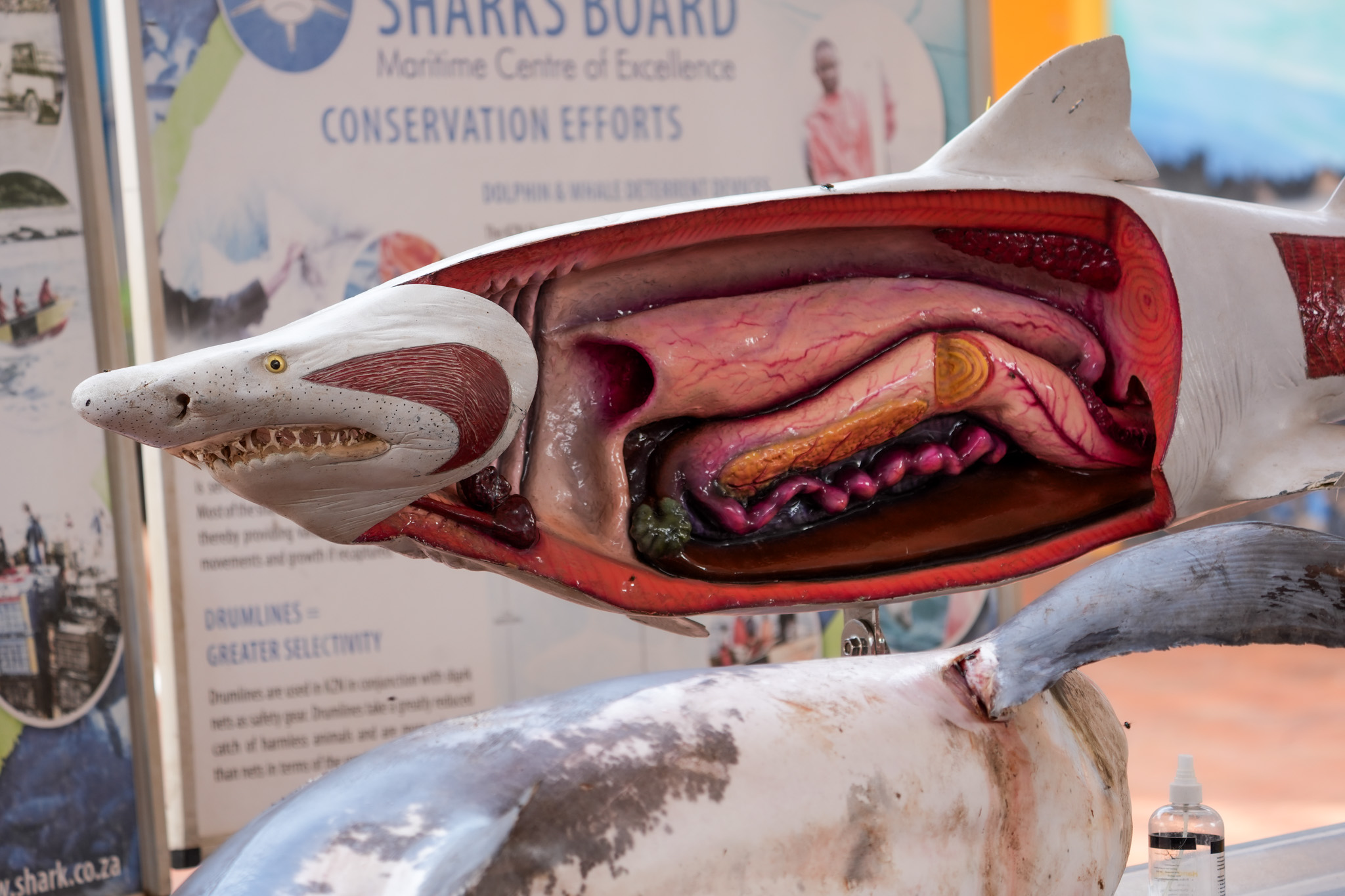
At the KwaZulu-Natal Sharks Board, learners learnt about shark-safety measures, including the use of nets and drumlines. Demonstrations involving a shark specimen and an anatomical model gave them an opportunity to examine shark features and learn more about these animals. The visit also provided a basis for discussing marine life, shark conservation, and how people manage interactions with wildlife along the coast.
The group also visited Burman Bush Nature Reserve, where they took part in a 45-minute hike. Walking through the reserve allowed learners to experience a natural environment and observe their surroundings beyond a classroom setting. For educators, these observations can provide practical examples for teaching about habitats, biodiversity and relationships between organisms and their environments.
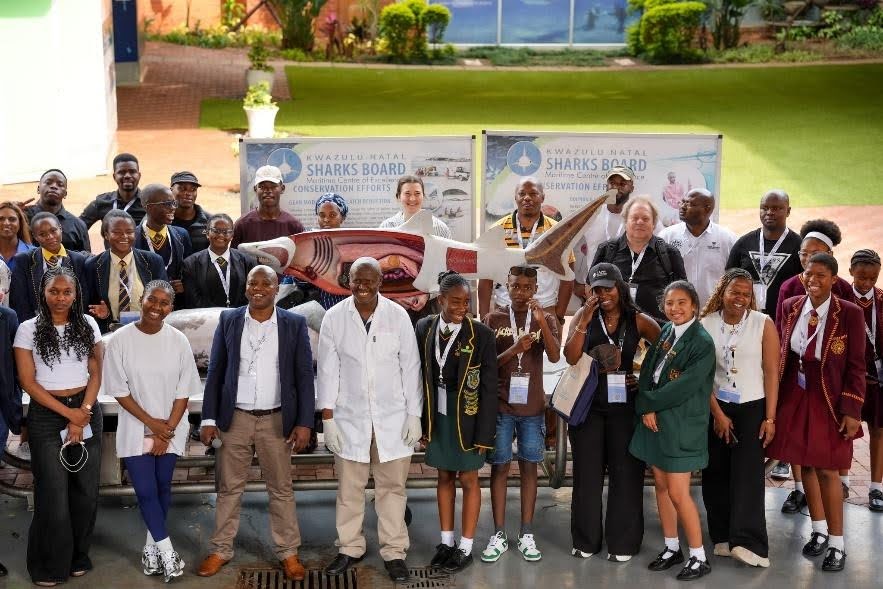
Learners take part in an educational visit during the Blue Schools programme in KwaZulu-Natal.
On 15 October, the learners visited uShaka Marine World. The programme included a Catchment to Coast presentation, a guided aquarium tour, a dolphin show and a refreshing walk along the beach.
The aquarium visit allowed learners to observe marine animals at close range. For learners investigating marine biodiversity and aquatic ecosystems, seeing different species can help make classroom concepts more concrete and encourage questions about animal behaviour, habitats and the relationships between organisms and their environments.
The Catchment to Coast session also connected with themes explored through the Blue Schools Programme, particularly the relationship between land-based water systems and the ocean. Water flowing through catchments can carry pollutants and other materials into rivers, estuaries and coastal waters. Understanding this connection helps learners consider how activities on land can affect aquatic ecosystems, including the environments they may have investigated in their own projects.
The dolphin show provided another opportunity for learners to observe marine mammals and learn about their behaviour and adaptations. Together with the aquarium tour, it could support discussions about marine life, animal welfare and the responsibilities involved in caring for wildlife. Educators can use these shared experiences to develop follow-up classroom discussions and activities.
The visit concluded with a walk along the beach, allowing learners to experience the coastal environment directly. This provided another opportunity to consider the relationship between the ocean, coastal habitats and human activities.


Learners during their visit to uShaka Marine World on 15 October 2026.
The value of educational visits
It is important to consider what learners and educators gain from these experiences and how the learning can be used after the visits.
For learners, field trips offer practical examples that can support their understanding of environmental concepts, stimulate questions and help them connect their research with real environments. Visits to facilities such as the KwaZulu-Natal Sharks Board and uShaka Marine World also expose learners to marine education, conservation activities and environments they may not otherwise have the opportunity to experience first-hand.
For educators, the visits provide examples they can bring back into lessons. Observations from the aquarium, coastal environment and nature reserve can be used to support discussions, classroom activities and future research projects. Linking these experiences to the curriculum can help educators explain concepts that are difficult to demonstrate through textbooks alone.
The visits also provided opportunities to connect with themes from the learners’ projects, including water quality, aquatic biodiversity, pollution and environmental change. For example, the Catchment to Coast activities helped illustrate the links between land-based water systems and the ocean, while the Sharks Board visit provided a practical context for discussing marine animals and human interactions with them.
To better demonstrate the return on investment of these visits, future programme evaluations could gather feedback from learners and educators, identify what participants learnt and record whether the visits informed later classroom activities or research projects. This would provide evidence of the educational value of the trips and help NRF-SAEON and its partners improve future visits.
Encouraging the next generation of environmental researchers
The National Blue Schools Conference brought together learners who had spent months investigating environmental questions and preparing to share their findings. Their projects addressed issues affecting local communities and aquatic ecosystems, while the conference allowed them to engage with science professionals and receive feedback on their work.
The educational visits extended the programme beyond research reports and presentations. By combining learner investigations with opportunities to explore natural environments and take part in marine education activities, the programme gave learners and educators additional examples to draw on when discussing environmental science.
Through the National Blue Schools Programme, NRF-SAEON and its partners support learners in developing their interest in environmental science and learning how research can be used to investigate the world around them. The 2026 conference recognised the work learners had completed and gave them further opportunities to build their research and communication skills.
