eNews
#04 2026
Crop Water Use at a Scale Farmers Can Act On
By Ameera Yacoob, NRF-SAEON-hosted PhD candidate at the University of KwaZulu-Natal (UKZN)
#04 2026
By Ameera Yacoob, NRF-SAEON-hosted PhD candidate at the University of KwaZulu-Natal (UKZN)
Ameera Yacoob, an NRF-SAEON-hosted PhD candidate at the University of KwaZulu-Natal (UKZN), was invited by Dr Luxon Nhamo of the Water Research Commission (WRC) to present in a WRC special session at the Water Institute of Southern Africa (WISA) 2026 Conference, held at the Cape Town International Convention Centre on 23 July 2026. The session, Mainstreaming indigenous underutilised crops as a climate change adaptation strategy in a water-stressed South Africa, featured three presenters: Ameera; her colleague Richard Kunz of the UKZN Centre for Water Resources Research (CWRR); and Prof Takalani Mulaudzi-Masuku of the University of the Western Cape (UWC). Prof Mulaudzi-Masuku presented research on the role of indigenous crops in climate change adaptation and in water, food and nutritional security.
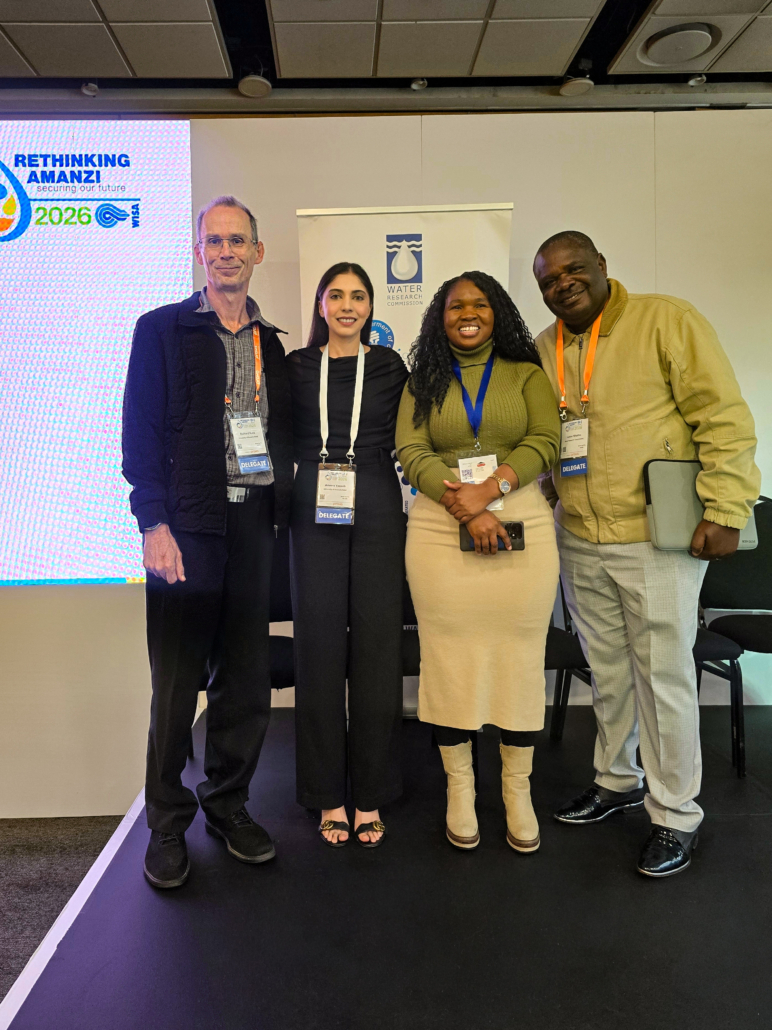
Figure 1: Presenters and facilitator of the WRC special session at WISA 2026. Left to right: Richard Kunz (UKZN CWRR), Ameera Yacoob (NRF-SAEON/UKZN CWRR), Prof Takalani Mulaudzi-Masuku (UWC) and Dr Luxon Nhamo (WRC; session facilitator).
Although Ameera’s work was developed on sugarcane, it addressed a question central to the session: how to measure crop water use, and detect the onset of water stress, at a scale farmers can act on. Drawing on her WRC-funded MSc research, Ameera combined Sentinel-2, unmanned aerial system (UAS) and in situ observations across a smallholder sugarcane field. She applied machine learning to UAS imagery to estimate evapotranspiration and to predict the Normalised Difference Water Index (NDWI), an indicator of crop water status. Richard approached the same question through crop modelling. He used field and greenhouse measurements of sweet potato and taro to calibrate the AquaCrop model, then mapped crop and nutritional water productivity at national scale.
The three presenters then took part in a panel discussion, facilitated by Dr Nhamo, on the opportunities and barriers to adopting indigenous crops. Questions to Ameera focused on thermal sensing and on making UAS methods practical enough for routine field use.
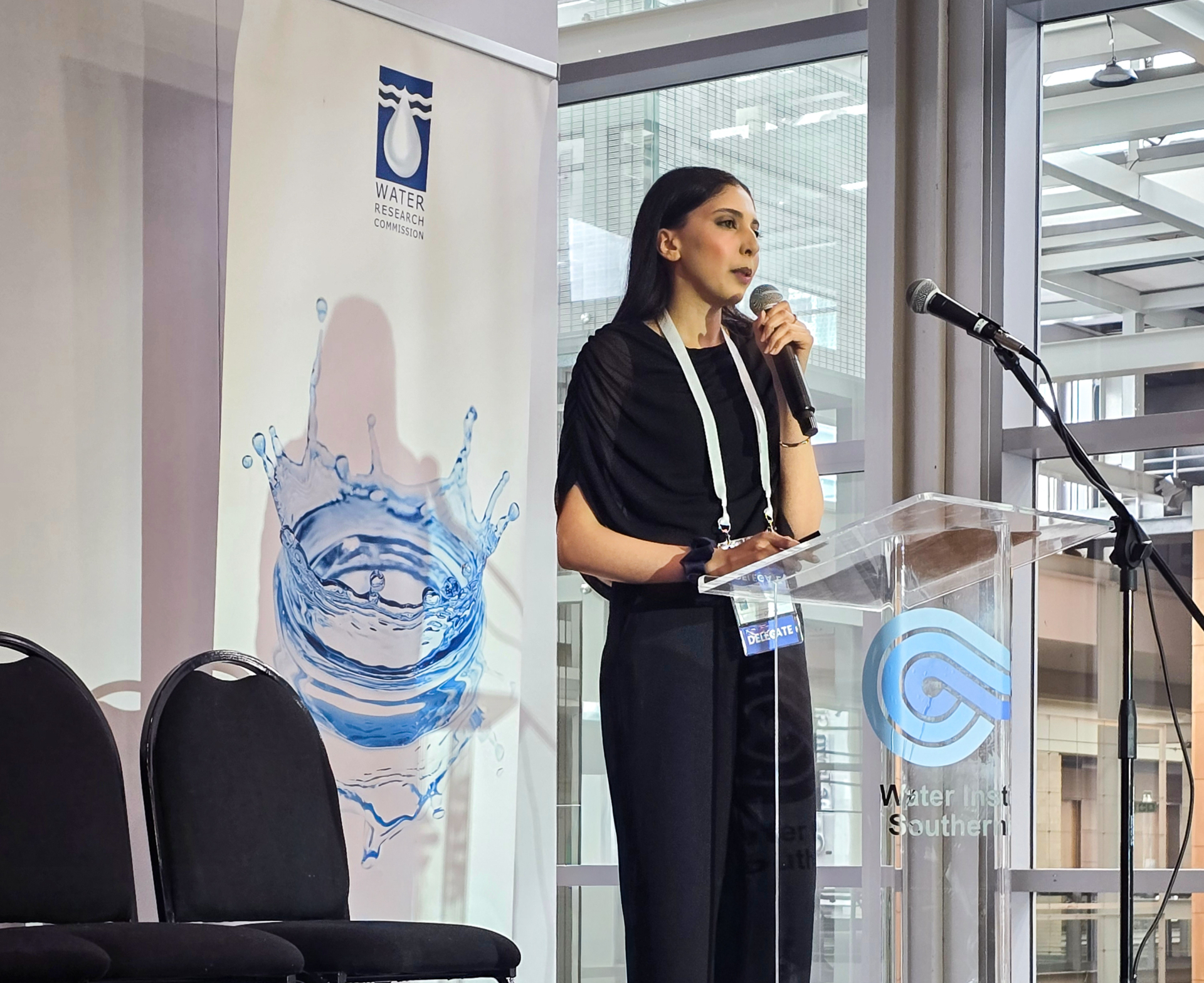
Figure 2: Ameera Yacoob presenting her MSc research on UAS-based crop water monitoring in the WRC special session.
After the session, several students and early-career researchers approached Ameera. They were as interested in how she had entered UAS-based remote sensing in the water sector as in her results. For Ameera, the exchange was a reminder that research reaches people through conversation and mentorship, not only through publication.
Ameera thanks the WRC and her MSc supervisors, Dr Shaeden Gokool and Prof Alistair Clulow.
