eNews
#04 2026
Advancing Ecological Monitoring through Innovative Technologies: Highlights from the 18th SAEON GSN Indibano
By the SAEON Graduate Student Network
#04 2026
By the SAEON Graduate Student Network
The NRF-SAEON Graduate Student Network (GSN) hosted its 18th annual Indibano from 13 September to 18 September 2026 at Hazyview Sun, in Mpumalanga.
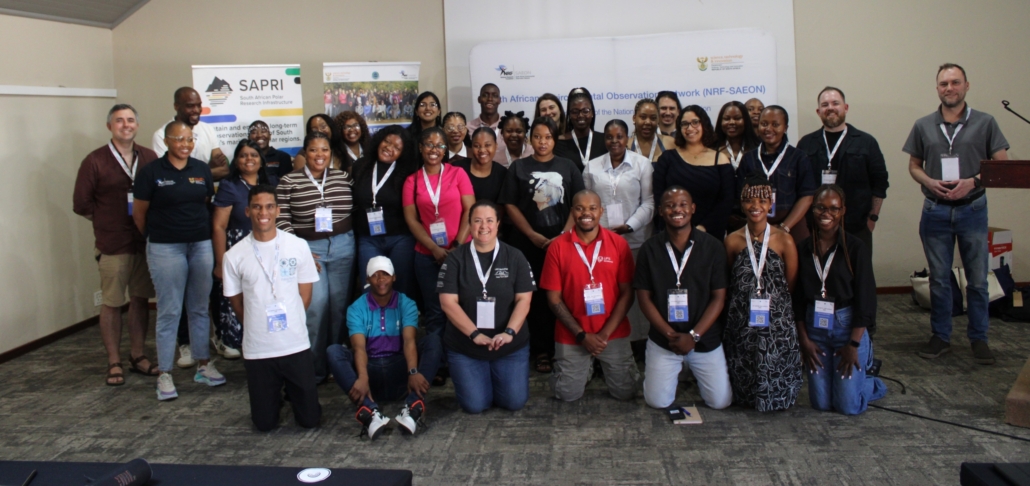
A group of postgraduate students who earned an opportunity to attend the 18th SAEON GSN Indibano, where they engaged with leading experts and explored new perspectives in environmental research.
Innovation and knowledge-sharing took centre stage at the 18th SAEON Graduate Student Network (GSN) Indibano, held in Mpumalanga from 13–18 September 2026. Under the theme “Advancing Ecological Monitoring through Innovative Technologies,” the gathering brought together postgraduate researchers, scientists and environmental practitioners to exchange knowledge, strengthen research skills and explore innovative approaches to understanding environmental change.
Bringing diverse environmental perspectives together
The programme reflected the breadth of environmental science, bringing together perspectives from terrestrial and marine research, hydrology, environmental management and climate science.
Wynand Calitz opened the scientific programme with insights into SAEON’s terrestrial research activities. Dr Marc Pienaar further highlighted SAEON’s terrestrial observations and environmental monitoring initiatives, including the work of the Ulwazi Node.
Marine science was another important focus. Dr Tammy Morris introduced delegates to SAEON’s Marine Programme, sharing insights into the work being undertaken to observe and understand the oceans and marine ecosystems. Her presentation highlighted the importance of long-term marine observations in understanding environmental change.
Delegates also welcomed Dr Nolusindiso Ndara, an EFTEON Landscape Scientist specialising in Hydrology, whose contribution brought a landscape and water-focused perspective to the gathering. Dr Mary Nkosi explored hydropedology and its application to catchment management, using the Crocodile River Catchment as a case study.
The importance of translating environmental knowledge into practical action was highlighted by Lebogang Mdluli, Principal Environmental Officer at Ehlanzeni District Municipality. Drawing on more than 15 years of experience in environmental management, compliance, climate change and law enforcement, Lebogang shared insights into the practical realities of environmental governance and management.
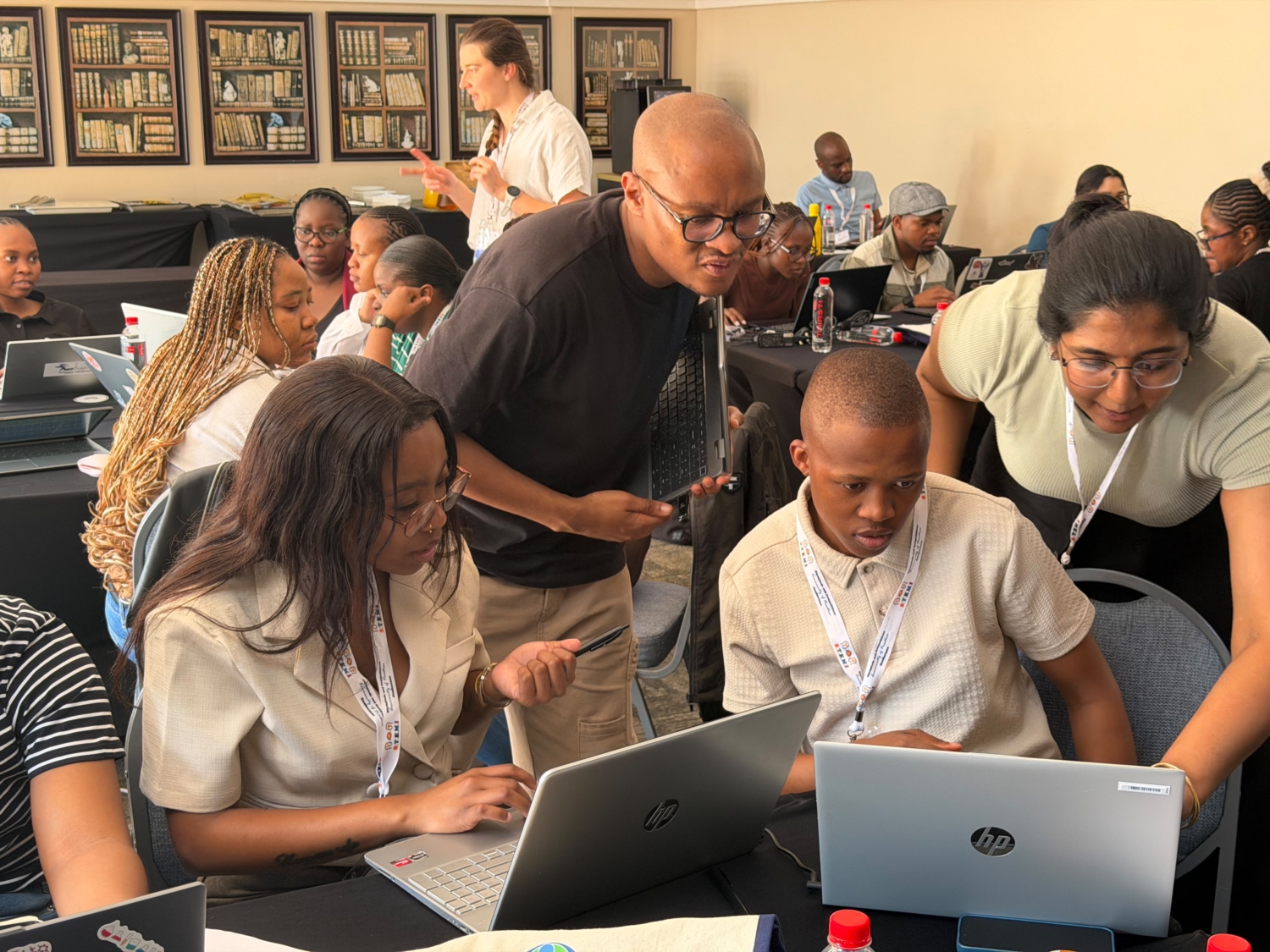
Students engaged in the Tropical Cyclone workshop, sharing ideas, learning from one another and discovering how teamwork can strengthen their approach to scientific challenges.
Strengthening research skills and embracing innovation
Developing strong research skills was an important part of the Indibano. Dr João Silva from North-West University facilitated a workshop on experimental design, hypothesis testing and interpretation, encouraging delegates to strengthen their research approaches and critically evaluate their findings.
Dr Ramontsheng Rapolaki, Lead Scientist in the Marine Research Unit at the South African Weather Service (SAWS) and a Research Fellow at the University of the Free State, contributed to the hands-on workshop on Tropical Cyclone Dataset Analysis and Impacts over Southern Africa. His expertise in climate science and numerical modelling added to the range of scientific perspectives shared with delegates.
Douglas Eriksen of Cango Wildlife delivered a keynote presentation exploring Project Zoological Open Architecture (ZOA). His presentation encouraged delegates to consider how Artificial Intelligence (AI) and innovation can help shape a more sustainable future.
The role of emerging technologies was explored further during a workshop led by Dr Jaco du Toit, titled “Building the Next Generation of AI-Enabled Environmental Scientists.” The session encouraged delegates to consider how AI could support environmental research and contribute to future monitoring approaches.
Delegates were also introduced to citizen science through Caitlin Ransom’s session on iNaturalist, a platform that enables users to record biodiversity observations and contribute to research. Participants were encouraged to use the platform throughout the week, turning the experience into an engaging opportunity to document biodiversity while learning from their surroundings.
Together, these sessions demonstrated that advancing ecological monitoring requires more than technological innovation alone. It also depends on robust research methods, critical thinking, effective communication, and opportunities to connect scientific knowledge with practical environmental challenges.
Communicating Science Beyond Academia
Science communication was another important highlight of the Indibano. Two months before the Indibano, Kogie Govender (SAEON’s science engagement coordinator) facilitated a science communication training on creating scientific outputs for a non-technical audience based on research papers published by SAEON researchers. Students were put into syndicate groups during the training based on the research area and met weekly to design and develop a product. Students presented the science communication products developed by their groups, translating scientific research into accessible and engaging content for non-specialist audiences. The presentations showcased their creativity and ability to communicate complex scientific concepts in ways that are easier for broader audiences to understand, highlighting the importance of making scientific knowledge accessible beyond academia.
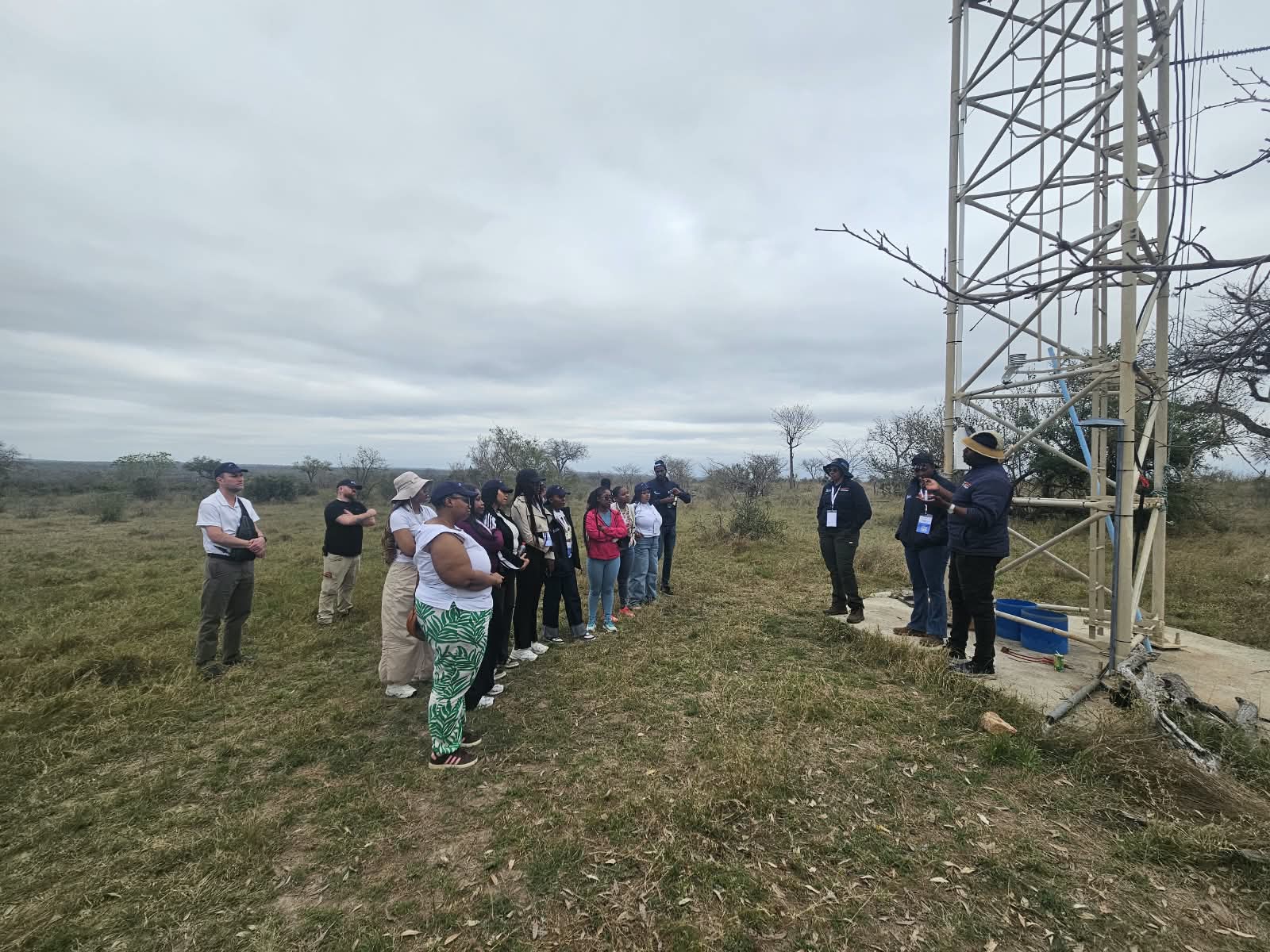
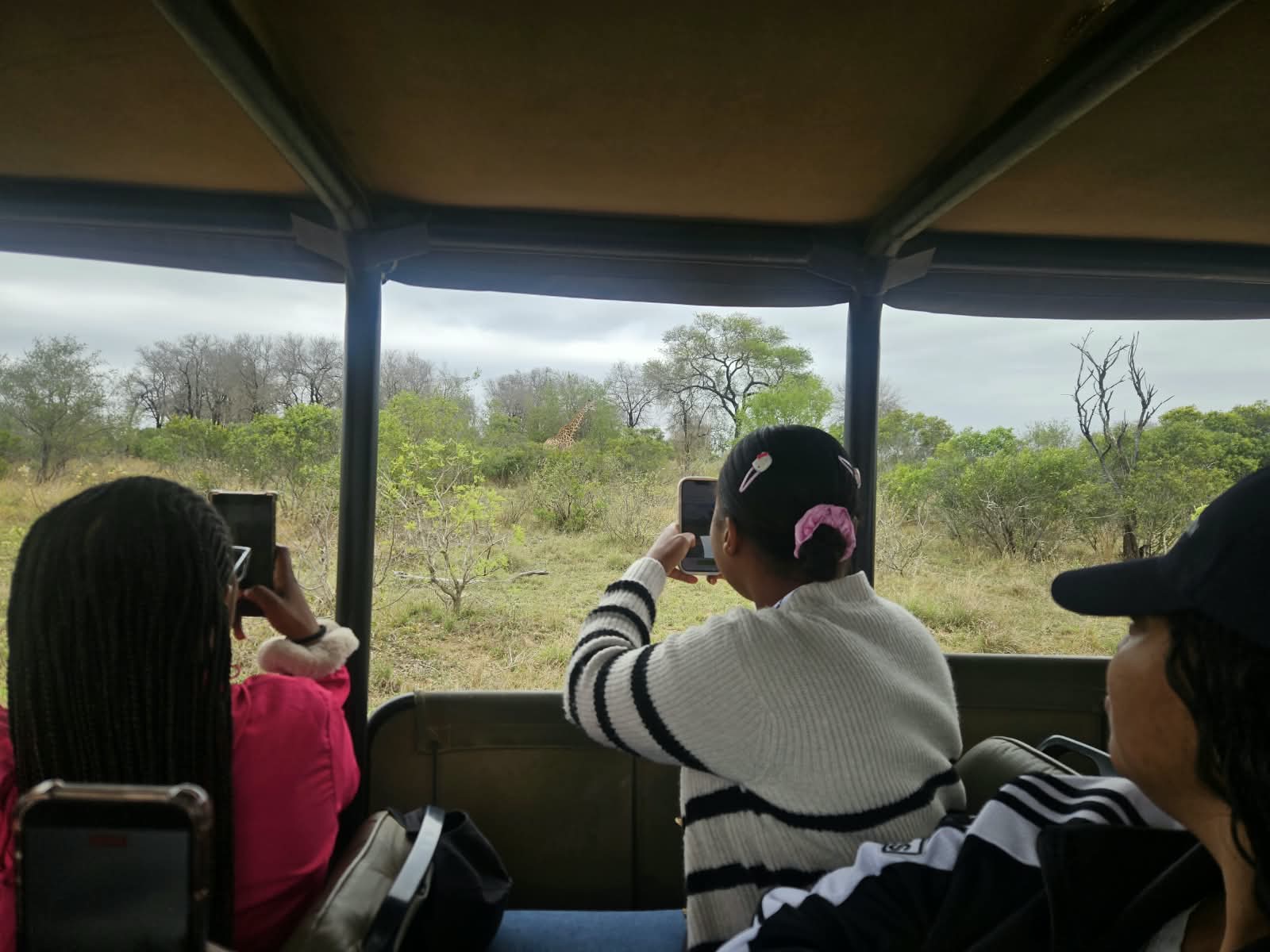
Students were shown the flux tower at Kruger National Park (left). They also connected with nature during a game drive (right).
Learning beyond the conference room
A memorable field trip to Kruger National Park on Thursday provided delegates with an opportunity to extend their learning beyond the conference room. A key highlight was the visit to the EFTEON flux tower, where EFTEON officials introduced delegates to the infrastructure and its role in long-term environmental observation and ecosystem monitoring. The visit offered valuable insight into how environmental data are collected to improve understanding of ecosystem processes and environmental change. Delegates also visited the herbarium and observed wildlife in its natural habitat, connecting their scientific discussions to the biodiversity and ecosystems they seek to understand and protect.
Beyond the presentations and field experience, the Indibano created space for postgraduate researchers to exchange ideas, discuss research challenges, and build connections across disciplines. These interactions are an important part of developing a collaborative scientific community and encouraging new perspectives on shared environmental challenges.
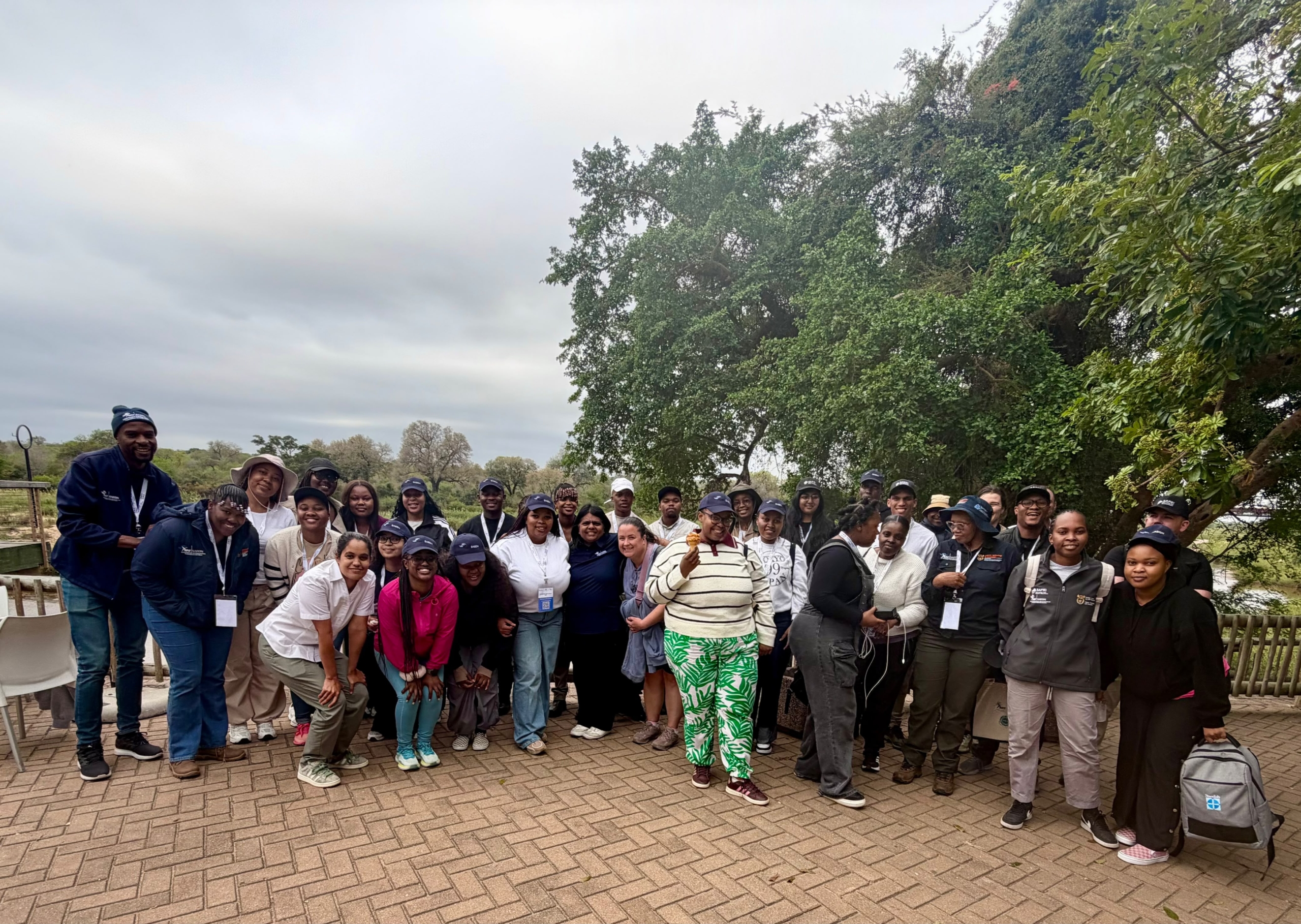
A moment of shared joy after an insightful visit to the EFTEON flux tower at Kruger National Park, capturing the smiles, connections and memorable experiences that made the SAEON GSN Indibano special.
Recognising emerging scientific talent
The gathering also celebrated the contributions of three outstanding presenters who were recognised for their research presentations: Yonwaba Maqungu who achieved first place for her presentation titled, “ Effects of encroaching tree species and canopy on herbaceous vegetation dynamics in semi-arid savanna rangelands”; Chloe Naidoo earned second place for “Investigating the Hydrological Responses to Landcover and Climate Change in the Jonkershoek Catchment, Western Cape “; and Suveena Govender who achieved third place for “Comparative analysis of microbiomes obtained from wild freshwater fish in Pietermaritzburg, KwaZulu-Natal, South Africa”. Their achievements highlighted the value of communicating scientific findings, sharing new knowledge and creating opportunities for emerging researchers to showcase their work.
Congratulations to the three recognised presenters, and appreciation to all delegates who contributed to the scientific programme through their presentations, questions and discussions.
Looking ahead
The 18th GSN Indibano brought together diverse expertise and experiences, demonstrating how environmental monitoring benefits from collaboration across scientific disciplines and professional fields. From terrestrial observations and hydrology to marine science, environmental management, climate science, citizen science and artificial intelligence, the programme highlighted the range of approaches available to strengthen our understanding of environmental change.
Ultimately, the Indibano was about both the advancement of environmental science and the people who will shape its future. By creating opportunities for learning, collaboration, and professional development, the SAEON GSN continues to support emerging researchers as they contribute to environmental observation, research, and knowledge-sharing in South Africa.
The 18th Indibano reinforced a central message: advancing ecological monitoring requires innovative tools, sound scientific thinking and a connected community committed to understanding and protecting the environment.
Acknowledgements
We also thank all speakers, workshop facilitators, Node Sponsors, adjudicators and delegates for making the gathering a memorable and enriching experience. Thank you to Caitlin Ransom for arranging all the flights. Our sincere thanks and gratitude to Kogie Govender for arranging the GSN Indibano together with the GSN steering committee.
