eNews
#04 2026
Inspiring Future Environmental Scientists: The Grade 11 Science Camp 2026
By Phumudzo Raginama, Arid Lands Node
#04 2026
By Phumudzo Raginama, Arid Lands Node
Arid Lands Node hosted 20 learners from 28 to 30 September 2026 at Sandveld Nature Reserve to a Grade 11 Science Camp. The camp aimed at developing practical research skills, introducing technological innovations in environmental science, and inspiring the next generation of researchers and scientists. The programme seamlessly blended theoretical understanding with field-based scientific investigation, hands-on spatial technology, and future career planning. The journey began with foundational training in scientific methods, introducing learners to key concepts like formulating hypotheses, defining variables, and structuring experiments. To reinforce these ideas interactively, participants engaged in games to deepen their understanding of biological life cycle stages and research steps.
The camp integrated citizen science platforms namely Budburst and Globe Observer used for field data collection and analysis. Using these citizen science tools, learners gathered field observations, mapped biodiversity, and analyzed datasets, plot trends, and synthesized findings. This field-based research was complemented by training in GIS and using QGIS and Google Earth Pro to capture and analyse field data. Through this practical assessment using QGIS and Google Earth, learners gained valuable exposure to digital mapping and professional spatial analysis techniques.
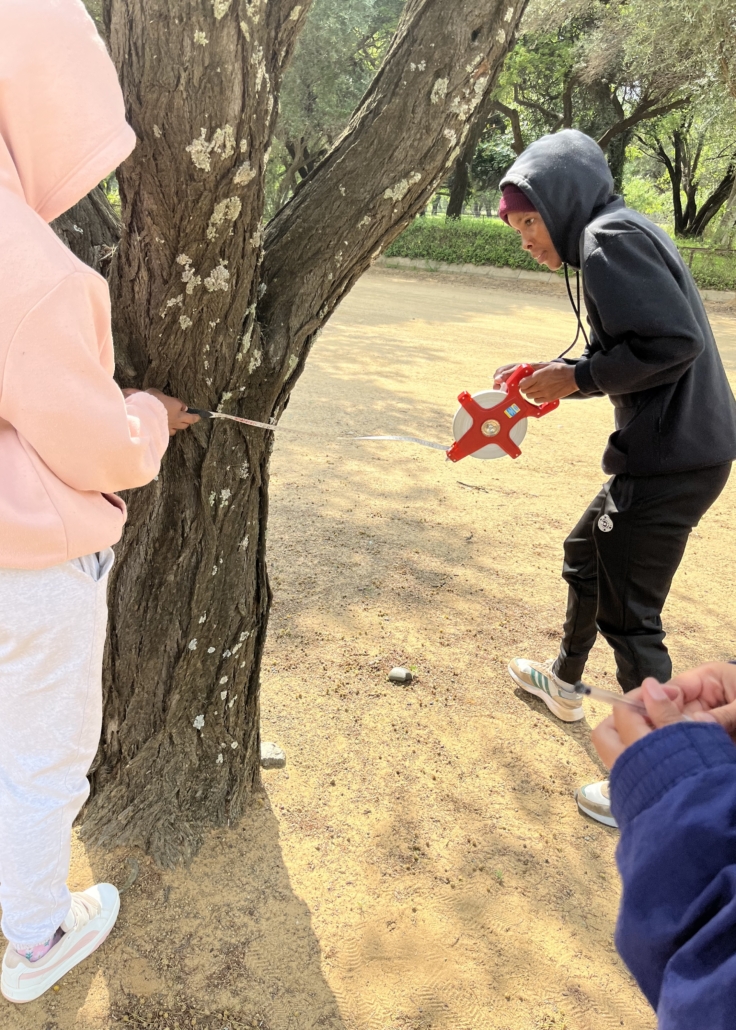
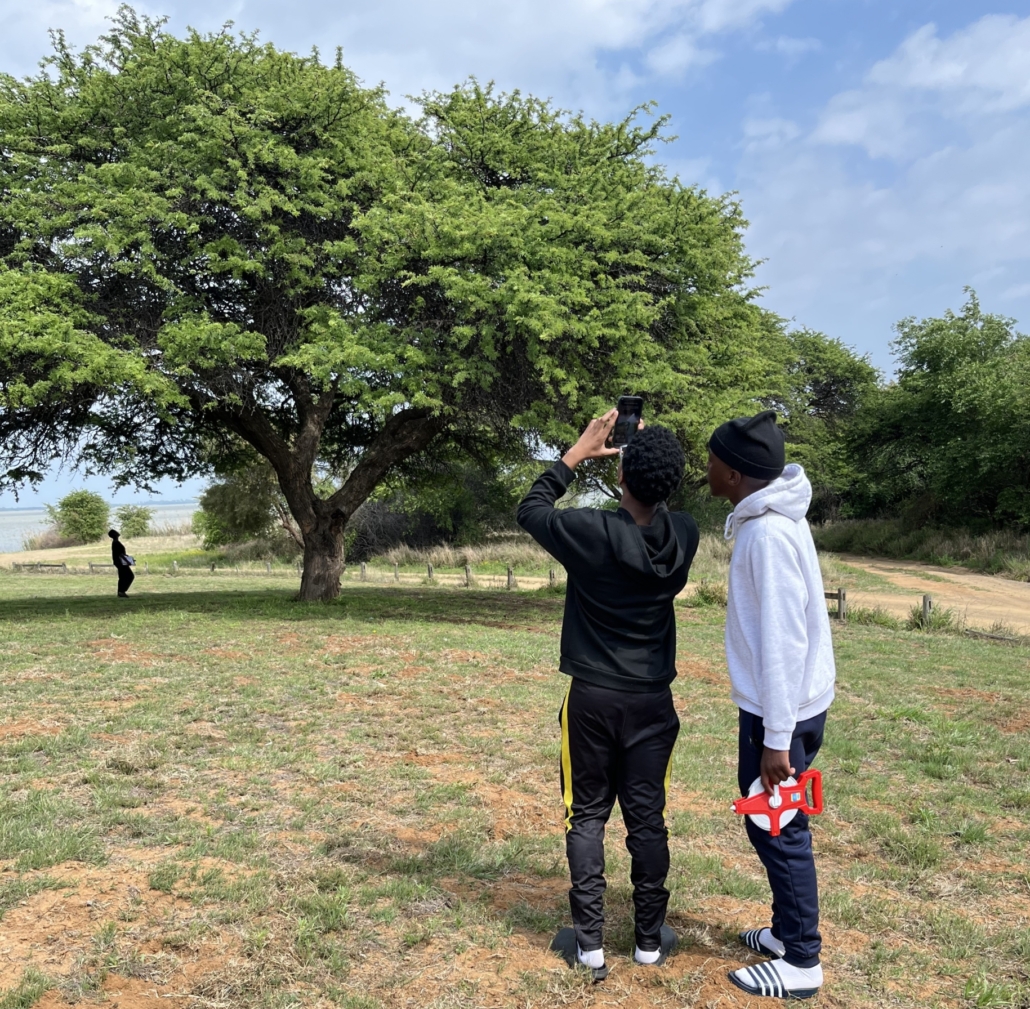
Participants collecting data and using citizen science tools (left and right)
Learners were introduced to core research projects addressing pressing environmental and developmental challenges. The goal of this activity was to engage groups in mini-research projects, encouraging them to investigate critical environmental issues facing South Africa and local communities. By doing so, the activity fostered curiosity, critical problem-solving skills, and scientific inquiry. To foster scientific communication, groups finalized their research projects and presented their findings to peers, facilitators, and educators. Lastly, to connect these hands-on experiences with future aspirations, learners participated in a dedicated career planning activity exploring pathways across STEM.
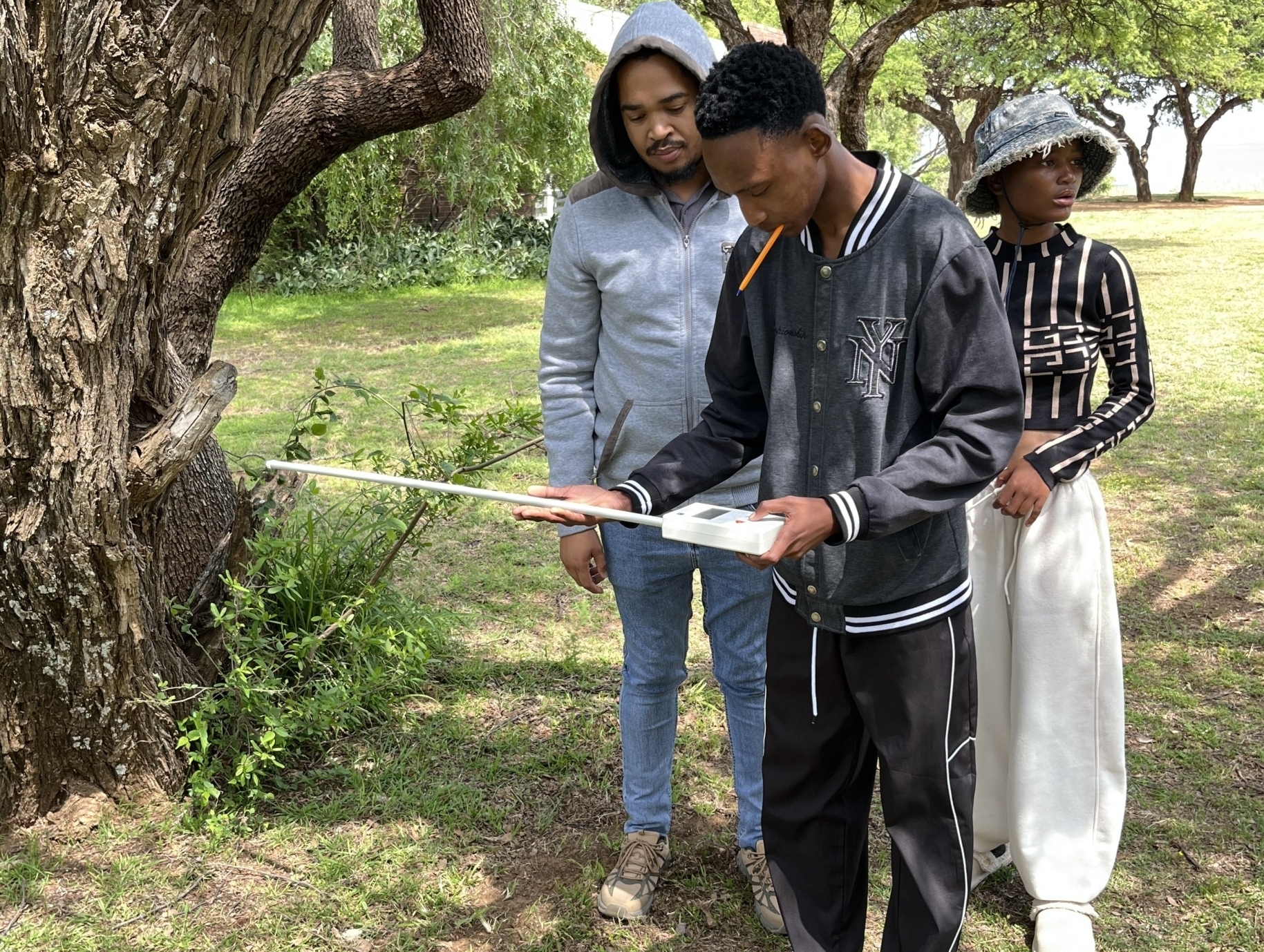
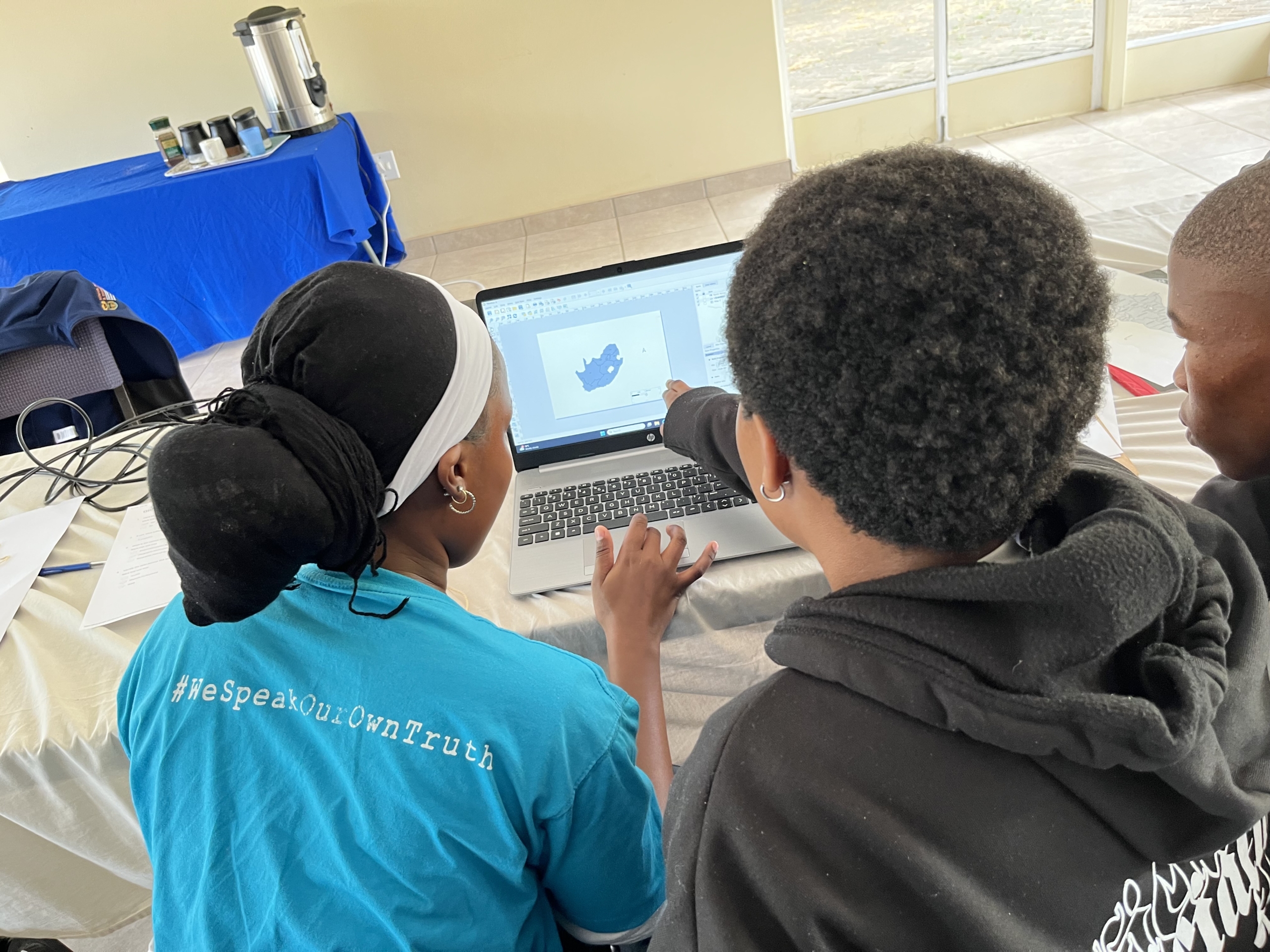
Learners evaluating photosynthetically active radiation (left) and utilizing QGIS for study site mapping (right)
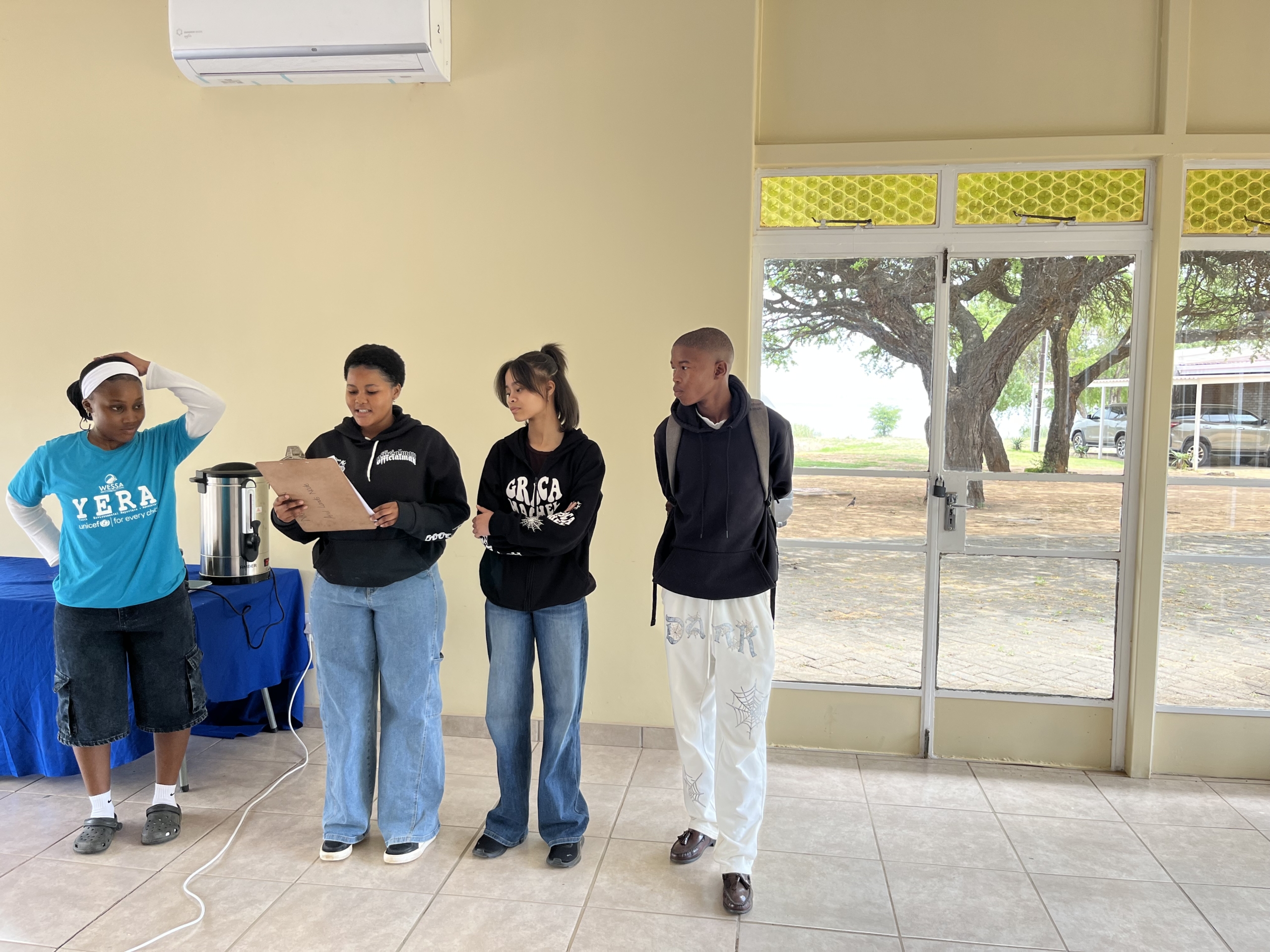

Learners during their field research reporting (left) and presenting their mini research projects (right)
Key Takeaways
