eNews
#04 2026
NRF-SAEON Egagasini Highlights Ocean Science and Community Partnerships at Nairobi Convention COP12 in Tanzania
By: Melissa Philander, NRF-SAEON, Egagasini Node
#04 2026
By: Melissa Philander, NRF-SAEON, Egagasini Node
From 6–9 October 2026, the NRF-SAEON Egagasini Node attended the 12th Conference of the Parties (COP12) to the Nairobi Convention in Dar es Salaam, Tanzania. The week provided an opportunity to share South African marine research, engage with partners from across the region and explore some of the challenges facing people whose livelihoods depend on the ocean.
The first major engagement was a side event hosted on 6 October titled “Empowering Women and Youth as Ocean Leaders: Untangling the Environmental Investment Challenges in Small-Scale Fisheries and Aquaculture.” Hosted by NRF-SAEON in partnership with the South African Network for Women in Fisheries and Aquaculture (SANWFA), Nelson Mandela University (NMU) and AUDA-NEPAD, the session looked at why small-scale fisheries and aquaculture enterprises often struggle to secure funding, even when their work supports environmental conservation and local livelihoods.
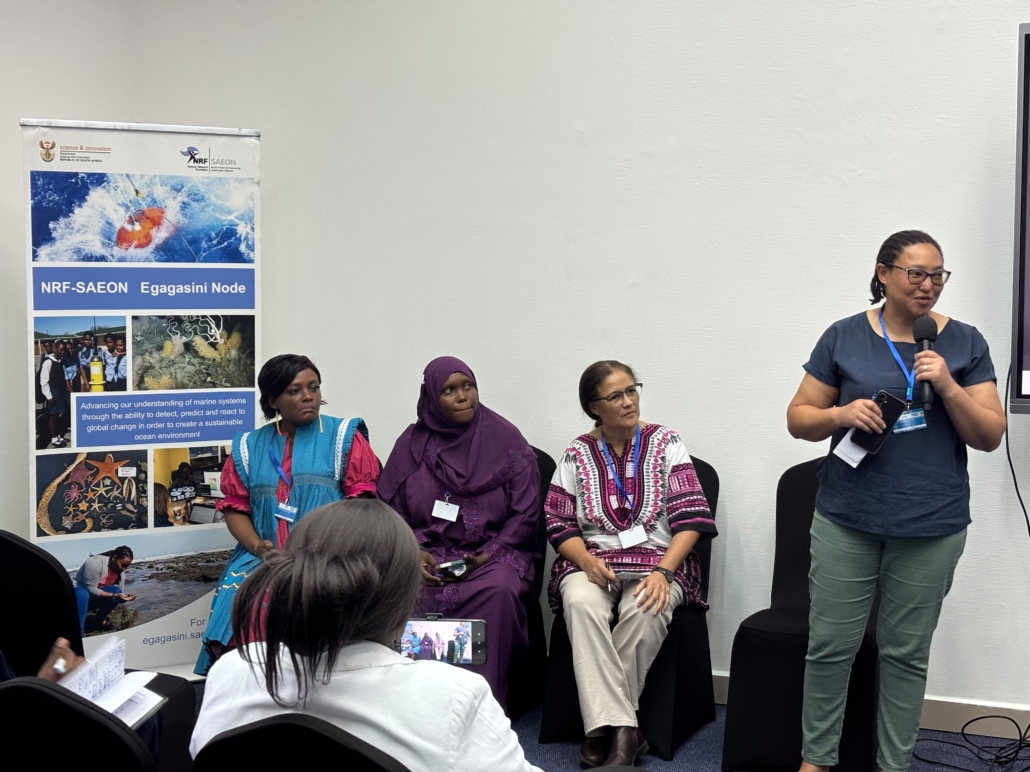
Panel discussion being moderated by Ms Nicole du Plessis
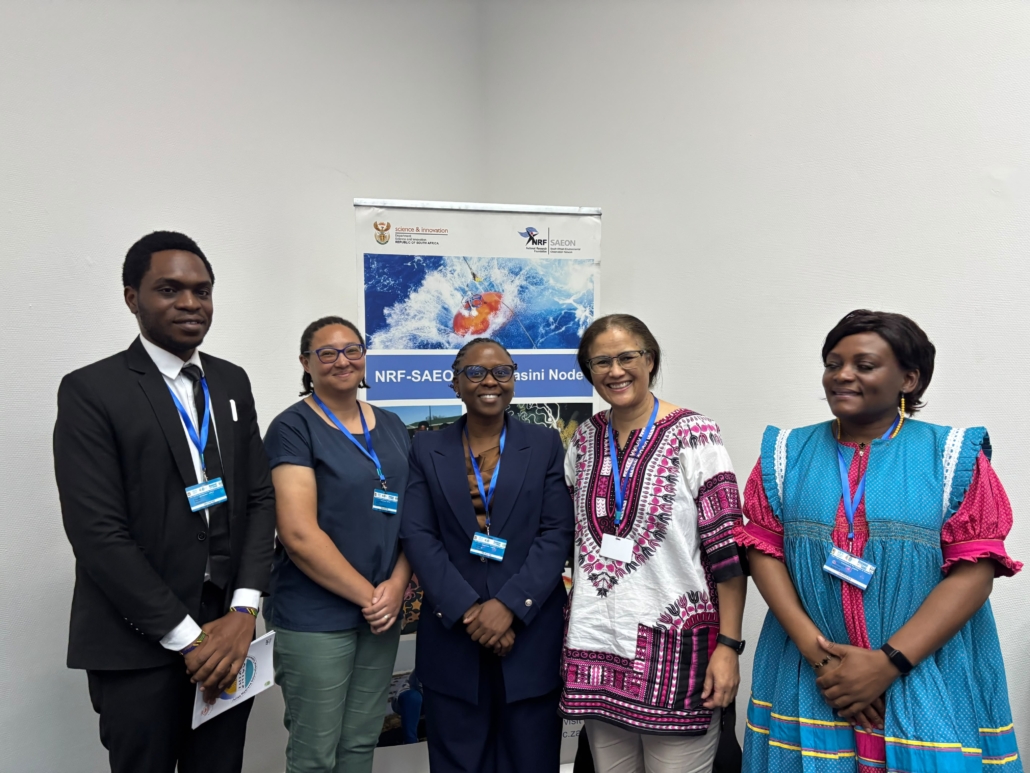
Panelists being joined by Ms Janeth Rukanda (middle)
Ms Janeth Rukanda, Acting Assistant Director for Aquaculture Development in Tanzania’s Ministry of Livestock and Fisheries, opened the session by outlining some of the challenges facing the sector, including limited access to finance, markets, technology and skills.
Moderated by Egagasini Node’s Science Officer, Ms Nicole du Plessis, the panel featured Ms Meali Mohamed Maule of Vanga Blue Forest in Kenya, Ms Mashebane Thosago of SANWFA and Dr Jessica Fraser of NMU. Their contributions brought practical experience to the discussion, from community-led conservation to fisheries and aquaculture initiatives.
One of the key questions was whether environmental data could help small businesses secure investment. Ms Maule highlighted how projects involving mangrove restoration and carbon credits can benefit coastal ecosystems and local communities, but also explained some of the challenges involved. These include the costs of monitoring and verifying environmental outcomes, the need for upfront funding before projects generate income, and fluctuating carbon-credit prices. The discussion also touched on regulatory processes that can make it difficult for small enterprises to get started.
The discussion highlighted that improving access to finance is only part of the solution. Businesses also need support with financial management, simpler ways to navigate regulatory requirements and access to environmental data that can help them demonstrate the value and sustainability of their work. Just as importantly, communities need a say in how projects are designed and how the benefits are shared. A proposed follow-up discussion with representatives from the banking and insurance sectors in early 2027 will take these conversations further and explore what financial institutions need to see before investing in the sector.
Alongside the side event, the Egagasini Node and SANWFA shared an exhibition stand throughout the conference. The stand featured South African ocean science and highlighted SANWFA’s work supporting women in fisheries and aquaculture. It also provided an opportunity to speak directly with delegates and visitors about the research taking place at NRF-SAEON and how it connects with initiatives on the ground.
A particular highlight was the visit by the Vice-President of the United Republic of Tanzania, Honourable Deogratius Ndejembi. During the visit, I had the opportunity to give a brief presentation on NRF-SAEON’s work and its partnership with SANWFA. With only two minutes to introduce the work, it was a valuable opportunity to share what the Egagasini Node does and highlight the connection between marine research and community-based initiatives. The stand was also visited by South Africa’s Deputy Minister of Forestry, Fisheries and the Environment, Mr Narend Singh.
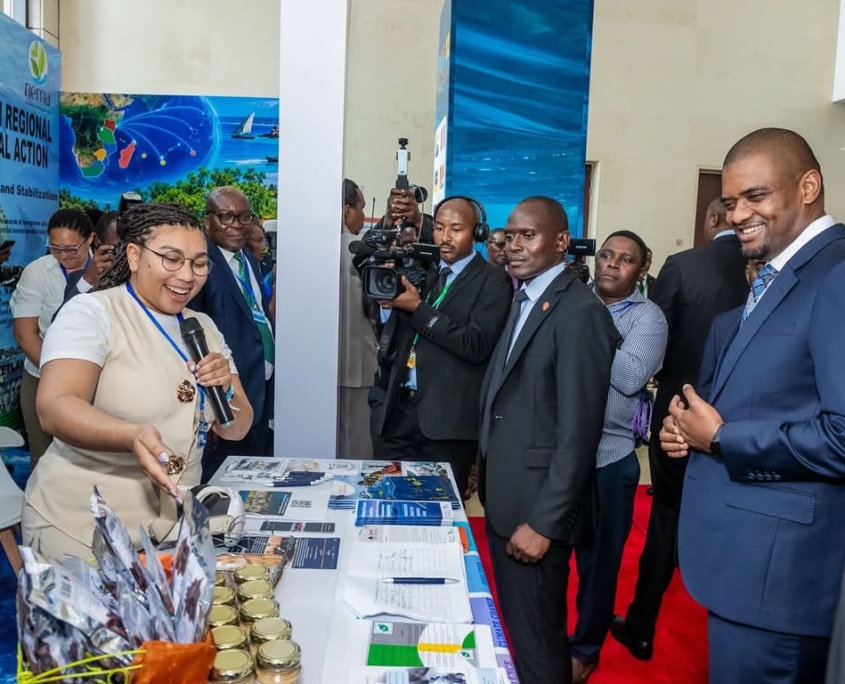
Ms Melissa Philander, NRF-SAEON engaging with Tanzania’s Vice President, Honourable Deogratius Ndejembi
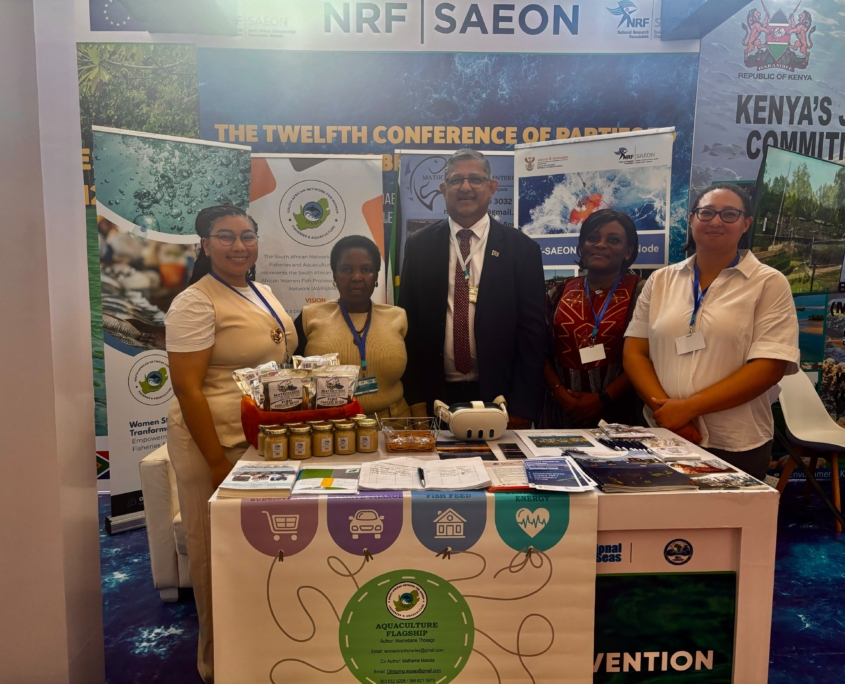
SAEON and SANWFA teams joined by DFFE Deputy Minister, Mr Narend Singh
The exhibition was a reminder of the importance of being able to communicate our work beyond the scientific community. Research does not exist in isolation; it can help inform decisions, support partnerships and contribute to addressing challenges faced by coastal communities.
Participation in COP12 forms part of the Egagasini Node’s ongoing work in ocean science diplomacy and regional cooperation. The discussions in Dar es Salaam highlighted the need to keep building connections between researchers, communities and the financial sector so that environmental knowledge can be put to practical use.
