eNews
#04 2026
Mentoring High School learners for Blue Schools and the Eskom Expo for Young Scientists competitions.
By Tarryn Johnson, Relebohile Shale, Hlalumi Kuzane, Mfundo Bizani, Marelé Nel,Godfrey Padare, and Nozi Hambaze

#04 2026
By Tarryn Johnson, Relebohile Shale, Hlalumi Kuzane, Mfundo Bizani, Marelé Nel,Godfrey Padare, and Nozi Hambaze
The NRF-SAEON Elwandle Node, Shallow Marine and Coastal Research Infrastructure (SMCRI) staff, recently hosted four high school learners from Ndzondelelo, Cingani, and Motherwell High Schools. These are all Quintile 1 (low socio-economic status) schools in Zwide and Motherwell locations in Gqeberha. Driven by curiosity and a desire to solve environmental challenges in their local communities, learners Sikhusele Nkotobe and Achuma Mdingi from Ndzondelelo High were brought to NRF- SAEON by their dedicated educator, Mr Vuyo QweQwe. With hands-on laboratory supervision and guidance from the biogeochemistry platform team. Both learners developed green, budget-friendly research projects that earned them a silver and a gold medal at the Regional Eskom Expo for Young Scientists, with one advancing to national representation. While Masonwabe Nabe of Cingani High received a gold medal at the Eskom expo regional fair for his project, which focused on a comparison of carbon stocks between salt marshes and salt pans in the Swartkops Estuary. Aqhama Nomabhunga did not enter his project in the science expo; however, all these learners entered their projects in the Blue School Competition.
Key Project Highlights
Achuma Mdingi: “PaperPure” Vetiver Water Filter
Achuma investigated an eco-friendly water treatment by developing “PaperPure” an antimicrobial filter paper created from locally harvested Vetiver grass leaves (collected in Joe Slovo) treated with green-chemistry iron acetate synthesised from steel wool and household vinegar.
His key findings, from using the UV-spec for quantitative analysis and incubation analyses revealed that boiled Vetiver grass loaded with iron acetate was most effective for antibacterial filtration, showing minimal microbial growth after two weeks. While hand-ground grass powder offered higher surface area for methylene blue dye removal, the grinding process destroyed the structural fibres required for sustained filtration.
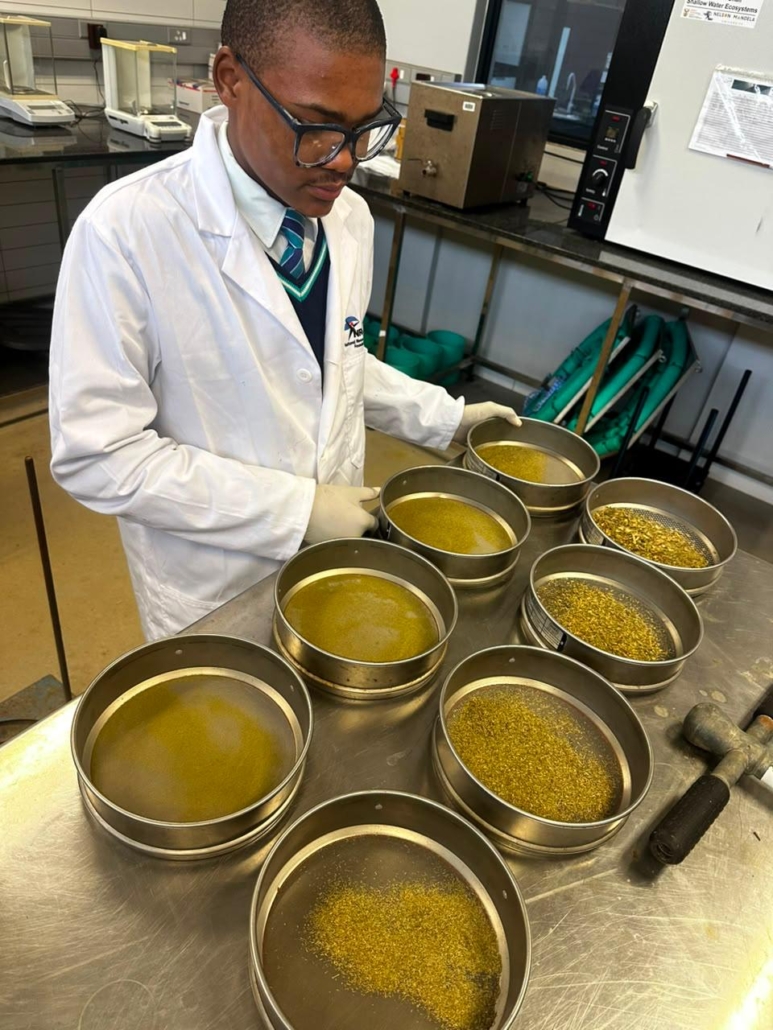
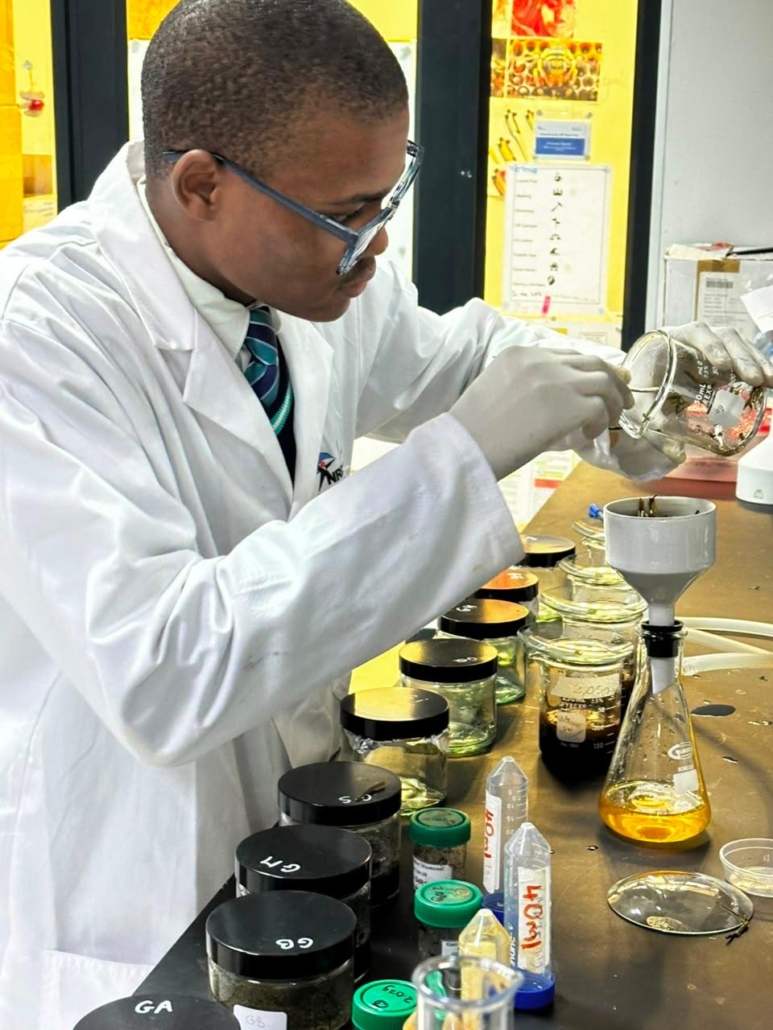
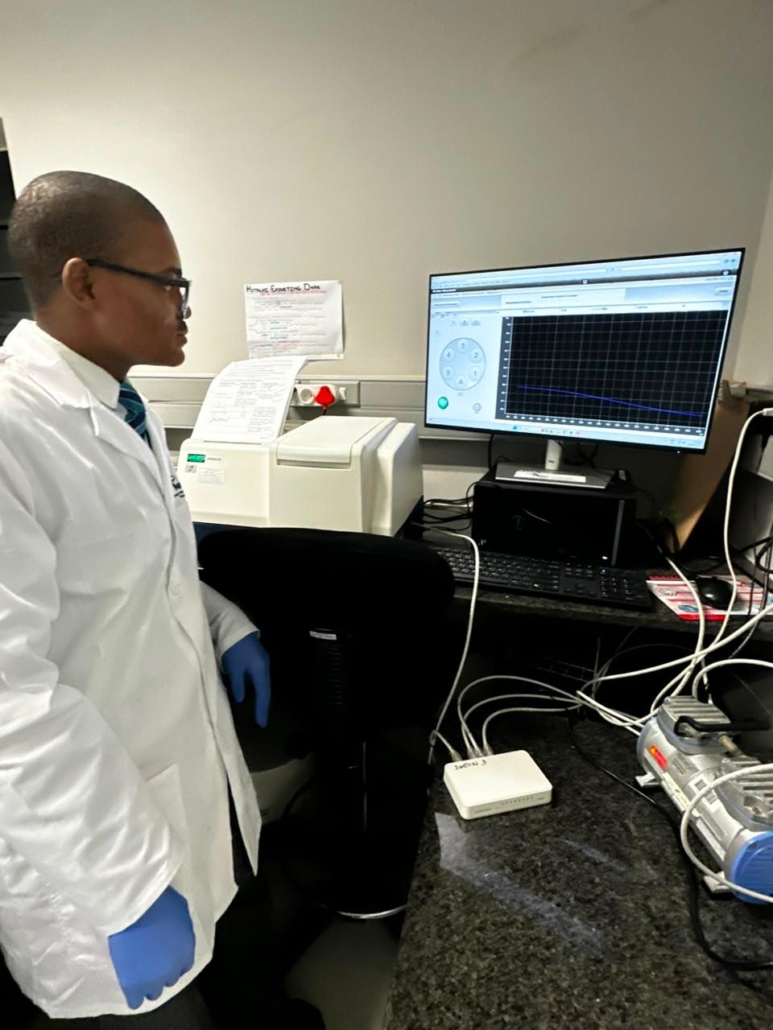
Achuma – Lab Process and Analysis of his PaperPure
Sikhusele Nkotobe: Carbo-S Polymer for Dual Water Action
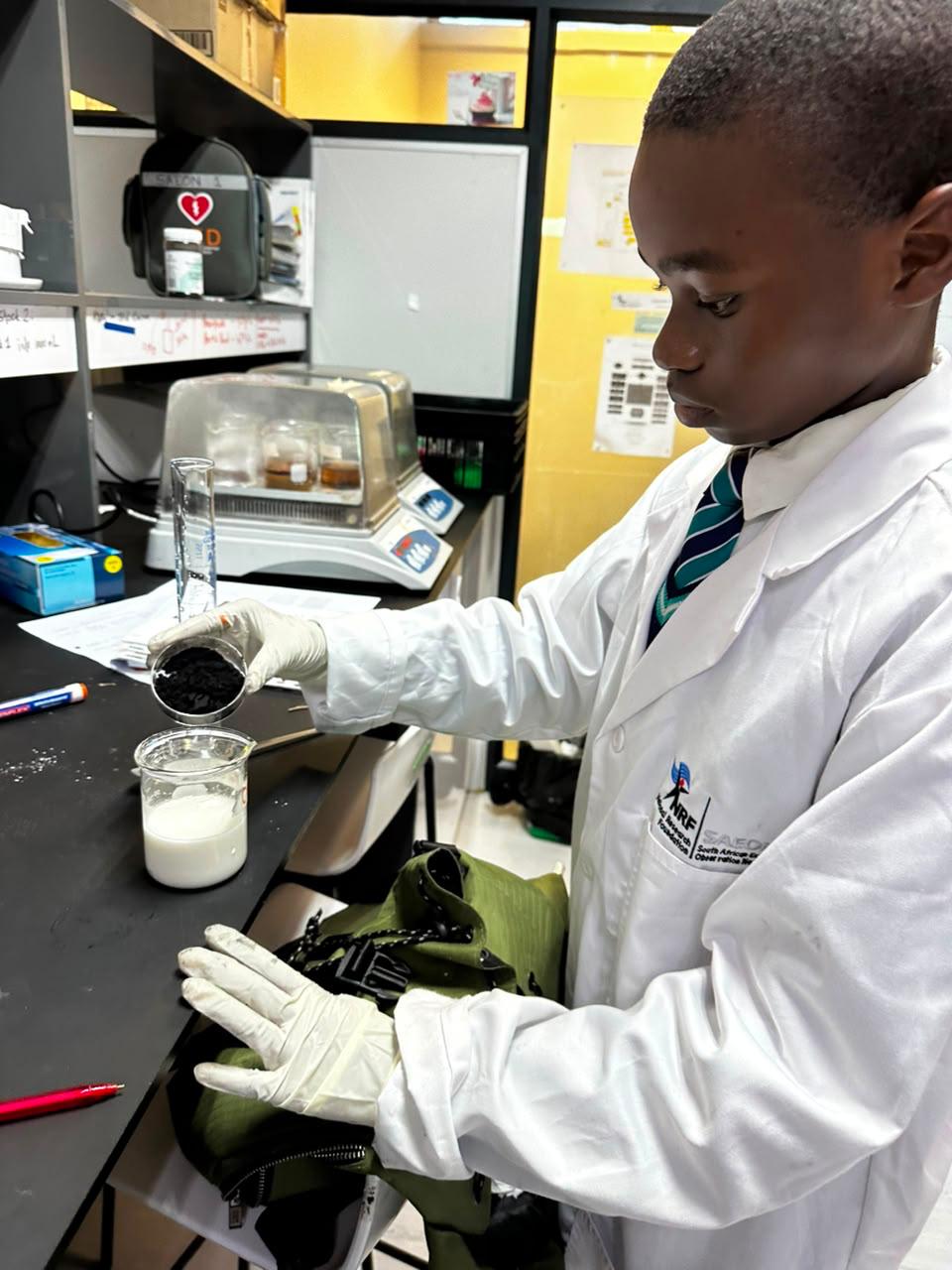
Sikhusele tackled water pollution and water scarcity simultaneously by engineering a “Carbo-S Polymer” (CSP, a microporous composite cryogel blending biodegradable starch with activated carbon). He tested its dual capability to purify contaminated water while improving moisture retention in estuarine sediments collected from the lower, middle and upper ridges of the Kromme River Estuary within the Eastern Cape.
His key findings were that higher concentrations of activated carbon dramatically improved water purification, achieving over 99 % reduction in total dissolved solids (TDS) for water hardness. However, increased activated carbon did not translate to better soil water retention; lower-activated carbon starch-balanced formulations provided more consistent moisture retention over time.
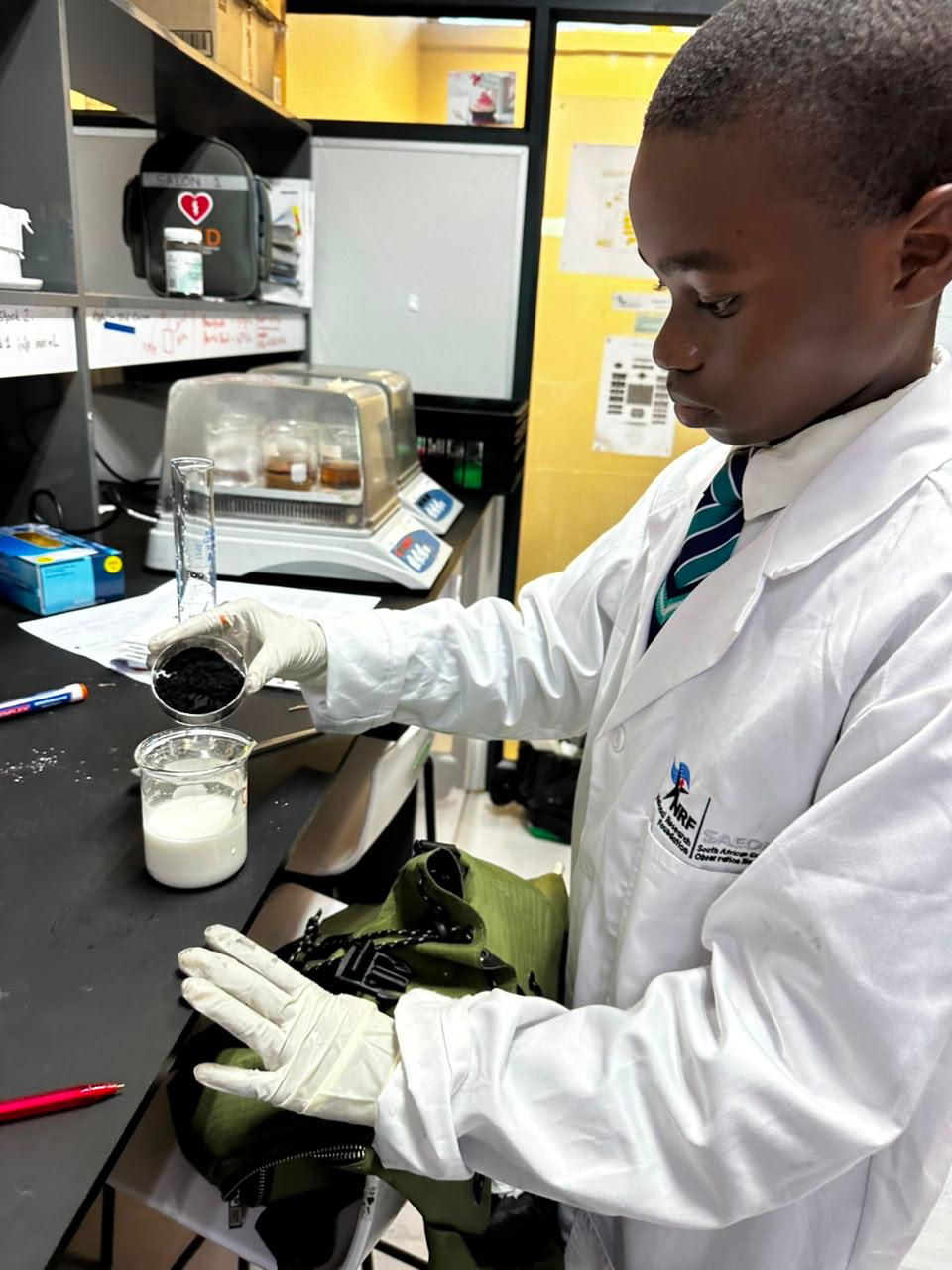
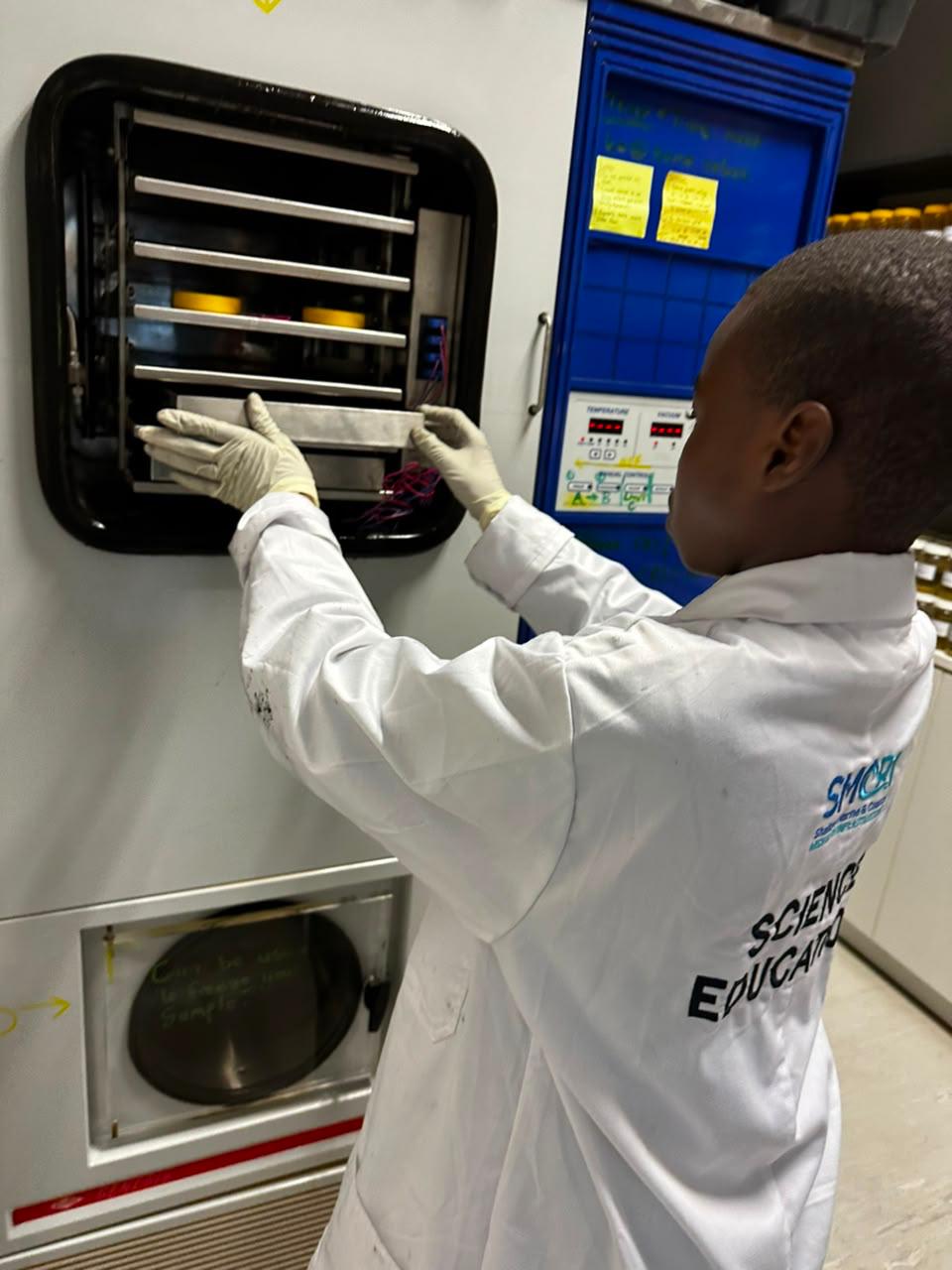
Sikhusele in the lab synthesising his CSP
Aqhama Nomabhunga: Seasonal composition of Zooplankton in Algoa Bay.
Aqhama investigated seasonal changes of zooplankton community composition of Algoa Bay in relation to environmental variables. This was done by analysing and identifying zooplankton samples collected during different seasons (spring and summer 2025; and autumn and winter 2026).
Key findings showed that zooplankton composition varied over different seasons. The changes in zooplankton composition were attributed to changes in water temperatures and fluorescence (proxy for phytoplankton biomass), linked to nutrient availability during spring and summer as a result of wind-driven upwelling. Wind-driven upwelling is an oceanographic process that transport cold, nutrient rich water from depth towards the surface, and is a feature that occurs frequently during spring and summer in Algoa Bay as a result of easterly winds. As such, during the spring and summer, zooplankton composition was dominated by large Calanoid copepods, whereas in autumn red tide forming mixotrophic dinoflagellate Noctiluca scintillans dominated.

Aqhama of Motherwell high looking at the sample
Masonwabe Nabe: A comparison of carbon stocks between salt marsh and salt pans in the Swartkops Estuary.
Masonwabe took cores sampled in the salt marsh and the old salt pans of the Swartkops Estuary. The salt marsh and salt pan cores were separated into 5-10 cm segments and analysed for organic carbon stocks in the Shallow Marine and Coastal Research. Infrastructure Blue Carbon lab at the SAEON Elwandle Node. In the laboratory, Masonwabe Nabe prepared his samples for particle size analyses, biomass estimation and organic carbon content. The laboratory analyses took two weeks of daily work and required critical thinking and analysis required of any research project.
His findings were that the salt marsh sediment core contained a combined carbon stock of 9.11% compared to 7.94% in the salt pans. This indicates that both the modified salt pan area and the salt marsh are valuable for their carbon storage. However, the greater value of the salt marsh shine when including the carbon stock in the biomass of 32.985% (above-ground biomass) and 27.61% (below-ground biomass).
Competitions Outcomes
Aqhama and Masonwabe were selected to present their projects at the Blue Schools conference held in Umhlanga, Durban. Masonwabe was also awarded a gold medal for his project at the regional science expo.
Achuma earned a silver medal at the Regional Eskom Expo and was selected to represent the Eastern Cape at the International Science Fair (ISF) in Johannesburg, where he secured a Silver medal.
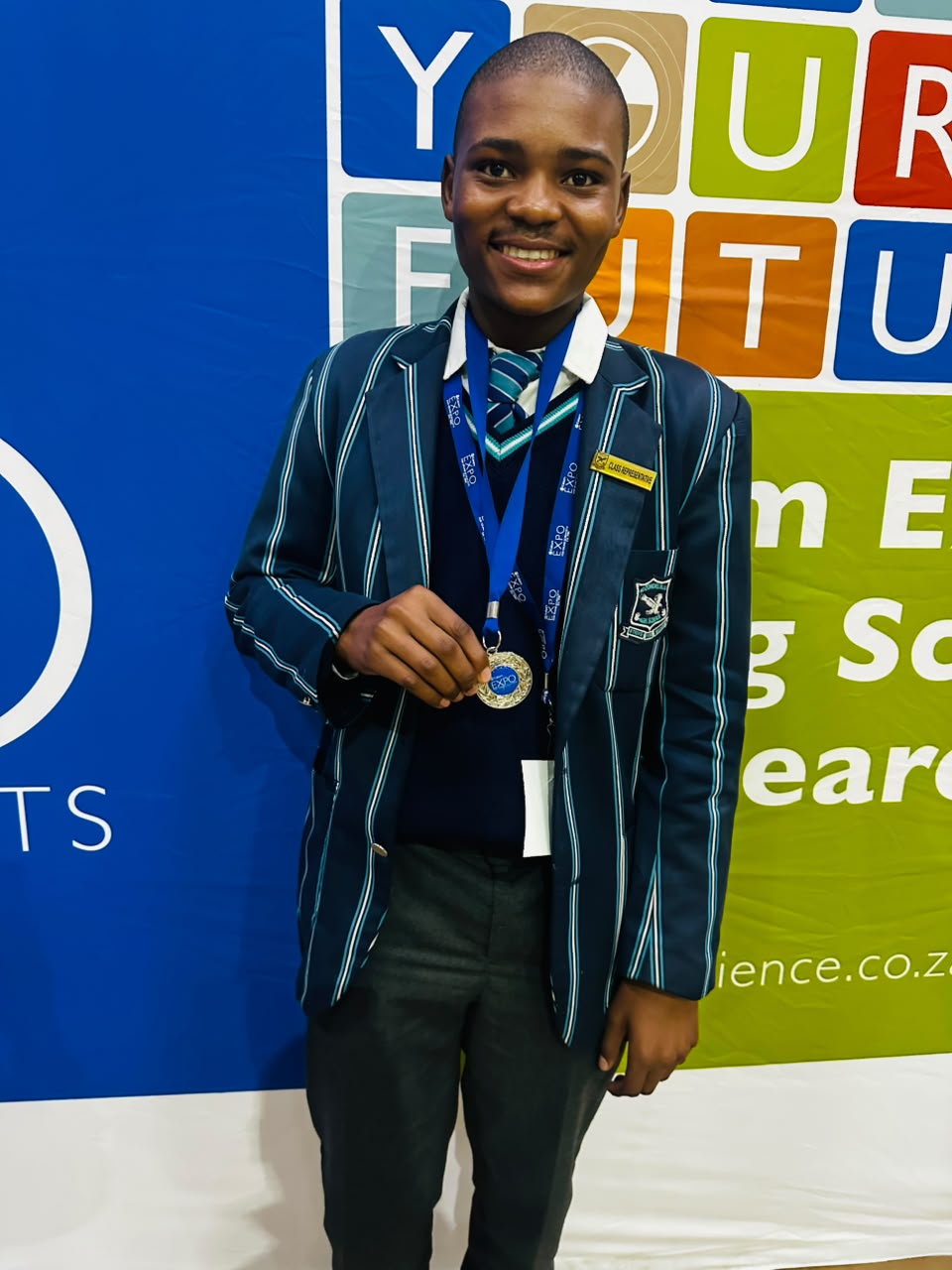
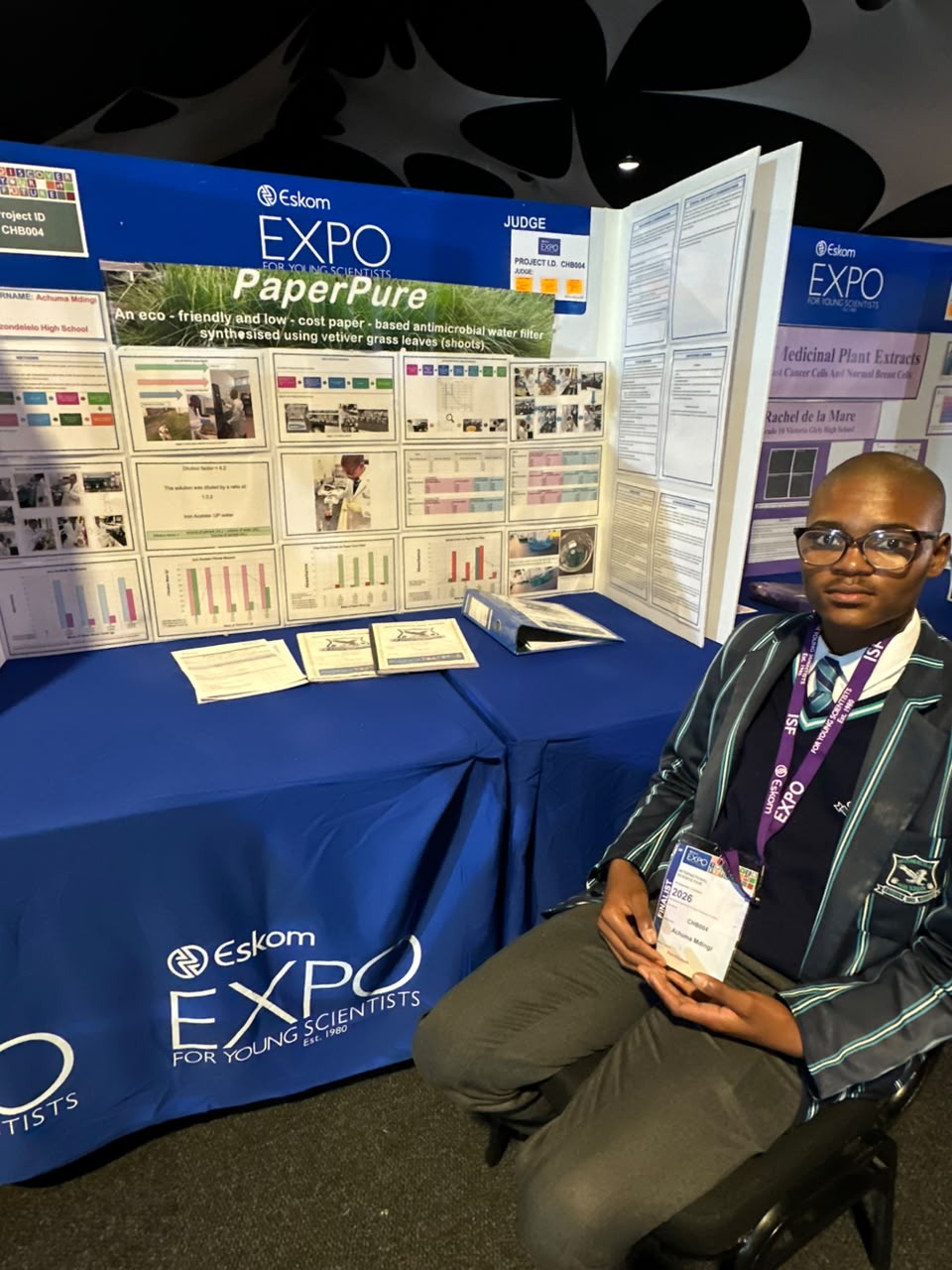
Achuma at Eastern Cape Regionals (LEFT) and at ISF (Right)
Sikhusele won a gold medal at the Regional Eskom Expo and was invited to present his findings at the Blue Schools Conference and won best project at the Blue Schools Conference.
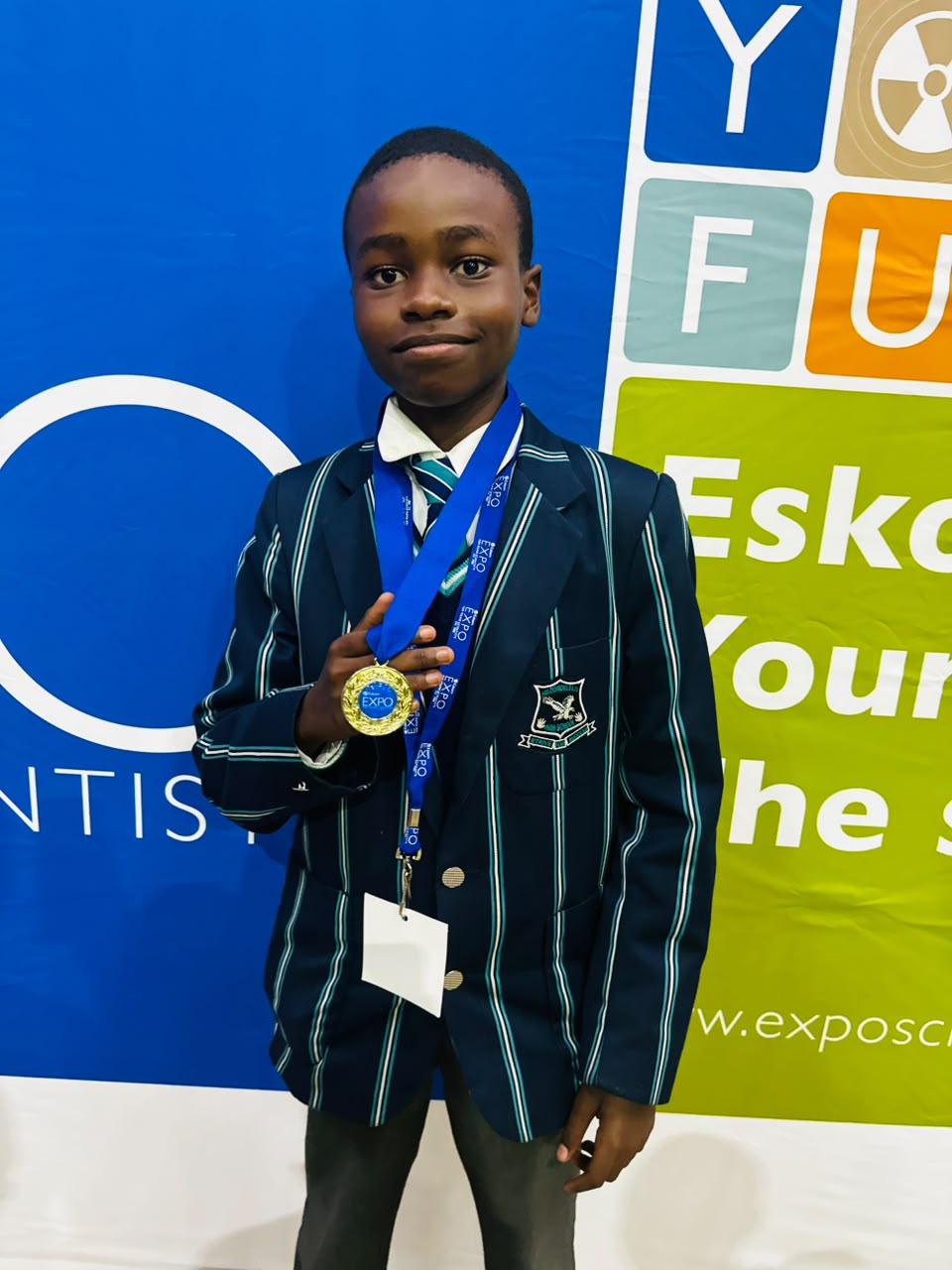
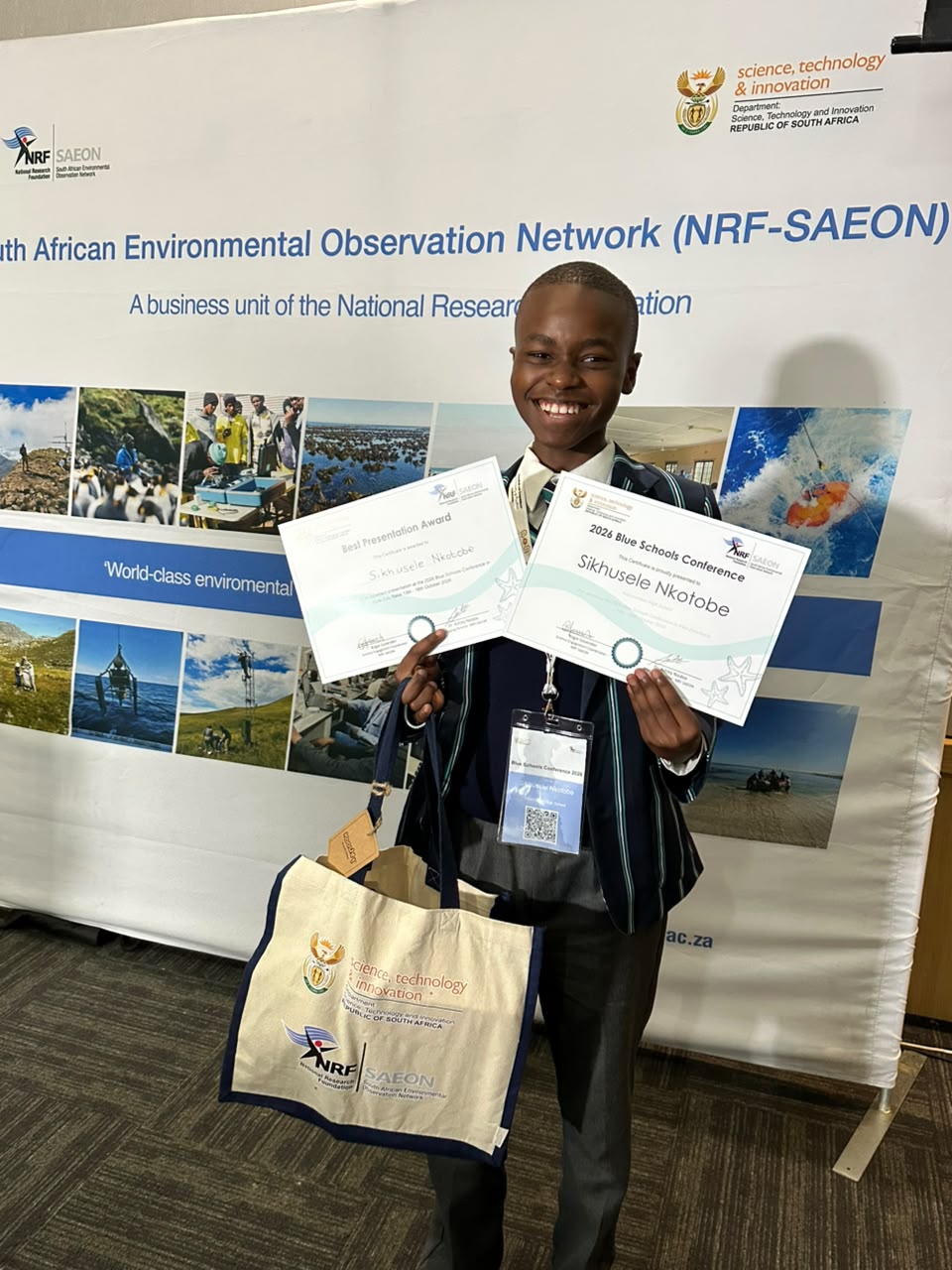
Sikhusele at Eastern Cape Regionals (LEFT) and at SAEON Blue Schools (Right)
Achuma’s and Sikhusele’s scientific understanding and development from this opportunity was rooted in experiencing the full scientific process, first-hand. Discovering that initial hypotheses can be disproven once data is thoroughly analysed. Achuma initially hypothesised that hand-ground grass would outperform boiled grass across all parameters due to its surface area, but experimental testing proved that physical fibre structure was crucial for bacterial retention. Sikhusele experienced how scientific analysis refines an answer to a hypothesis. He originally hypothesised that a single polymer formulation would perform uniformly well across both filtration and retention. However, his data analysis revealed that material composition must be adjusted to meet the targeted application.
Mentorship in the development of projects and use of the laboratory for analysis.
Throughout the practical research phases, the learners were guided through essential laboratory safety, correct pipetting and analytical techniques, data logging, and operating advanced laboratory instrumentation. This step-by-step mentorship ensured that all projects maintained strict scientific rigour while encouraging the learners to generate, present and interpret unexpected results independently. The success of these young researchers demonstrated that when learners are supported with mentorship and facilities, they can produce good scientific solutions regardless of the school’s economic background.
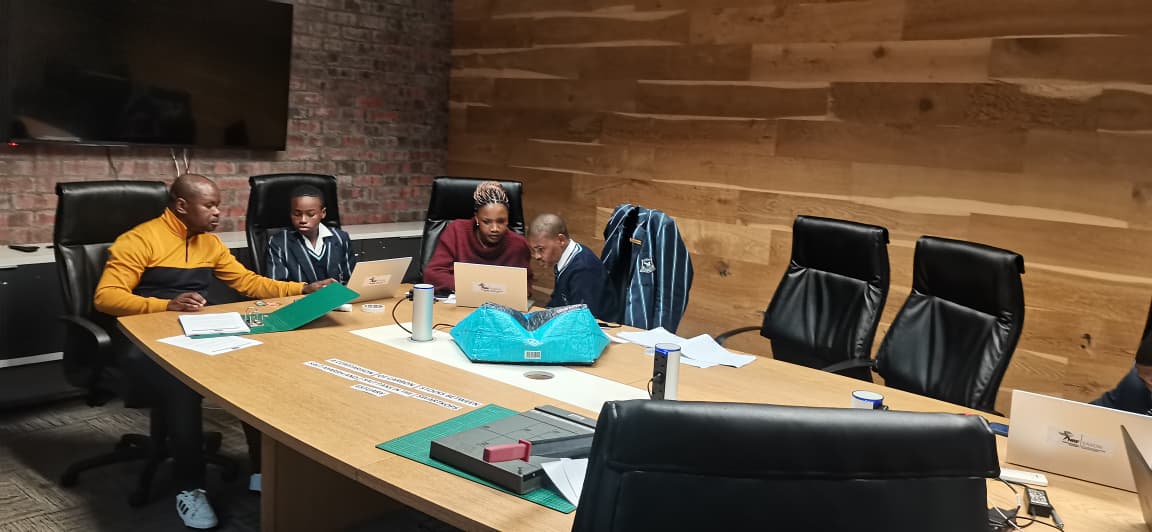
Sikhulele and Achuma Refining their Project Submissions
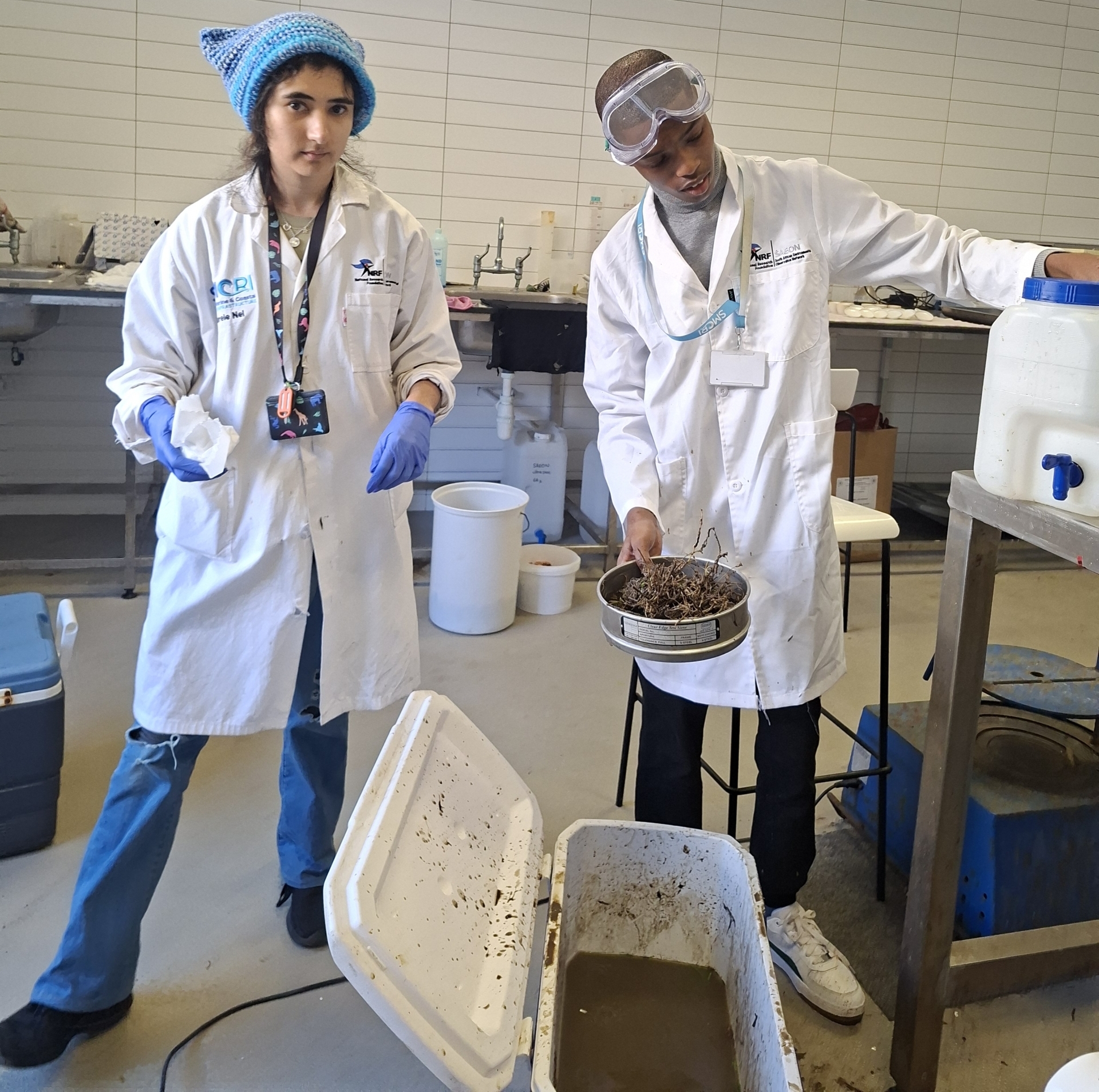
Masonwabe of Cingani High and Marele Nel in the lab
Both learners plan to refine and expand their research projects in the coming year. As SAEON Elwandle continues to nurture young scientific minds and build capacity from the ground up, these bright Grade 8s have shown that great innovation truly grows at the grassroots level, sometimes quite literally, as Achuma demonstrated by pulling Vetiver grass straight out of the local soil to filter clean water for his community.
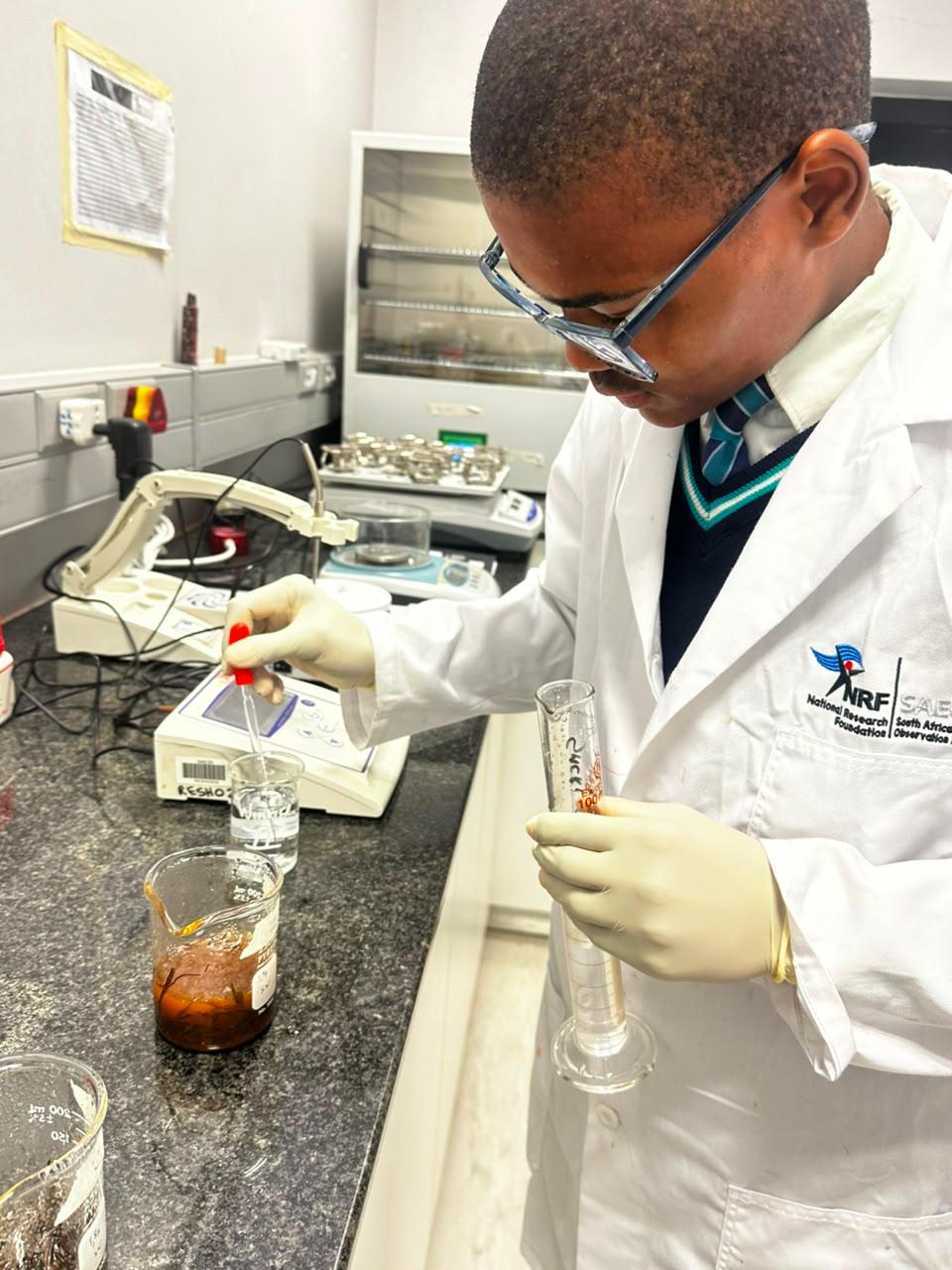
Sikhulele and Achuma in Action
