eNews
#05 2025
From intern to technician: A journey of growth and discovery
By Tsumbedzo Ramalevha, Biodiversity Technician, EFTEON
#05 2025
By Tsumbedzo Ramalevha, Biodiversity Technician, EFTEON
Internships enhance employability and are therefore crucial for graduates in South Africa. Professional conduct during an internship is equally important, as it shapes perceptions, opens doors to future opportunities and helps interns to learn and grow, both personally and professionally.
My path to becoming a biodiversity technician was shaped long before my internship with NRF-SAEON. It began in my childhood, where my father, an environmental monitor for the local tribal council, and my mother, a skilled traditional herbalist, taught me to see the world differently. From my father, I learned the importance of careful observation and the deep responsibility we have to protect our natural resources. My mother opened my eyes to the intricate relationship between plants and people, and the healing power and rich history found in the vegetation around us.
Growing up with their combined wisdom, I was always close to the environment, and it was this upbringing that laid the foundation for my lifelong journey of growth and discovery.
Five years ago I began an internship with NRF-SAEON’s Nlovu Node, an experience that would fundamentally shape my path as a biodiversity technician. At the time, I was a graduate student interested in environmental observation, seeking on-the-job expertise to determine whether this was indeed the field I wished to pursue full-time.
Looking back on my internship years, it is clear that my goals were centred on foundational skills and personal growth, developing professional relationships, learning scientific writing and mastering technical tools like QGIS and R software. My mentors recognised this eagerness: “Tsumbedzo’s eagerness to learn new skills is characterised by enthusiasm, focus and good planning.” Rion Lerm (Ndlovu Node technician)
The internship exposure was more than just a box to tick on my CV; it was a launchpad for my career. It was where the theoretical knowledge from my studies was grounded in the real-world application of science. I spent my days on essential fieldwork, meticulously collecting data and maintaining a plant trait database. The hands-on work, often in the breathtaking landscapes of the Kruger National Park, taught me the true value of careful observation and data integrity.
More importantly, it taught me that a career in biodiversity observation is not just about species lists and ecological models; it is about connecting with people. My role as an intern involved engaging with communities. As one outreach coordinator observed: “He fits in well and kids can relate to him. He is open to new ideas and shares his views willingly.” – Joe Sibiya (Ndlovu Node outreach coordinator)
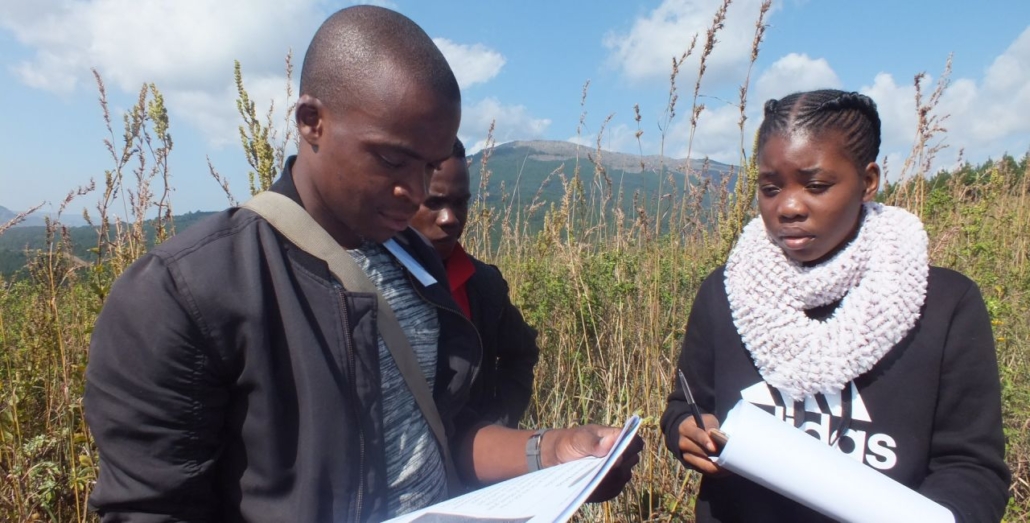
Tsumbedzo (left) assisting learners from Ba-Phalaborwa municipality during the 2019 grade 10 science camp in Haenertsburg.
Upon completing the internship in March 2021, I joined the Forb Ecology Research Group at North-West University (NWU) as a PhD student under the supervision of Prof. Frances Siebert (NWU) and Prof. Dave Thompson (NRF-SAEON). My PhD project is looking at the ability of plants to absorb disturbance and remain functional (resilience).
I was invited to join a research working group, sUnderfoot, at the German Centre for Integrative Biodiversity Research in Leipzig, Germany. The group focused on the functional diversity of belowground plant strategies in a rapidly changing world to standardise the sampling protocols, identify gaps in data and co-author research articles. I was also invited to spend a month in Zaragoza, Spain, at the Spanish National Research Council (CSIC). These opportunities allowed me to entrench myself in a global network of seasoned and emerging researchers that stands me in good stead for further scientific growth.
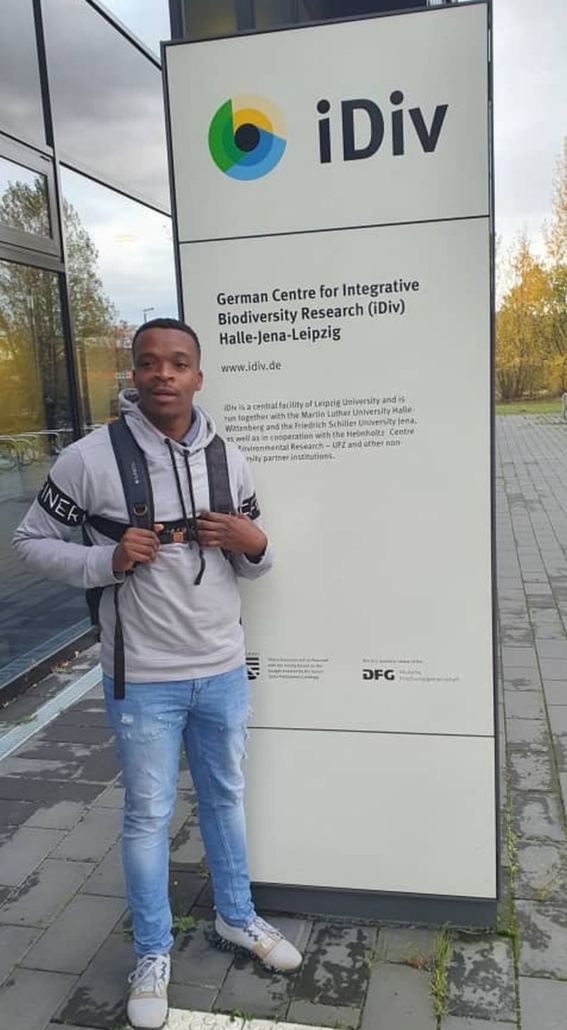
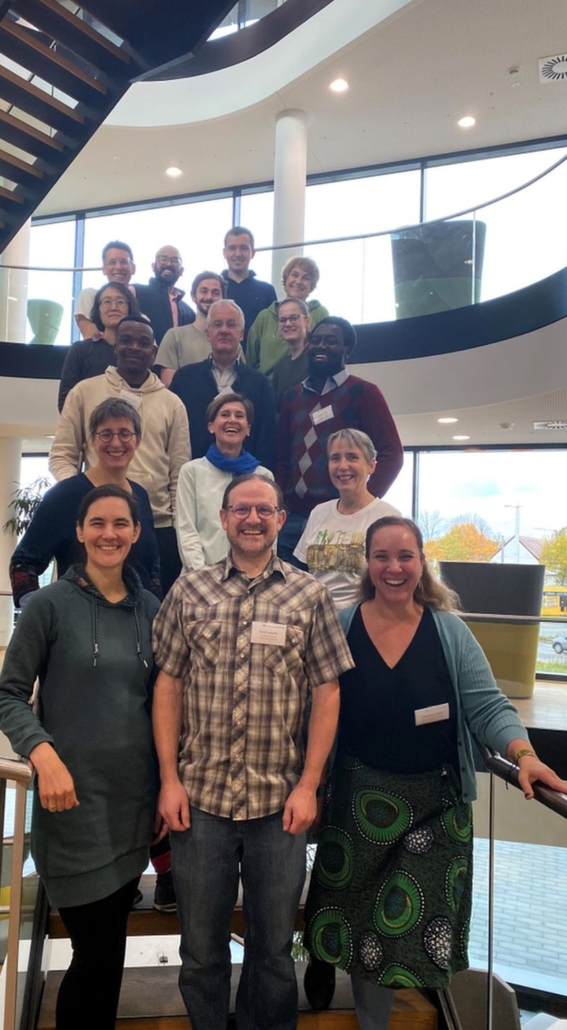
At the iDiv centre in Leipzig, Germany, with fellow sUnderfoot group members.
My journey from SAEON biodiversity intern to SAEON PhD student (finalising soon) and now to EFTEON biodiversity technician has been one of deepening my roots in practical science. This journey highlights a shift from foundational learning to professional application. This change in roles represents a transition from a learner to a contributor.
Though it is still early days, my core responsibilities as a biodiversity technician have shifted from assisting with tasks to actively managing projects and mentoring others. I am now tasked with the training, mentoring and technical development of technicians and community members, ensuring a legacy of skills and knowledge transfer.
Building and maintaining long-term environmental monitoring platforms is crucial because they provide the foundational data for scientific discovery and meaningful contributions to the field. This essential work – from meticulous fieldwork to careful data entry – is what enables us to understand our environment over time. In turn, this understanding empowers us to make informed decisions that improve and sustain healthy human livelihoods.
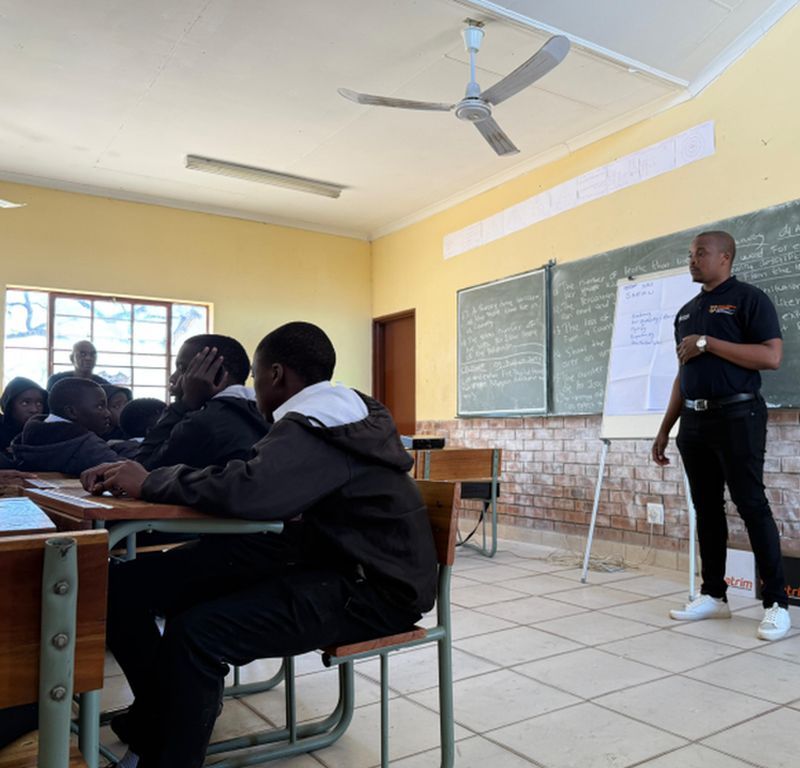
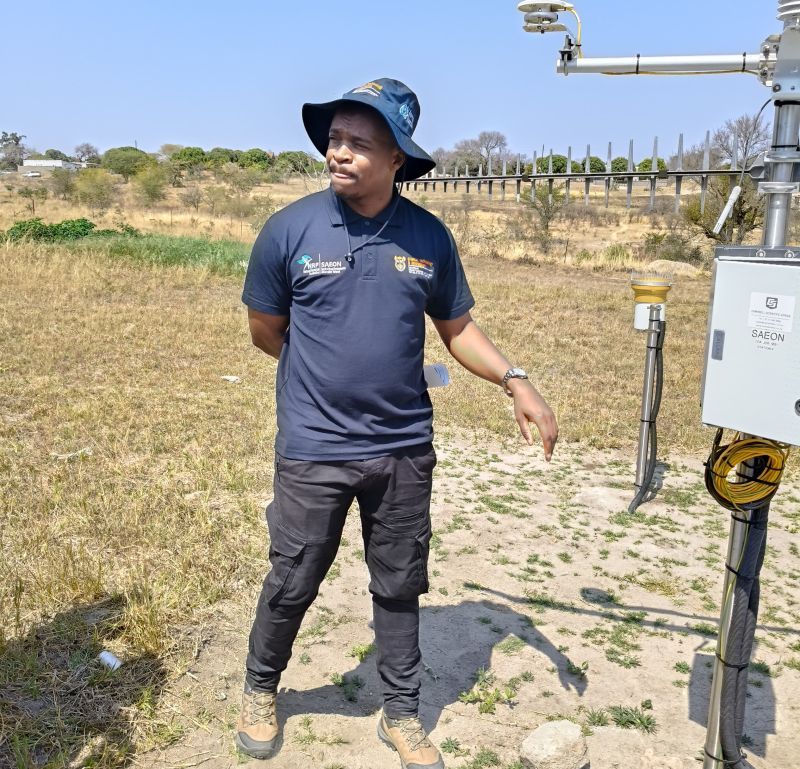
Tsumbedzo addressing learners during EFTEON’s visit to Mahlale High School during National Science Week (left) and a visit to the Agincourt weather station (right).
May NRF-SAEON continue to be a platform for training our future scientists. To my EFTEON colleagues, let us develop initiatives to enhance public understanding and participation in environmental monitoring, thereby fostering a science-literate and engaged society for a sustainable future.
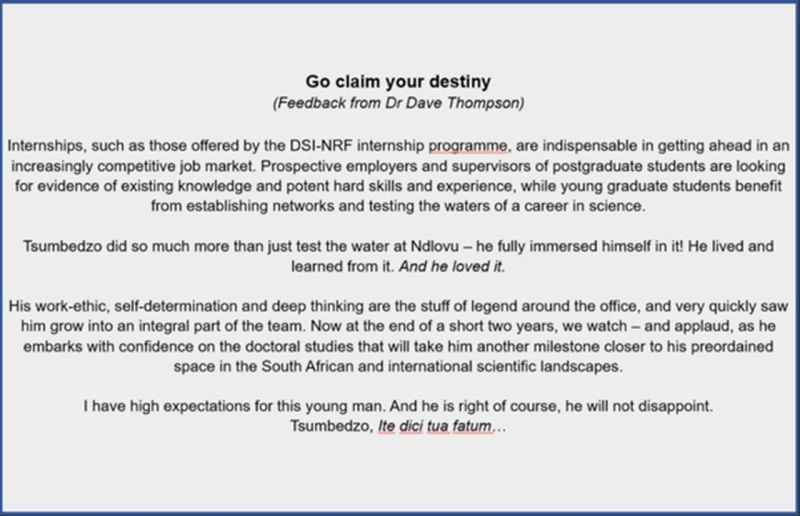
My journey from biodiversity intern to biodiversity technician was made possible by Prof. Dave Thompson, who mentored and guided me from my internship to my PhD studies. I am deeply grateful to Prof. Thompson for noticing my potential during the internship and for supporting me all the way.
