eNews
#02 2026
Trading squat lobsters for sponge crabs
Dr (Thomas) Arno Botha, SAEON Egagasini PhD and Postdoc

#02 2026
Dr (Thomas) Arno Botha, SAEON Egagasini PhD and Postdoc
In 2020 whilst doing an internship with SAEON Egagasini Node, under the supervision of Dr Lara Atkinson I fell in love with deep-sea research. Spending time on numerous demersal cruises collecting, identifying and documenting benthic invertebrates had me hooked (excuse the pun). In fact, I enjoyed it so much that I thought: “How can I combine this with my other passion, crustacean taxonomy?” After giving it some thought, Lara and I came up with the idea of revising the taxonomy of South African squat lobsters as a PhD project. This was perfect timing, as Lara’s FBIP SeaMap project was soon to be starting, with my PhD embedded within. Squat lobsters are a mostly deep-sea group of crustaceans that resemble lobsters, but are in-fact anomuran crabs, which means they only have four pairs of legs and are closely related to hermit crabs. They are a poorly-known group, and researchers like Lara and Professor Kerry Sink from SANBI have been encountering squat lobsters on underwater footage for years, but unfortunately identifying these animals to species-level was virtually impossible and hence a PhD was born.
In 2021 I started my PhD at the University of Cape Town with Lara as my supervisor, along with local marine biology legend Emeritus Professor Charles Griffiths and international squat lobster expert Professor Enrique Macpherson. In 2024, under the guidance of these three individuals, I was able to achieve our goal of providing a comprehensive revision on the group, increasing the number of species known from South Africa from 32 to 44, adding more than ten new species records, six new genus records and two new species. The new species have since been described in two separate publications, the first being a species that has remarkably big pincers/arms (which earned it the nickname ‘Popeye squat lobster’; see Figure 1). This species was described as Galathea noboya, an incredibly hairy species, hence we used the Xhosa word noboya which translates to hairy or fluffy (Botha et al. 2025 https://doi.org/10.11646/zootaxa.5661.3.2).
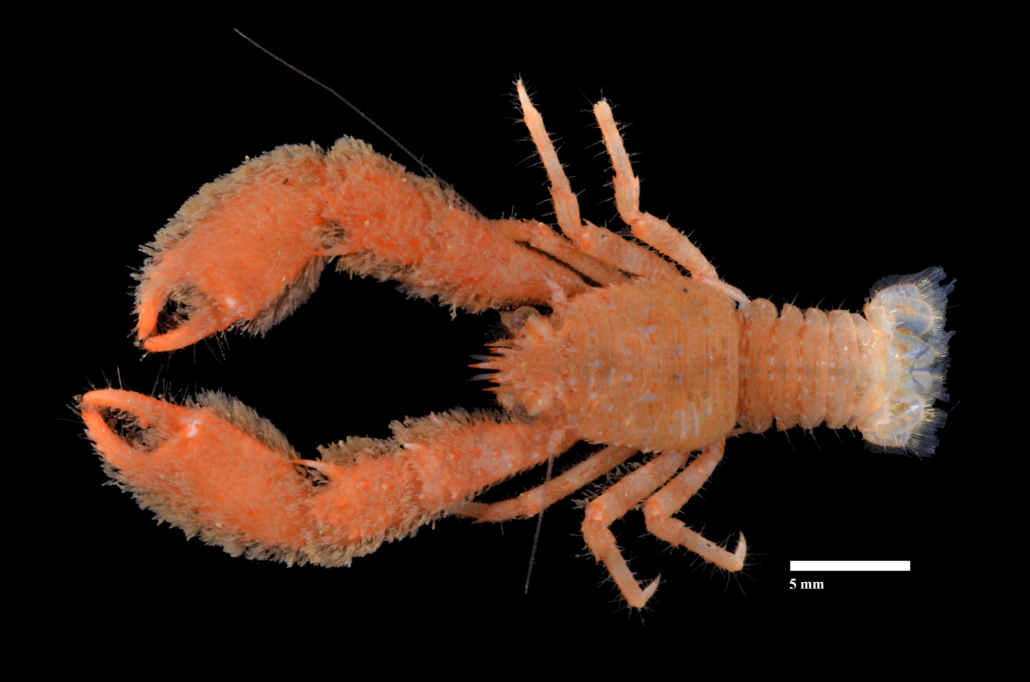
Figure 1: Galathea noboya showing off its ‘Popeye’ arms.
The second new species we jokingly started calling ‘lang arms’ due to its massively long pincers/arms, but especially its long hand (which is made up of the claw and carpus, the section next to the claw), a unique feature in this particular species. This is also the reason we called this east coast species Trapezionida longisandla as ‘isandla’ means hand in Zulu (Botha et al. 2026 https://doi.org/10.5852/ejt.2026.vol-number.articleID).
Completing my PhD truly was a dream come true as I had the opportunity to spend time on various cruises collecting and describing weird and wonderful deep-sea creatures, travelled to New Zealand to present my work to international experts and peers at the 10th International Crustacean Congress and lastly, had the privilege to host my international supervisor Enrique Macpherson in Cape Town, to examine specimens at the Iziko Museum and learn from him firsthand. None of these experiences would have been possible without funding received from the NRF PhD bursary and NRF FBIP SeaMap Grant No. 138572, for which I am very grateful.
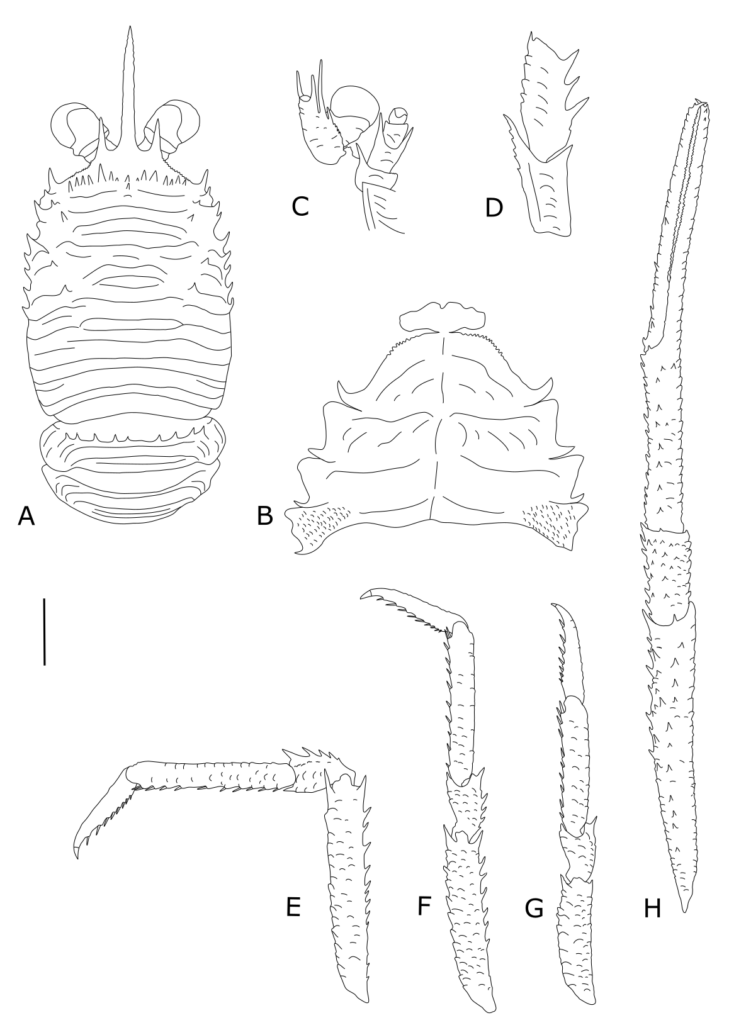
Figure 2: Illustration of various body parts of the newly described Trapezionida longisandla.
After taking a break from research for a year and a half I realised that I missed working on deep-sea creatures too much and was lucky enough to be awarded the new NRF Research and Infrastructure Professionals Program (RIPP) funding to pursue a postdoc hosted with Lara Atkinson at SAEON Egagasini Node. This time around we’re trading squat lobsters for a different group of crustaceans called sponge crabs. They are the ‘fashionistas’ of the crustacean world, as they trim off pieces of sponges (or ascidians, algae or even shells) which they ‘wear’ using their modified hindlegs to hold the sponge over their carapace. Not only are these biotic cloaks fashionable, they also provide protection and camouflage from predators. There is little known about the taxonomy of these unique crabs and we are hoping to increase our knowledge of them through phylogenetics and modern taxonomy. I am looking forward to embarking on the new adventures and learning during my postdoc.
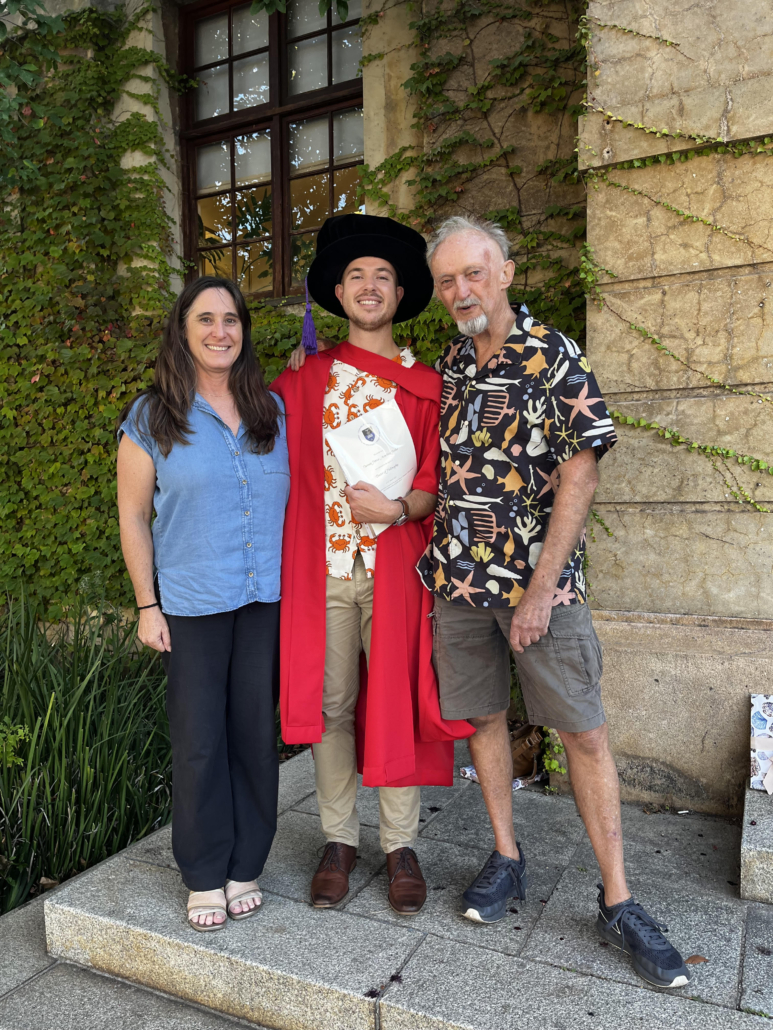
Figure 3: Graduation with supervisors, Dr Lara Atkinson (left), Emeritus Professor Charles Griffiths (right) and Arno Botha (middle).

Figure 4: Sponge crab Platydromia spongiosa from False Bay. Image by: Craig Foster.
