eNews
#02 2026
Ocean robots monitoring our global ocean! SAEON-Egagasini hosts the annual Argo Steering Team in Cape Town
By Tamaryn Morris

#02 2026
By Tamaryn Morris
The 27th annual meeting of the Argo Steering Team (AST) was hosted by SAEON Egagasini in Cape Town from 20-24 April 2026, with funding made available through the Department of Science, Technology and Innovation.
Argo floats are autonomous robotic platforms (Figure 1), deployed globally, and are used to measure temperature, salinity and pressure of the upper 2000 m of the global ocean (Figure 2, showing a typical Argo cycle), with mission extension to measure the deep ocean to 6000 m, biogeochemical parameters such as oxygen, pH, nitrate, chlorophyll a, suspended particles and downwelling irradiance, and increased observations of sea-ice and polar regions. This ocean observing network, including extension of missions, is known as OneArgo. The data generated from the over 25 years of Argo float deployments, which is open and easily available, is ingested into global and regional numerical models, informing our weather and climate forecasts with the critical, yet historically sparsely collected, subsurface and surface ocean information. These data are also used to inform the state of the ocean in publications related to the Intergovernmental Panel on Climate Change (IPCC) and the United Nations Framework Convention on Climate Change (UNFCCC) and is arguably the only available in situ dataset that is truly global in nature.
Annually, the AST meets to discuss technological advances of Argo floats platforms, sensor developments, deployment needs and opportunities and the challenges facing the ocean observing network, including continued funding.
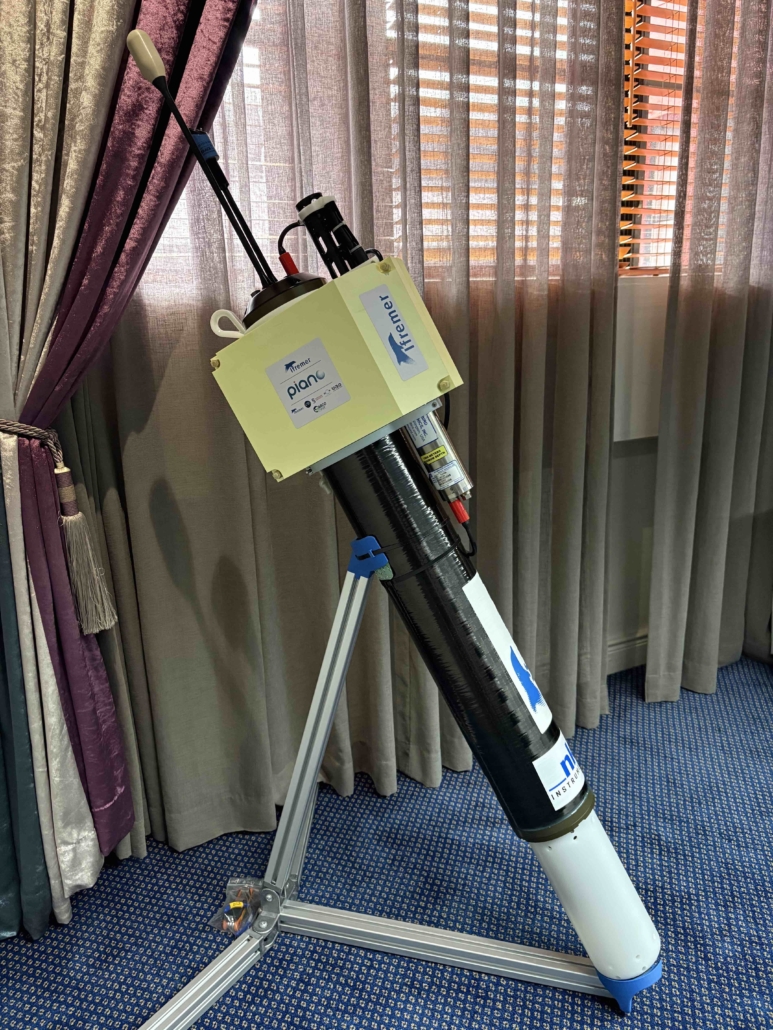
Figure 1: Argo floats.
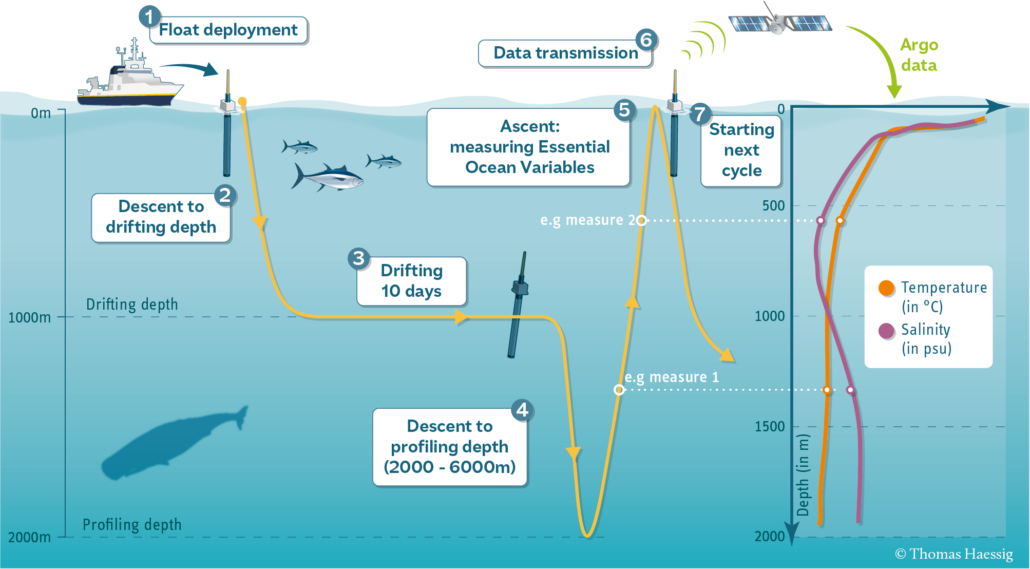
Figure 2: Argo cycle.
As the South African representative on the AST, Dr Tammy Morris welcomed the annual meeting on behalf of SAEON and presented the South African National report. South Africa has been instrumental in the Argo programme through the deployment of Argo floats from other national teams (UK, USA, Germany and France) in the ocean regions around Southern Africa and into the Southern Ocean and through the Egagasini Node’s Adopt-a-Float project which engages school learners to learn about Argo floats and follow their adopted floats online once deployed, and was presented by Thomas Mtontsi to the AST (Figure 3).
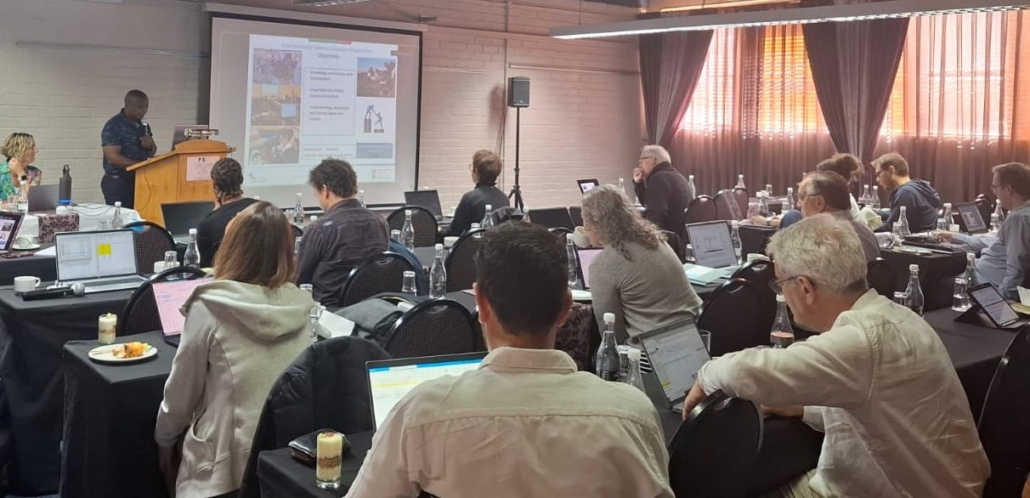
Figure 3: Thomas Mtontsi presenenting on Egagasini Node’s Adopt-a-Float project to the AST
More recently, SAEON has procured through the South African Polar Research Infrastructure (SAPRI), six Argo floats which have been proudly adopted by schools in Cape Town and will be deployed over the next six months (refer to NRF Bulletin #185, 2 April 2026). The first of these two Argo floats will be deployed on the Marion Island relief expedition in the Indian sector of the Southern Ocean in May 2026. The other four SAPRI Argo floats will be deployed in the South Atlantic and South Indian Ocean basins as soon as opportunities come up in coming months.
Given OneArgo is an ocean observing network under the Global Ocean Observing System (GOOS), the annual meeting hosted a presentation by the co-chair of the Observation Coordination Group (OCG), Prof Juliet Hermes, who is also the Node Manager at the Egagasini Node. A postgraduate diploma student, co-supervised by Jethan d’Hotman and Tammy Morris, presented initial results from the Seatrec Float donated to SAEON through Project FIND, and deployed offshore of Algoa Bay in May 2024 as part of the Agulhas Current impacts on shelf ACEP project previously reported on.
The AST was very well attended international and locally (Figures 4 and 5) and raises the profile of ocean observing in South Africa!
Figure 4: Argo Steering Team attendees
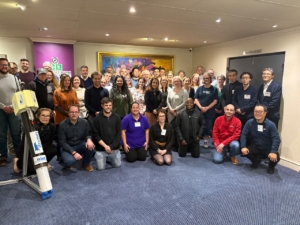
Figure 5: Argo Steering Team attendees
