eNews
#06 2025
Working together for a smarter ocean: SOMISANA’s growing modelling team
By Philile Mvula and Jennifer Veitch, Egagasini Node, NRF-SAEON
#06 2025
By Philile Mvula and Jennifer Veitch, Egagasini Node, NRF-SAEON
The SOMISANA (Sustainable Ocean Modelling Initiative, a South African Approach) team, based at SAEON’s Egagasini Node in Cape Town, serves as an ocean-modelling hub dedicated to building a critical mass of internationally recognised experts. Their vision is to generate and share high-quality information on the changing state of the ocean to support impactful decision-making.
To achieve this, they focus on two core goals: developing national capacity in ocean modelling and producing high-resolution operational ocean models for South Africa. All model outputs are freely accessible through their online catalogue, available via the SOMISANA web portal, and feed into the decision-support tools of the National Oceans and Coastal Information Management System (OCIMS), led by the Department of Forestry, Fisheries and the Environment and implemented in partnership with SAEON, the South African Weather Service (SAWS) and the Council for Scientific and Industrial Research (CSIR).
In isiXhosa, somisana means “to work together”, a principle that underpins the team’s collaborative approach with both local and international institutions in modelling and capacity-development activities. True to their name, the team works closely and cohesively – and is delighted to welcome a new member.
Philile Mvula is taking on the role of Ocean Products Developer, responsible for developing ocean products from the operational ocean model to support OCIMS stakeholder needs. She is also pursuing a PhD in Physical Oceanography at the University of Cape Town, focusing on a ridge found in an area inshore of the Agulhas Current, where she uses a combination of in-situ data and CROCO model outputs to understand whether the area is suitable for kingklip spawning aggregations.
Her journey started with a BSc and MSc in Marine Biology from the University of KwaZulu-Natal, where she studied long-term change in rocky shore communities along the KwaZulu-Natal (KZN) coastline. That work gave her a strong foundation in data collection, processing and analysis. The shift to models occurred when she realised that the last comprehensive study of the KZN rocky shores had been done almost 20 years earlier, so there was a need to fill data gaps between comprehensive field studies.
Through her journey, she has benefited from various forms of support offered under the National Research Foundation (NRF) umbrella, including the NRF Master’s Innovation Scholarship and the NRF internship programme.
She became familiar with the work done by the SOMISANA team through the 2022 CROCO Summer School. She is excited to finally be part of the team that is committed to building modelling capacity in South Africa.
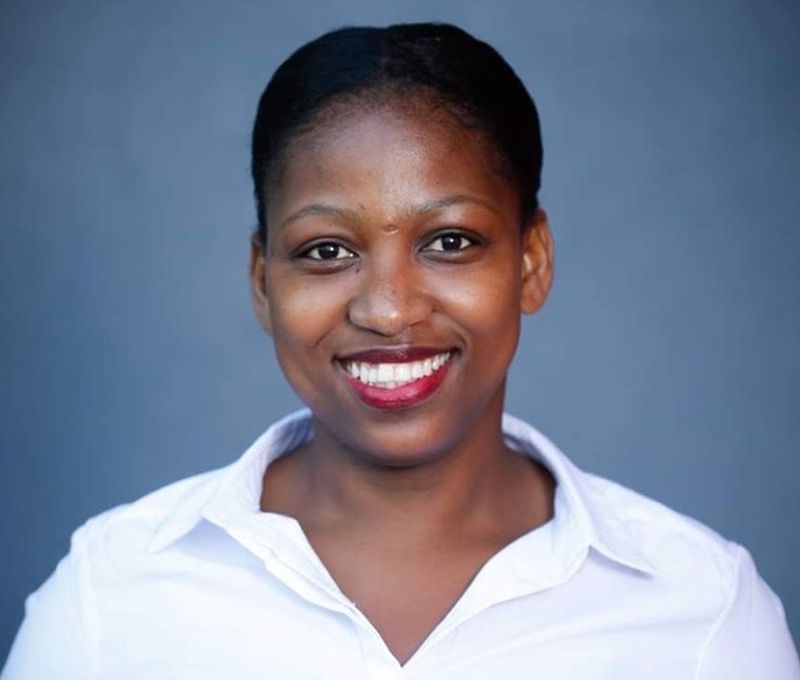
Ocean Products Developer Philile Mvula is pursuing a PhD in Physical Oceanography at the University of Cape Town, focusing on a ridge found in an area inshore of the Agulhas Current, where she uses a combination of in-situ data and CROCO model outputs to understand whether the area is suitable for kingklip spawning aggregations.
