eNews
#05 2026
Stable isotope technologies for uncovering ecohydrology pathways in the Mariepskop Mountains
By Dr Retang Mokua, Ndlovu Node, NRF-SAEON

#05 2026
By Dr Retang Mokua, Ndlovu Node, NRF-SAEON
Dr Retang Mokua, a postdoctoral fellow at SAEON’s Ndlovu Node, is working in collaboration with the Federal Institute for Geosciences and Natural Resources (BGR) in Germany on a project that involves the use of isotopic analysis of water to determine how land management affects freshwater supplies.
As part of this partnership, Dr Mokua spent three months at the BGR facilities in Berlin conducting laboratory work on plant xylem and soil water analysis. The study aims to uncover where different tree species draw their water from and how these patterns influence river flow.
This work forms part of Dr Mokua’s broader postdoctoral project, which seeks to model how vegetation changes affect hydrological processes in the Upper Klaserie catchment. The findings will contribute to improving hydrological models and will be submitted to the Journal of Hydrology Special Issue on contributions of isotope hydrology to water sciences in Africa.
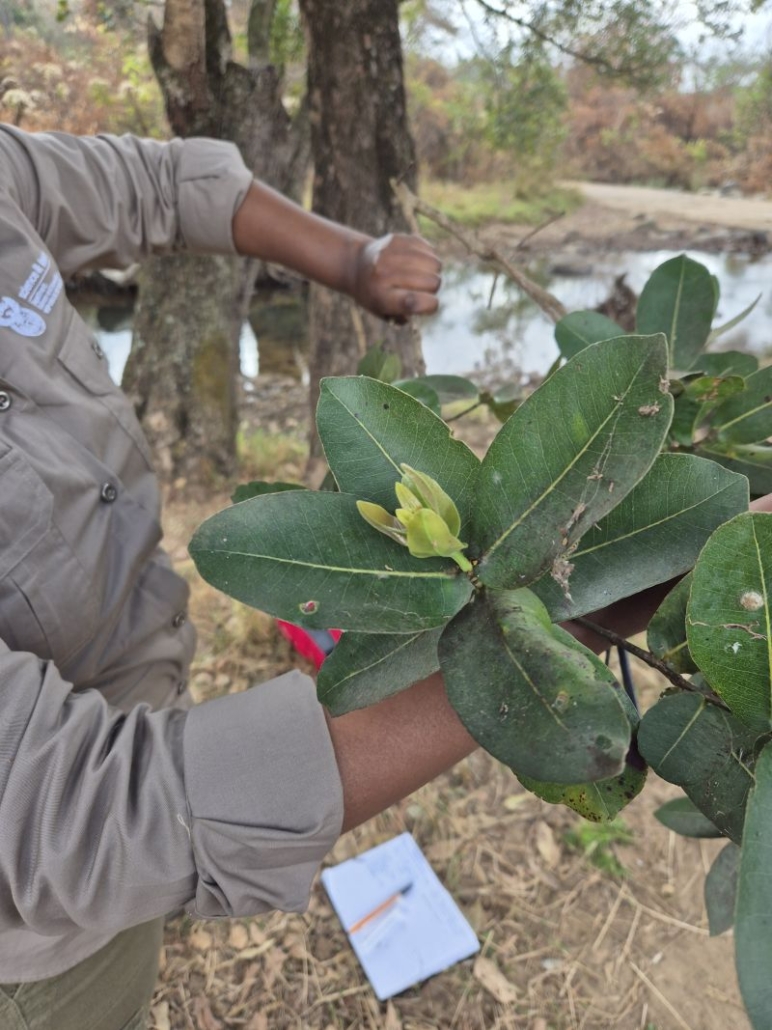
To determine water sources and seasonality in water usage, samples were collected during summer and winter over the past two years.
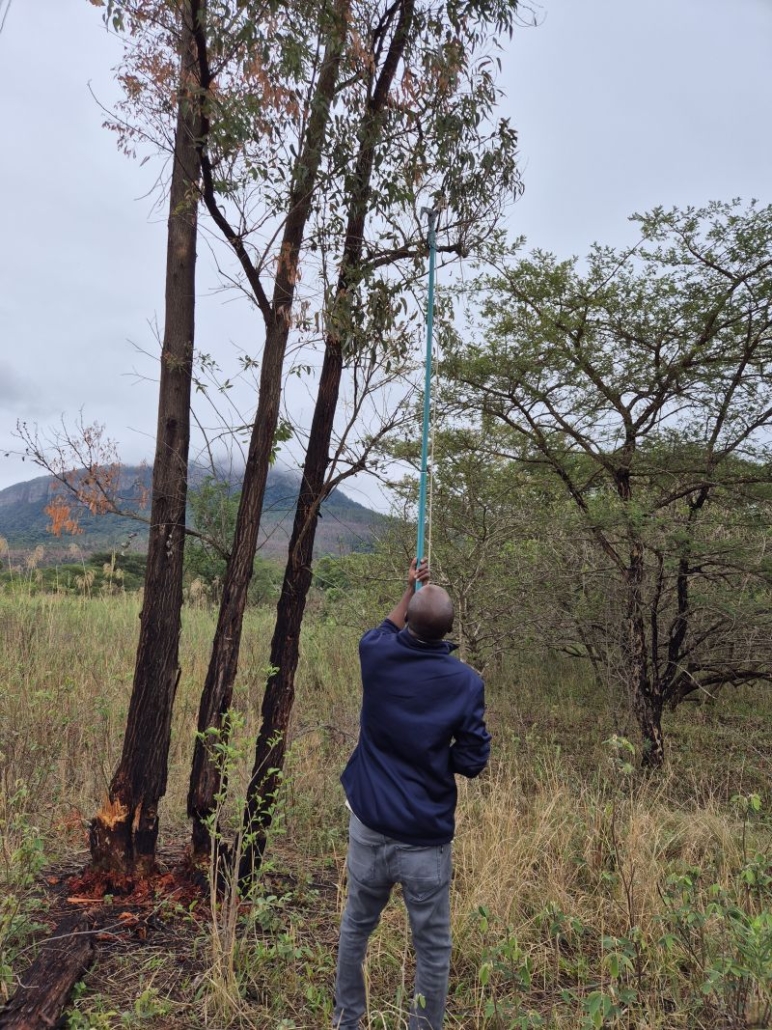
SAEON field assistant, Mighty Mashele, sampling branches from a Eucalyptus tree in the Upper Klaserie catchment.
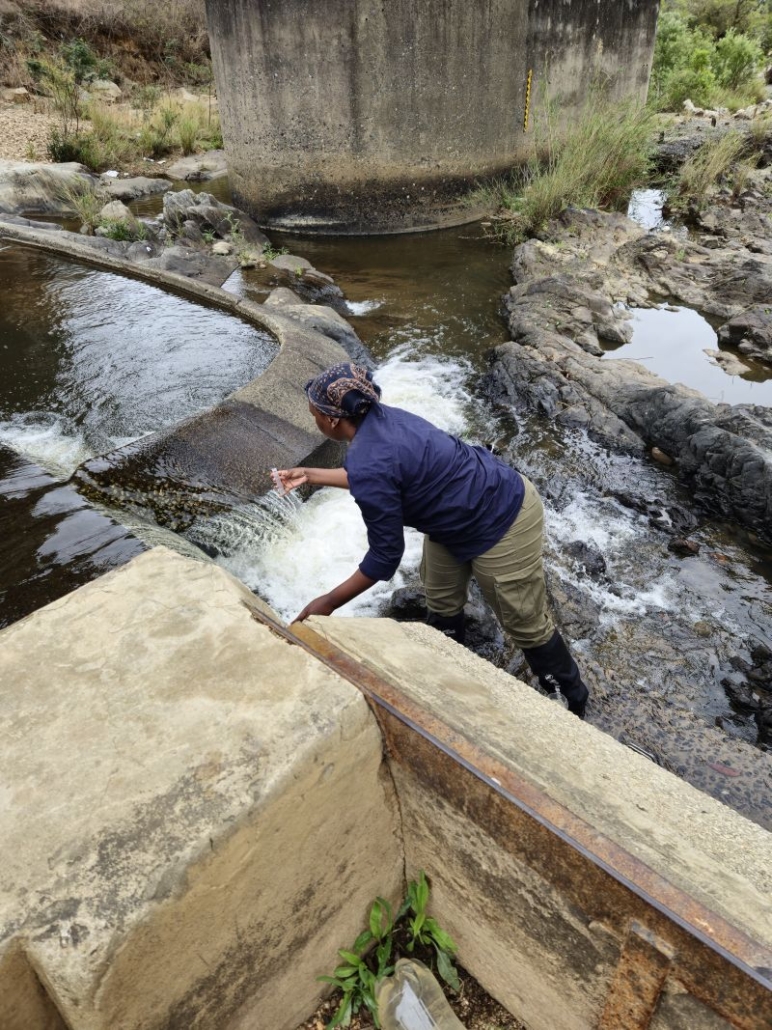
Dr Retang Mokua collecting a water sample from the Klaserie River.
To determine water sources and seasonality in water usage, samples were collected during summer and winter over the past two years. The sampling of plant xylem is done by cutting part of the branch, preferably the twigs, to avoid damage to the tree. This is done in parallel with the collection of soil samples and samples from various water sources within the catchment (rivers, groundwater from boreholes, soil water from piezometers and rainwater). A total of 305 plant samples from 10 different species and 83 soil samples were subsequently extracted at the BGR isotope laboratory in Berlin.
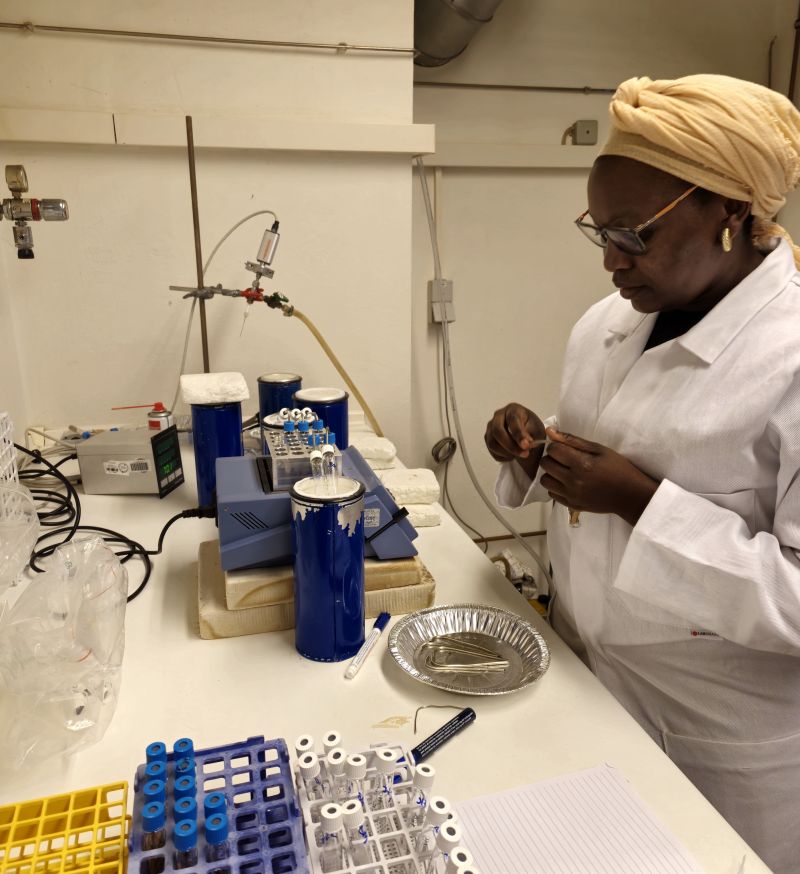
Dr Retang Mokua conducting cryogenic vacuum extraction of xylem water from plants.
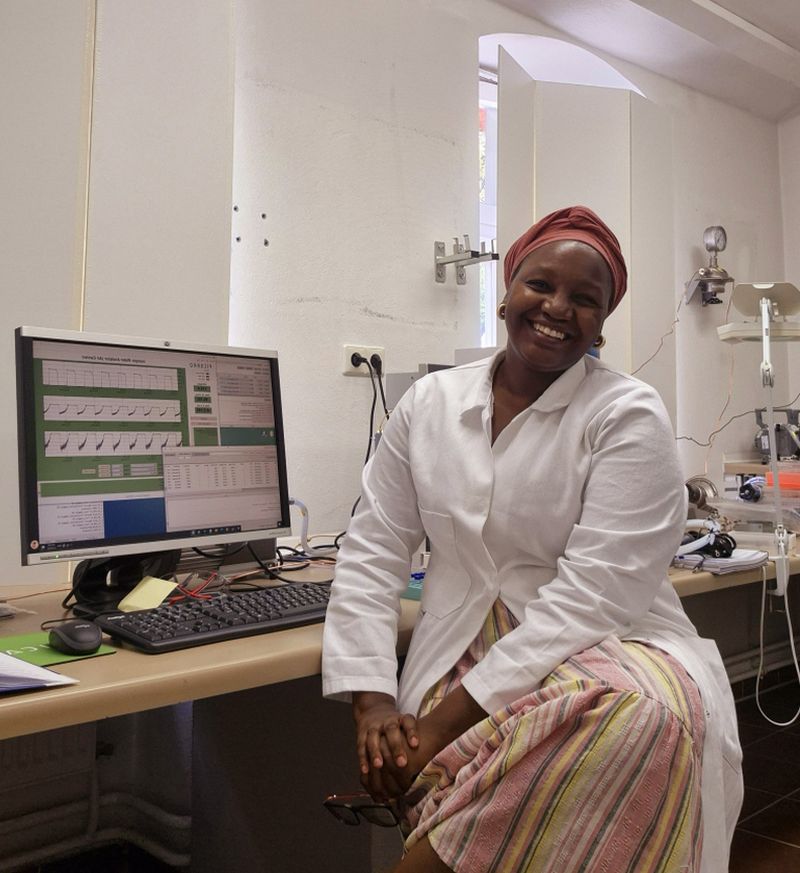
Stable isotope analysis using the CVRD.
Preliminary results show that plant samples are not using river water but rather deep groundwater. These aspects will be examined in more detail in the upcoming peer-reviewed publication. Based on these results, it appears that streamflow in the Klaserie River is sustained by groundwater discharge. Additional analyses are ongoing, and a full conclusion will be presented in the forthcoming manuscript.
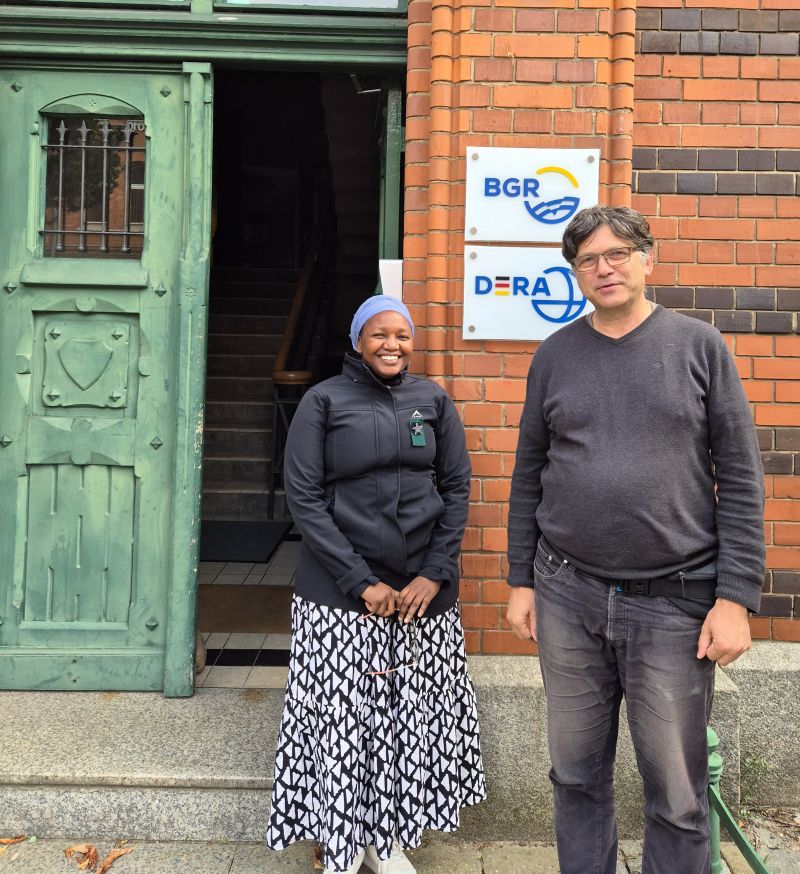
Dr Retang Mokua with Dr Paul Köeniger at the Federal Institute for Geosciences and Natural Resources (BGR) in Berlin, Germany.
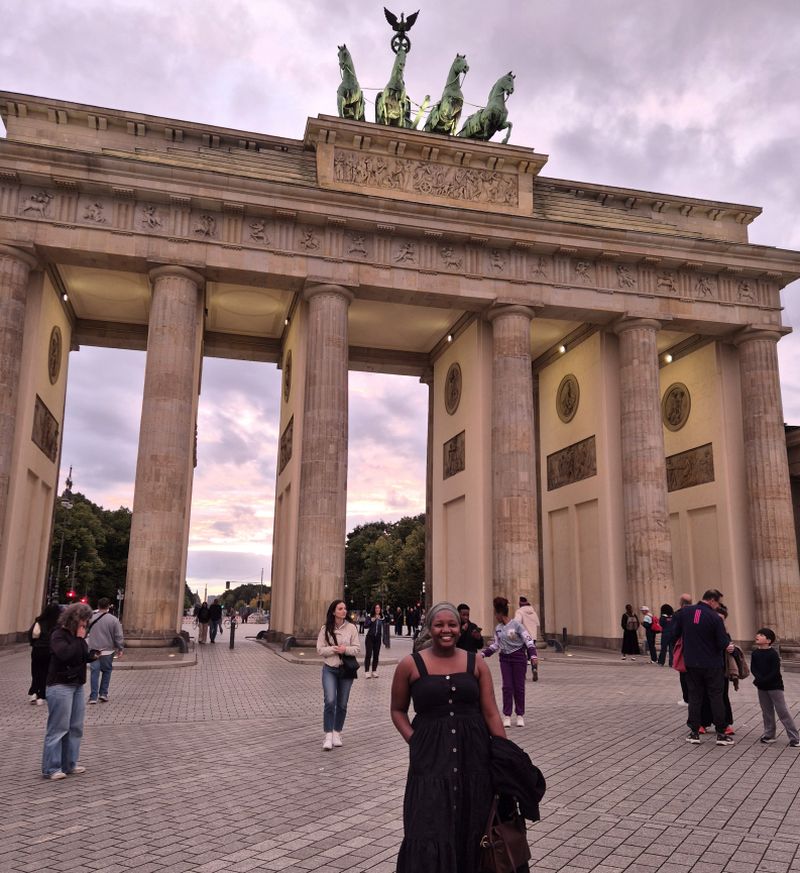
Retang at the Brandenburger Tor in Berlin.
The National Research Foundation (NRF) for funding the postdoctoral studies, Dr Paul Köeniger and Sebastian Friebe at BGR for providing guidance and assistance with extraction and isotope analysis. Mike Butler from iThemba LABS for assistance with water stable isotopes from non-plant samples, and the German Academic Exchange Services (DAAD-KBS-Stiftung) and NRF/RIISA for assistance with research travel to Germany. We would also like to thank Mr Jan Graaf for providing knowledge of plant species and the SAEON Ndlovu Node staff for assistance in the field.
