eNews
#02 2026
From South Africa to Scotland: Advancing Ocean Science at OSM 2026
Philile Mvula, Jordan Van Stavel, Nasreen Burgher, Jennifer Veitch, Tamaryn Morris, Juliet Hermes
#02 2026
Philile Mvula, Jordan Van Stavel, Nasreen Burgher, Jennifer Veitch, Tamaryn Morris, Juliet Hermes
The Ocean Sciences Meeting (OSM) is an international gathering among ocean researchers, professionals, and students. Endorsed as a United Nations Decade of Ocean Science for Sustainable Development action, the conference was cohosted by the American Geophysical Union (AGU), the Association for the Sciences of Limnology and Oceanography (ASLO) and The Oceanography Society (TOS) and was designed to foster connection and collaboration among the broader ocean community.
The conference takes place biannually, and this year it was held in Glasgow, Scotland, from the 22nd to the 27th of February. It was attended by a group of three senior researchers (Professor Juliet Hermes, Dr Jenny Veitch, and Dr Tamaryn Morris) and three early-career researchers (Philile Mvula, Jordan Van Stavel, and Nasreen Burgher).
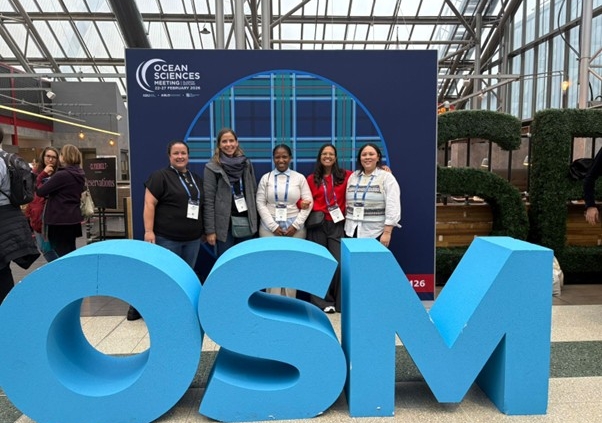
Figure 1: From left to right: Dr Tammy Morris, Dr Jennifer Veitch, Miss Philile Mvula, Miss Nasreen Burger and Miss Jordan Van Stavel form NRF-SAEON Egagasini. Not photographed is Prof. Juliet Hermes.
The conference included a variety of sessions ranging from oral presentations, poster presentations, e-lighting sessions, town halls and outcome sessions with a variety of special events in between. Presentation sessions covered a range of topics from physical dynamics, on the global and regional scales, macro-to-micro biology and ecology, deep-sea research, innovative technologies, and biogeochemistry and many other ocean science disciplines.
Our presentation highlights at OSM:
Professor Juliet Hermes (on behalf of Matthew Carr) – The spread of Indonesian Throughflow waters within the Indian Ocean and resulting biogeochemical interactions.
The work presented formed the final Chapter of research from Matthew Carr’s PhD. The Indonesian Throughflow (ITF) acts as a crucial ocean conveyor, transporting warm, relatively fresh waters from the Pacific into the Indian Ocean. These waters travel across the basin embedded within the westward-flowing South Equatorial Current (SEC), significantly impacting the region’s heat content, vertical stratification, and overall water mass properties. While the seasonal pathways of these currents are well established, their year-to-year shifts have remained less understood. Matthew’s research uses ocean model sensitivity simulations to reveal that interannual wind forcing over the South Indian Ocean basin, rather than variations in the Pacific Ocean inflow itself, is the primary driver of this variability.
The research demonstrates that these local wind variations are transmitted through ocean phenomena known as Rossby waves. When downwelling Rossby waves are present, they deepen the ocean’s thermocline, causing the SEC to form large northwestward meanders that carry ITF waters deep into the central basin. Conversely, in the absence of these waves, the SEC takes a much straighter, zonal westward path, carrying the waters further south. Uncovering the mechanisms behind these shifting routes is vital, as they directly influence important downstream impacts, including vertical stratification, marine connectivity, the dispersal of coral larvae, and the transport of marine plastics across the ocean.
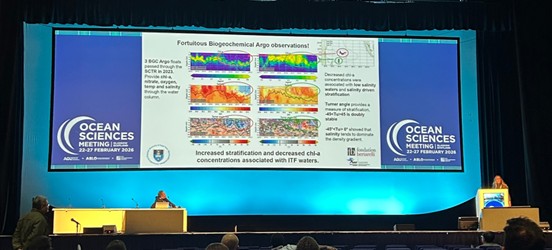
Figure 2: Prof Juliet Hermes presenting on behalf of Matthew Carr, “The spread of Indonesian Throughflow waters within the Indian Ocean and resulting biogeochemical interactions”.
Dr Jennifer Veitch – FAIR and interoperable coastal ocean forecasting: a South African Model for Resilient Digital Ocean Services
Jennifer presented in the session: ‘Bridging the Ocean with Data: Connected Regional Services Driving a Resilient, Interoperable Global Ocean Digital Ecosystem’, whose objective was to bring together data providers to discuss the marine knowledge value-chain. Her presentation showcased the National Oceans and Coastal Information Management System (OCIMS) and demonstrated how its FAIR (Findable, Accessible, Interoperable, Reusable) digital ocean services are a critical necessity for sustainable and equitable ocean governance, particularly in resource-limited regions. By integrating open-source, locally optimized numerical models with long-term data preservation through the Marine Information Management System (MIMS), the initiative provides fit-for-purpose decision support tools that mitigate economic and environmental hazards like oil spills and harmful algal blooms. This cost-effective model prioritizes resilience by using documented, replicable workflows that safeguard institutional memory against the ‘brain-drain’ and infrastructure instability. Ultimately, by providing equitable access to high-resolution data and open-source code, OCIMS fosters a collaborative Blue Economy that empowers local entrepreneurs, supports artisanal fishers, and ensures that scientific intelligence is a shared national asset for all who depend on the sea.
Figure 3: Dr Jennifer Veitch presenting on “FAIR and Interoperable Coastal Ocean Forecasting: A South African Model for Resilient Digital Ocean Services”
Dr Tamaryn Morris – Agulhas Current research
Tammy presented first results from the African Coelacanth Ecosystem Programme (ACEP) project which looks at the impacts of the Agulhas Current on the shelf and inshore regions around Algoa Bay. Survey results illustrated three scenarios for physical dynamics in Algoa Bay – a “business as usual” scenario where the Agulhas Current is featured at the shelf edge, the interaction of cyclonic mesoscale eddies on the shelf region adjacent to Algoa Bay, and the more commonly sampled scenario for our ACEP work which shows a cool shelf and warm fronts intersecting the region. These physical dynamics have differing impacts on biodiversity collected through nutrients, chlorophyll a data and phyto- and zooplankton samples.
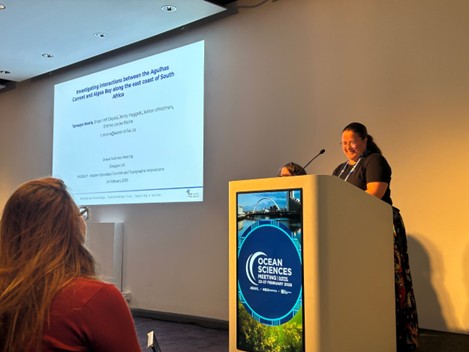
Figure 4: Dr Tamaryn Morris presenting on “Investigating Interactions between the Agulhas Current and Algoa Bay along the east coast of South Africa.”
Nasreen Bugher – The turbulent inshore edge of the Agulhas Current
Nasreen Burgher presented her PhD research, which explores the turbulent inshore edge of the Agulhas Current, one of the strongest western boundary currents in the global ocean. Using long-term satellite sea surface temperature data and in situ observations, she investigates how mesoscale features such as Durban Eddies and Natal Pulses shape variability along the South African coast. Through automated detection techniques, her work aims to improve our understanding of eddy-driven turbulence, ocean circulation, and its implications for regional ocean dynamics and ecosystems.
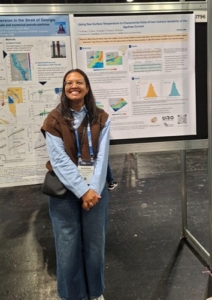
Figure 5: Nasreen Burgher presenting on “Using Sea Surface Temperature to characterise Eddy-driven Inshore variability of the Agulhas Current.”
Philile Mvula – Numerical modelling for studying thermal and circulatory structures of topographic features
Philile presented on the “Unraveling Physical-Biological Interactions at Meso- and Submesoscales” session, where she presented her PhD work on the submesoscale dynamics around the Kingklip ridge and how they affect the kingklip aggregation that occur inshore of the ridge annually. The research demonstrated how topographic anomalies such as the kingklip ridge can alter the submesoscale flows that would otherwise lead to larval loss to the open ocean into rotations that promote retention.
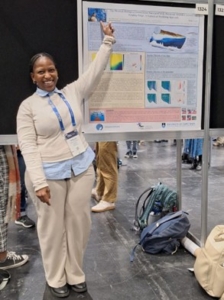
Figure 6: Philile Mvula presenting on “The thermal and circulatory structure of Eastern Agulhas Bank water around a Topographic Anomaly: A Numerical Modelling Approach.”
Jordan Van Stavel – Benthic epifaunal functioning across two South African ecoregions
Jordan Van Stavel presented her MSc research, “Functional composition and diversity of offshore benthic epifauna on the western and southern ecoregions of South Africa”. Offshore benthic ecosystems (over 200 m depth) are still poorly understood on a global scale despite epifaunal communities being key indicators of ecosystem health and functioning. Her study examined the functional traits of epifauna (invertebrate species living on or attached to the seafloor) along South Africa’s continental shelf, using data from over 900 trawl stations. The results showed clear differences in ecosystem functioning between ecoregions, with depth, seafloor complexity and varying oceanographic regimes driving benthic functional patterns. These findings provide valuable insights to support South Africa’s conservation planning and fisheries management efforts.
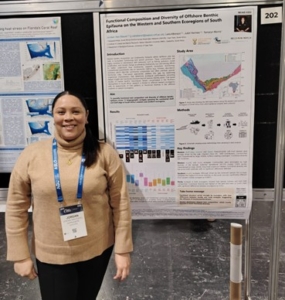
Figure 7: Jordan Van Stavel presenting her poster on the “Functional composition and diversity of offshore benthic epifauna on the western and southern ecoregions of South Africa”.
Advancing knowledge and building connections
Philile, who recently joined the SOMISANA team as a product developer, also had the unique opportunity to attend several sessions where operational modelling advancements were presented and she gained an understanding of where our operational modelling system is placed at a global scale and the leaps we have made compared to other regions.
As SAPRI’s research coordinator for Long-term Observations of the Oceans integrated facility, Jordan made full use of the conference programme. She attended a wide variety of presentations, exhibits, and town hall discussions ranging from ocean observation to deep-sea science and emerging technologies. She also gained insight into upcoming research projects and cruise opportunities, while networking across disciplines and connecting with fellow members of the African Network of Deep-water Researchers (ANDR).
OSM provided an opportunity to really interact with the international marine science community, particularly ocean observing scientists, technicians and teams. Collaborative developments were particularly forged with regards the Fishing Vessel Observing Network (FVON) collaborations, tide gauge collaborations and the GOOS Co-Design Boundary Current project.
It also enabled the opportunity for Prof Juliet Hermes to attend FAIRSEAS, a one-day EuroMarine Foresight Workshop, jointly organised by SOLAS, OASIS, and CLIVAR, held in Edinburgh. Which brought these international programmes together to shape the next decade of coordinated air-sea interaction research, with discussions spanning observational, modelling, and remote-sensing approaches to better understand processes at the air–sea interface.
Overall, the experience in Scotland was highly rewarding and we are sincerely grateful to the NRF-SAEON and SAPRI, KIC, IRD, LOPS as well as the management and administrative team at the SAEON Egagasini Node for making this opportunity possible.
