eNews
#01 2026
Bridging Digital Skills, Storytelling and Ocean Literacy at Marine and Coastal Educators Network 2026
By Dipuo Masebe, HSRC Science Communication Intern
#01 2026
By Dipuo Masebe, HSRC Science Communication Intern
Digital literacy is often associated with screens, coding, and technology. But at the Marine and Coastal Educators Network (MCEN) 2026 Conference, held in Gauteng from 18–23 January, it became clear that digital literacy is also about access, inclusion, and meaningful engagement.
Hosted under the theme Digital Literacy for Future Readiness, MCEN, a network of the South African Network for Coastal and Oceanic Research (SANCOR), brought together educators, researchers, NGOs, and government stakeholders to explore how technology and education can strengthen marine and coastal awareness across South Africa.
The South African Environmental Observation Network (NRF-SAEON) and SAPRI were actively represented throughout the week, contributing to discussions on ocean literacy, digital innovation, and community engagement.
A highlight of the conference was SAPRI’s presentation, delivered by Kelly Mogotsi and Asisipo Mboneli, which shared insights into polar and marine research and its role in building inclusive, transdisciplinary knowledge systems. The screening of Life of an Islander resonated strongly with delegates, reminding participants that science is not only about data but also about people, place, and lived experience.
The presentation received the Best Novice Presentation Award, recognising its strong impact within the marine and coastal education community.
Digital tools were not discussed in theory; they were experienced. Kathy Drummond from SAAMBR facilitated an interactive climate solutions simulator that allowed delegates to role-play as stakeholders from business, government, and civil society. Through this computer-based simulation, participants explored the decisions required to limit global warming below 2°C, transforming abstract climate science into participatory learning.
Nomfundo Buthelezi demonstrated how quiz-based active learning can optimise ocean literacy through educational technology. Designed for Senior and FET phase learners, her approach replaced passive memorisation with active retrieval practice, making learning both rigorous and enjoyable.
Robotics and coding featured prominently in the programme, highlighting how digital tools can introduce learners to marine science concepts while developing future-ready STEM skills. Prof Patricia Gouws showcased how robotics competitions can simulate underwater exploration, pollution detection, and sustainable fisheries management, while Dr Tedson Nkoana shared insights from the Youth in STEM (YiSTEM) programme, which exposes learners, particularly from rural and under-resourced communities, to robotics, coding, and STEM career pathways. The message was clear: spark interest, build skills, and expand opportunity.
SAEON Egagasini Node’s Science Engagement Officer, Thomas Mtontsi, actively participated in these sessions, contributing to conversations on how innovation can enhance science engagement and youth development.
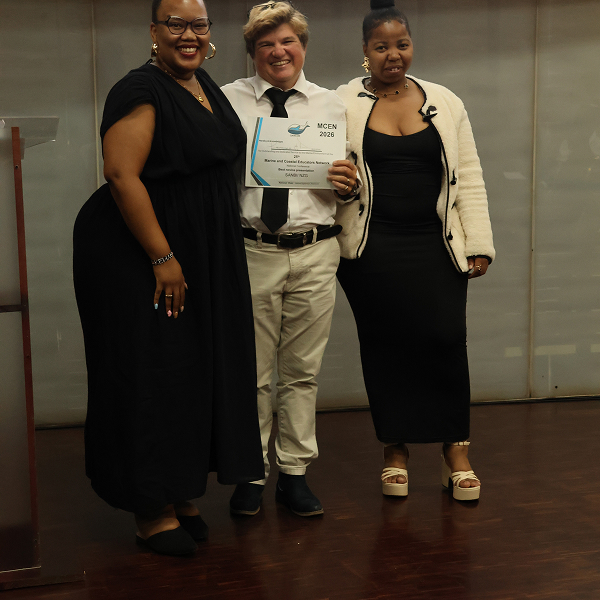
Kelly Mogotsi and Asisipo Mboneli receiving the Best Novice Presentation Award at the MCEN 2026 Gala Dinner.
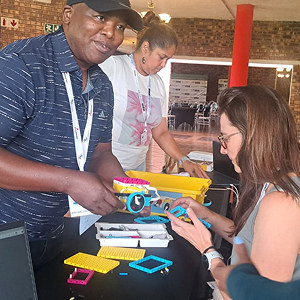
Delegates engaging with robotics presentations during MCEN 2026, exploring how coding and automation can support marine education.
Beyond digital innovation, MCEN 2026 addressed pressing social and environmental realities. Siyabonga Mthethwa from the National Sea Rescue Institute presented a comprehensive drowning prevention strategy centred on water safety education, survival swimming, and the distribution of Pink Rescue Buoys. The approach emphasised empowering vulnerable communities with life-saving knowledge and practical rescue techniques.
Clean-up coordination was also reframed through Varsha Naidu Moodley’s session, which moved beyond once-off beach events to focus on sustained community engagement. Through strategic communication, partnerships, and educational resources, including collaborations with corporate sponsors, the emphasis shifted from symbolic action to long-term behaviour change around plastic pollution.
Language itself was recognised as a powerful tool for transformation. Wade Naudé from the Save Our Seas Foundation Shark Education Centre explored the importance of decolonising terminology in marine education. By adapting presentations, incorporating local languages, and using relatable descriptions, educators can meet target audiences halfway and create more inclusive learning environments.
Energy and climate responsiveness were addressed through Velile Maxwell Dingaan’s Smart Cooking demonstration, which highlighted how energy-efficient cooking practices can reduce household costs, lower carbon emissions, and improve community well-being.
MCEN 2026 also emphasised the critical link between inland ecosystems and ocean sustainability. Delegates visited facilities connected to the Vaal Dam, where they participated in a water purification activity and gained insight into how rivers support both communities and marine systems.
This excursion reinforced an important reality: ocean literacy begins far from the coast. Protecting rivers, using water responsibly, and understanding freshwater systems are essential to safeguarding ocean health.
The conference programme included immersive site visits to the National Zoological Garden, Pretoria National Botanical Garden, Freedom Park, and the Ditsong Museums of South Africa. These experiences strengthened the connection between biodiversity conservation, heritage, science communication, and environmental stewardship.
Beyond the formal sessions, MCEN 2026 fostered collaboration and camaraderie, including a spirited regional potjie competition that brought together teams from across provinces. These shared experiences strengthened professional networks and encouraged continued partnership across the marine and coastal education community.
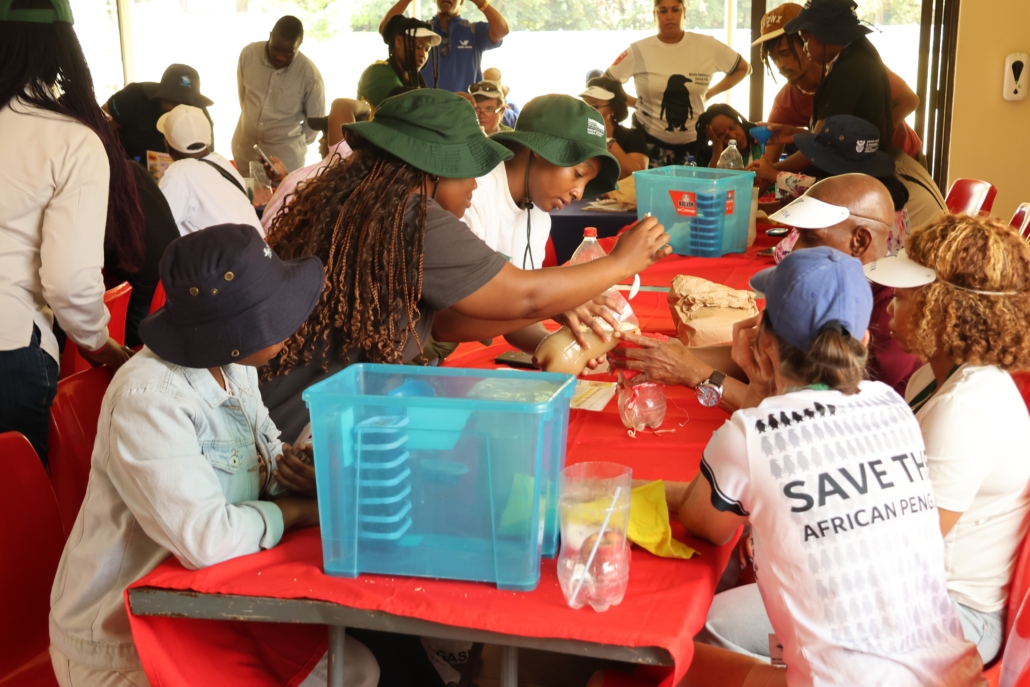
MCEN 2026 delegates participating in a Water Wise session at Rand Water, demonstrating the purification process of water sourced from the Vaal Dam.
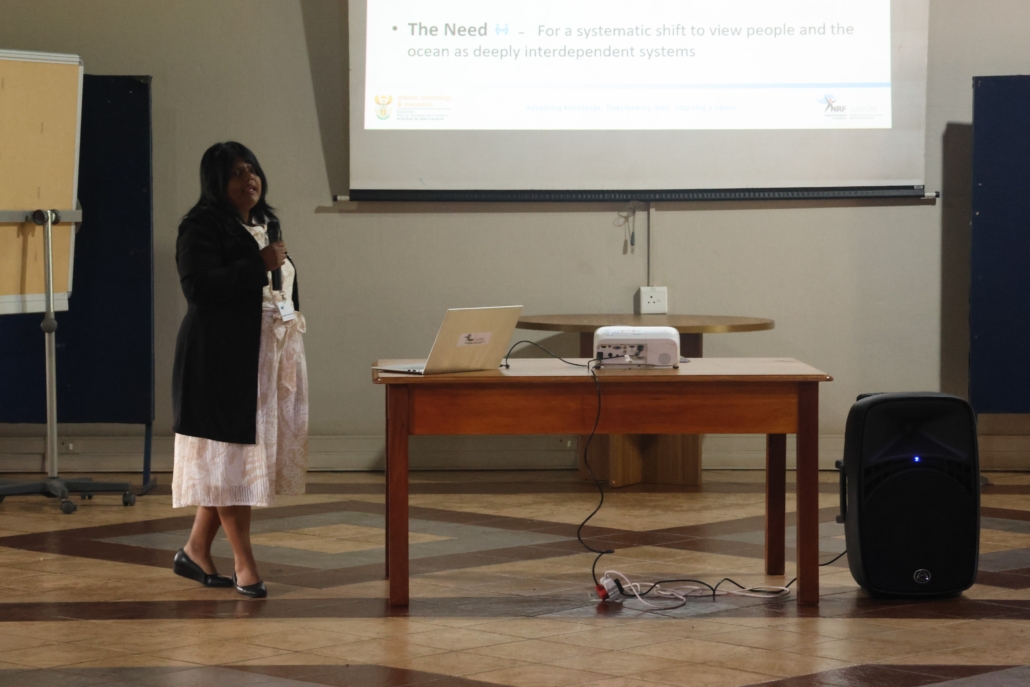
SAEON Science Engagement Coordinator Kogie Govender delivering a keynote on the Blue Schools Programme.
Science Engagement Coordinator Kogie Govender delivered a keynote on the Blue Schools Programme, highlighting how accessile, data-driven activities can connect inland learners to the ocean. Her message echoed throughout the week: ocean literacy is a national responsibility.
Participation at MCEN 2026 reaffirmed NRF-SAEON’s role in bridging long-term environmental observation, digital innovation, and public engagement. By integrating technology, storytelling, skills development, and inclusive education, the conference demonstrated how marine and coastal engagement can contribute to a more informed, empowered, and sustainable South Africa.
