eNews
#01 2026
Nelson Mandela Bay educators on Estuary
By Taryn Joshua Kuntz, Nozi Hambaze (NRF -SAEON), and Phakama Nodo (NRF-SAIAB)
#01 2026
By Taryn Joshua Kuntz, Nozi Hambaze (NRF -SAEON), and Phakama Nodo (NRF-SAIAB)
A joint initiative between NRF-SAIAB and NRF-SAEON Elwandle Node recently provided Geography educators from the Nelson Mandela Bay District with a valuable opportunity to participate in hands-on field research at the Sundays River Estuary, Gqeberha. The main aim was to support educators in gaining confidence in implementing scientific methods in their classroom set-up as stipulated in the curriculum.
The educators traded their four-walled classroom for an outdoor classroom, gumboots, and field notebooks by visiting the Sundays River estuary to learn first-hand how scientists collect data. Under the guidance of Dr. Phakama Nodo, a SAIAB postdoctoral scientist, participants were divided into groups and received practical training in core data collection techniques. These included measuring salinity, temperature, turbidity, and pH, as well as identifying and counting fish species using the field guide manual developed by both NRF-SAIAB and NRF-SAEON team members.
For many of the educators, this marked their first experience using specialised scientific equipment and conducting research aboard a research vessel. The learning experience did not only end in the field, but it also extended beyond fieldwork. Educators were required to make sense of and interpret the data they collected, thereby engaging in parts of the scientific process from data collection to interpretation and communication. There were lots of deliberations within groups whilst they were developing their presentations, and those discussions led to excellent presentations of their findings.
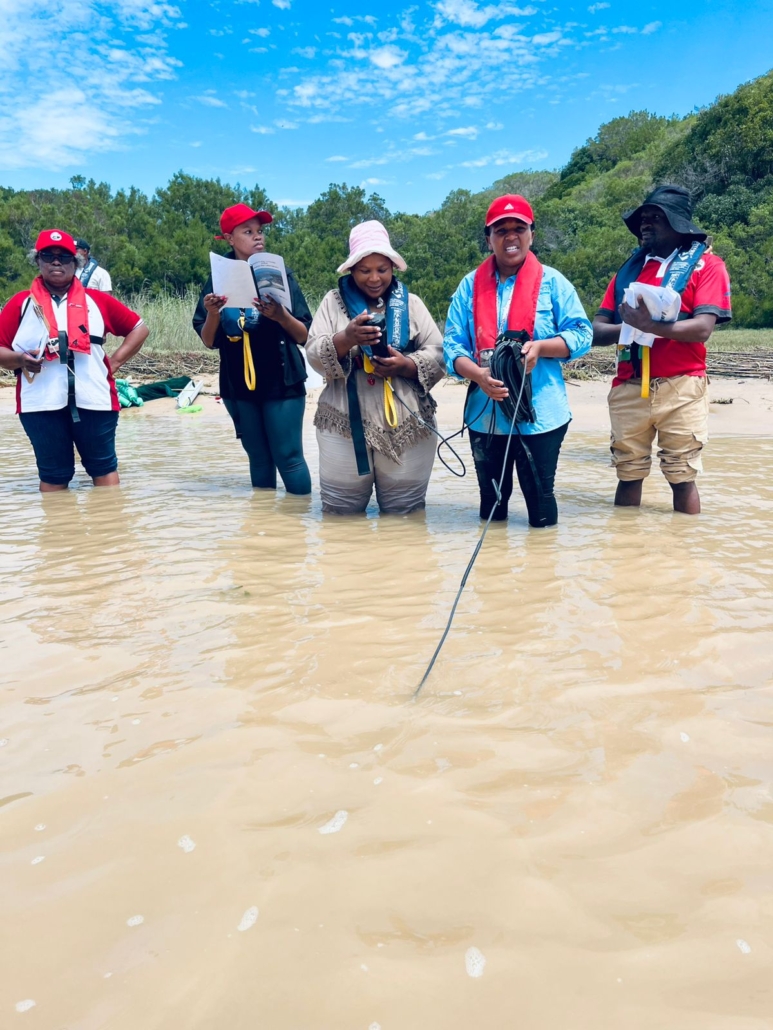
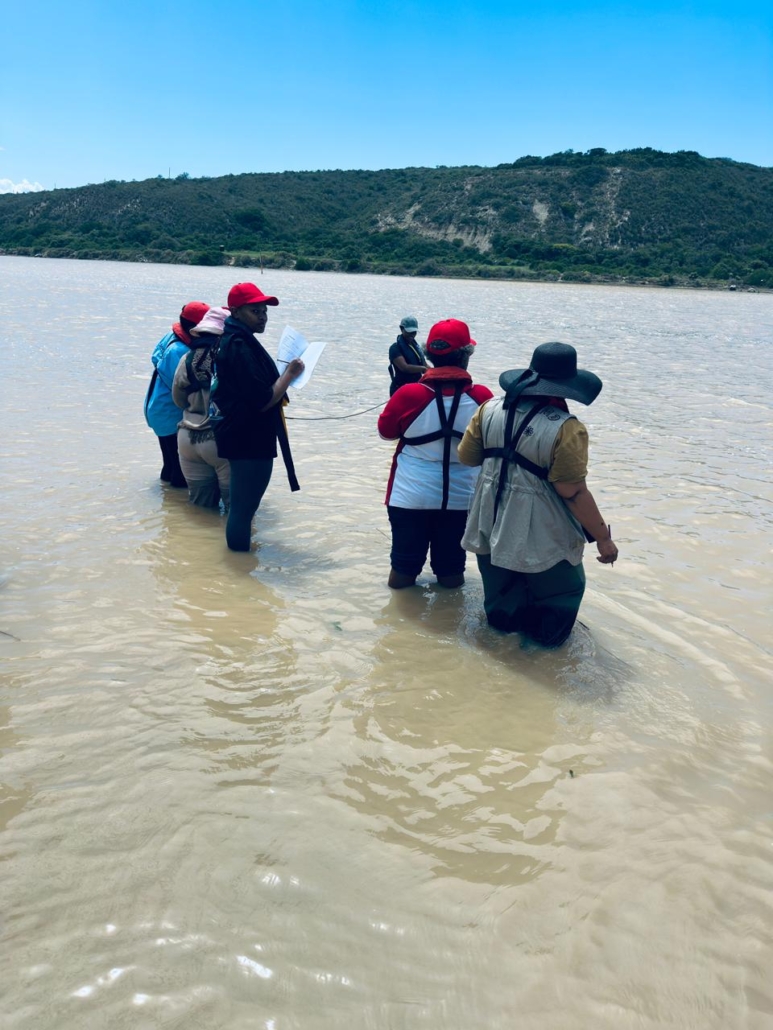
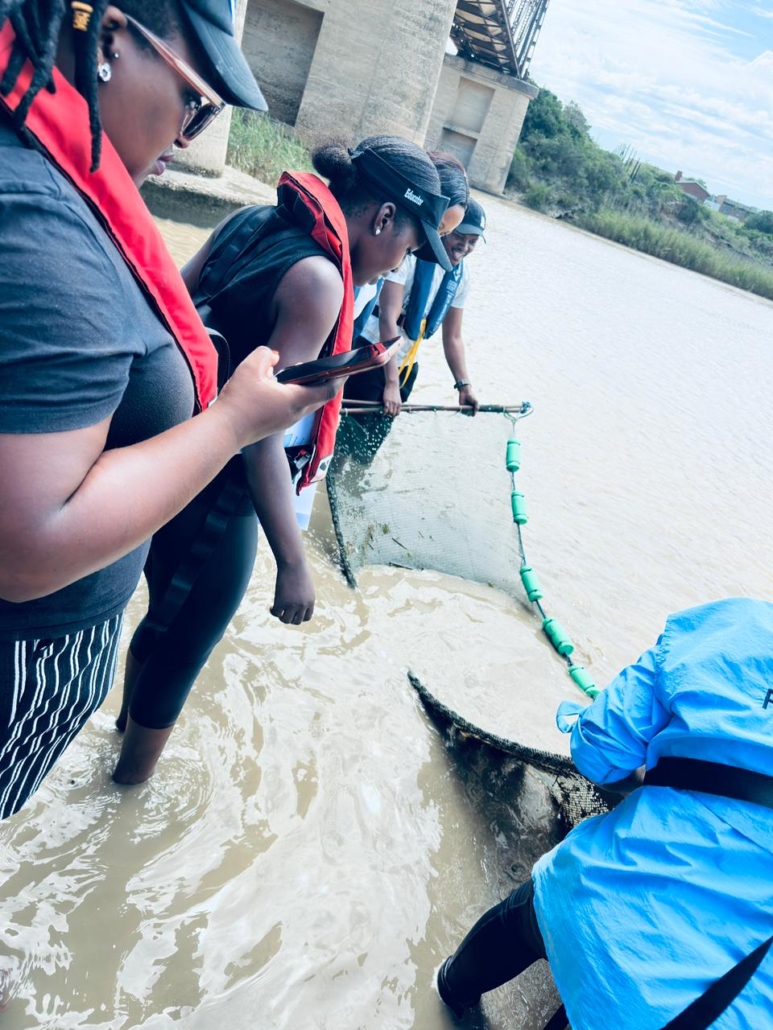
The Sundays River Estuary served as an effective outdoor classroom, enabling educators to deepen their understanding of human impacts on estuarine ecosystems as well as the importance of estuaries as a crucial habitat for fish. Participants have committed to transferring this knowledge to their learners and to encouraging learner-led scientific research projects within their schools.
When educators were asked about what they enjoyed about the workshop, they responded as follows
“Active participation and the real-life experience of conducting research”
“Being out of class. Making the subject more practically interesting. We acquired the skill of making research easy for our learners.”
“Field work, that was practical and allowed more participation in data collection”.
“Everything, especially the critical and logical level of making our own presentation based on the findings”.
When the educators were asked how they think the workshop could help to enhance their subject matter, they replied:
“I can apply the basis of research learnt ln the workshop to increase the standard of research conducted in my school.”
“In Term 2, we have a research project. We will apply all this information.”
“My learners will be equipped with skills to do research.”
