eNews
#01 2026
Bridging Traditional Knowledge and Science: World Wetlands Day 2026 on the Maputaland Coastal Plain
By Nozipho Mahlanze, Science Engagement, Grasslands Node, NRF-SAEON
#01 2026
By Nozipho Mahlanze, Science Engagement, Grasslands Node, NRF-SAEON
The SAEON Grasslands Node marked World Wetlands Day on 2 and 3 February 2026 through a series of impactful community and education-focused activities on the Maputaland Coastal Plain. The two-day programme brought together local farmers, government departments, conservation authorities, and learners to strengthen awareness, knowledge sharing, and collective action for wetland protection.
Community Engagement with Local Farmers
On 2 February 2026, an engagement was held at the uMbila Traditional Tribal Court with local wetland farmers. The event was conducted in collaboration with NRF-SAEON’s Expanded Freshwater and Terrestrial Environmental Observation Network (EFTEON); Ezemvelo KZN Wildlife; the KZN Department of Economic Development, Tourism and Environmental Affairs (EDTEA); the Department of Forestry, Fisheries and the Environment (DFFE); and the uMkhanyakude District Municipality. This engagement aimed to highlight the important role of traditional and indigenous knowledge in wetland management and preserving cultural identity, aligning with the 2026 theme: “Wetlands and Traditional Knowledge: Celebrating Cultural Heritage”.
Traditional Knowledge and Farming Practices
Farmers shared valuable insights into historical wetland farming practices, including seasonal planting cycles, indigenous crops, traditional tools, and customary rules that guided sustainable resource use. Indigenous knowledge systems were recognized as critical in maintaining soil fertility, managing water, and protecting sensitive wetland areas.
Participants reflected on changes observed over time, including reduced plant availability, declining wildlife presence, altered water flow patterns, and decreasing crop yields. Farmers also highlighted emerging challenges such as land-use change, expansion of commercial plantations, water abstraction, and climate variability.
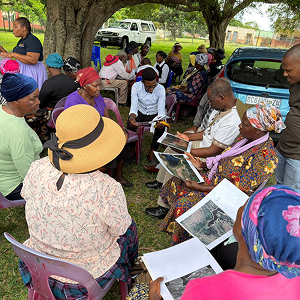
Engaging in the Land Use Land Cover (LULC) game with wetland farmers.
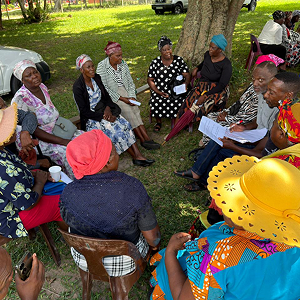
Framers reflecting on observed changes in wetland conditions and discussing practical solutions for rehabilitation and conservation.
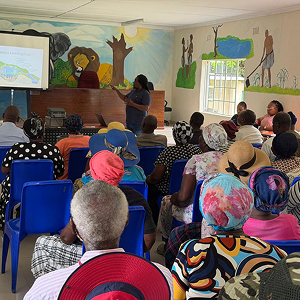
Siphiwe Mfeka presenting the importance of wetlands and the threats they face.
Impacts on Livelihoods and Food Security
The discussions revealed significant environmental, social, and economic impacts. Declining wetland health has resulted in:
The need for wetland rehabilitation, protection of indigenous practices, and innovative, climate-resilient farming approaches was strongly emphasized.
Understanding Land-Use Change and Lake Sibaya
A hands-on land-use and land-cover activity was conducted to demonstrate the long-term decline of Lake Sibaya. Farmers explored how the expansion of Eucalyptus plantations, increased water extraction, and changing climate patterns have contributed to falling lake levels over the years.
The impacts of the lake’s decline include reduced water availability, habitat loss for aquatic species, threats to biodiversity, and risks to local livelihoods that depend on the lake system. The activity strengthened understanding of the connection between land management decisions and water resources.
Environmental Education Outreach with Learners
On 3 February, the focus shifted to youth engagement through an outreach programme with Grade 7 learners from Sonto Zikhali Primary School. Learners were introduced to the concept of wetlands, their ecological importance, and the many benefits they provide, including flood regulation, groundwater recharge, water purification, and food production.
Through interactive poster activities, learners explored key benefits of wetlands, threats such as pollution, land-use change, water overuse, and climate change. They also discussed practical solutions, including water conservation, reducing waste, and protecting natural vegetation.
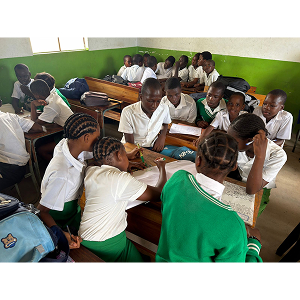
Learners engaging in an interactive poster activity exploring wetland benefits, threats, and solutions.
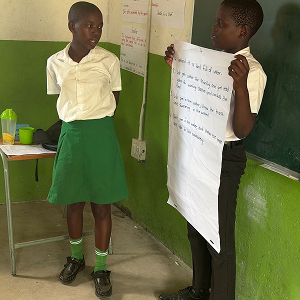
Learners presenting their poster activity.
Exploring the Maputaland Hydrological System
Learners were introduced to the unique hydrology of the Maputaland Coastal Plain, a groundwater-driven system with no rivers flowing into it. The region depends entirely on local rainfall to recharge groundwater. This means that any changes in rainfall patterns or land-use practices directly affect groundwater availability and lake water levels. Using a wetland model, facilitators demonstrated how different land-use practices influence groundwater recharge and surface water levels. The activity clearly showed how unsustainable practices can reduce water availability, increase drought risk, and negatively impact biodiversity and livelihoods.
Strengthening Partnerships for Sustainable Wetlands
The two-day celebration reinforced the importance of collaboration between research institutions, government departments, conservation agencies, traditional authorities, farmers, and schools. By integrating scientific research with indigenous knowledge and community participation, the initiative highlighted practical pathways toward sustainable wetland management.
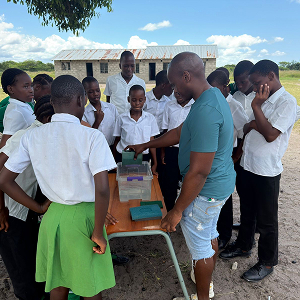
Learners participating in a hands-on wetland model demonstrating the effects of different land-use practices on groundwater resources and Lake Sibaya water levels.
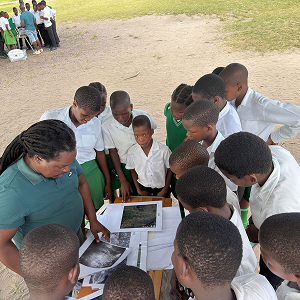
Learners participating in a hands-on land-use and land-cover activity to demonstrate the long-term decline of Lake Sibaya.
Overall Impact of the Event
The World Wetlands Day activities strengthened partnerships and communication among local farmers, traditional leaders, researchers, government departments, conservation authorities, and learners on the Maputaland Coastal Plain. By creating space for dialogue and knowledge sharing, the event elevated the role of indigenous knowledge in wetland management and promoted more inclusive, culturally relevant conservation approaches. Participants gained a deeper understanding of how land-use change, water abstraction, and climate variability impact wetland health, biodiversity, and local livelihoods.
The programme also increased environmental awareness and encouraged youth involvement in environmental stewardship. Through interactive discussions and hands-on activities, learners and community members developed a stronger sense of responsibility for protecting wetlands. The event promoted practical actions toward sustainable land use, wetland rehabilitation, and long-term conservation, contributing to more informed, resilient, and environmentally conscious communities.
