eNews
#06 2025
A finger in every pie: EFTEON Lowveld stakeholder workshop for in-field research support
By Nolusindiso Ndara, Amukelani Maluleke and Tsumbedzo Ramalevha, EFTEON
#06 2025
By Nolusindiso Ndara, Amukelani Maluleke and Tsumbedzo Ramalevha, EFTEON
Effective stakeholder engagement is important for a research infrastructure such as EFTEON to ensure scientific outcomes translate into sustainable, locally supported development within the landscape. Proactive involvement of local stakeholders fosters trust and ensures that research is relevant to real-world challenges.
The EFTEON Lowveld landscape hosted their first stakeholder workshop at the Wits Rural Campus in November 2025, following the Lowveld landscape inception meeting in 2021. The workshop was attended by a variety of landscape-based stakeholders, including representatives from academia, research institutions and NGOs. The main purpose of the workshop was to bring together all stakeholders who endorsed the development of the EFTEON Lowveld landscape, to update them on progress made since its establishment, and to further engage on opportunities for collaboration within the landscape.
Prof. Wayne Twine, director of Wits Rural Knowledge Hub and programme director for the day, welcomed guests and outlined the purpose of the workshop. The formal opening address was delivered by EFTEON manager, Dr Gregor Feig, who provided a recap of the selection process for the different EFTEON landscapes.
Scientists for the different landscapes then presented development updates for the landscapes under their responsibility: Dr Nolusindiso (Sindi) Ndara for the Lowveld landscape, Dr Warren Joubert for Greater Cape Town, Dr Helga Knoetze for the Kimberley Tri-Biome (KIMTRI) and Dr Gregor Feig, on behalf of Dr Kathleen Smart, for the Northern Drakensberg landscape. These updates included information on the instruments already deployed across the landscapes for various thematic areas, as well as an overview of current projects.
Because EFTEON is hosted by the SAEON Ndlovu Node in the Lowveld landscape, it was important to provide an overview of the node’s work. This was presented by Dr Anthony Swemmer, manager of the Ndlovu Node.
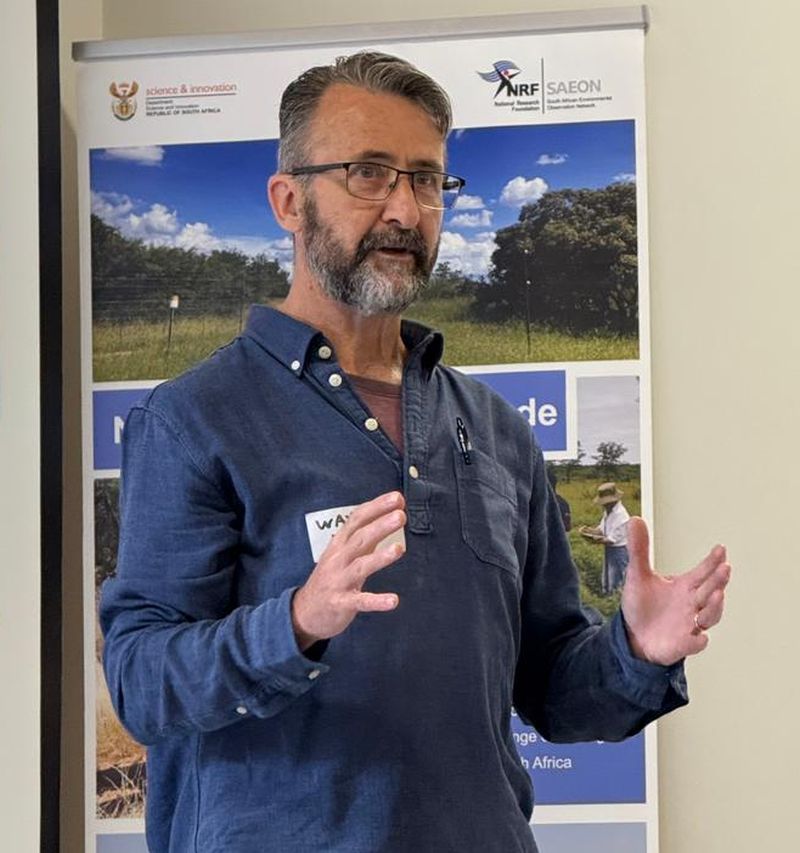
Prof. Wayne Twine, director of Wits Rural Knowledge Hub and programme director for the day.
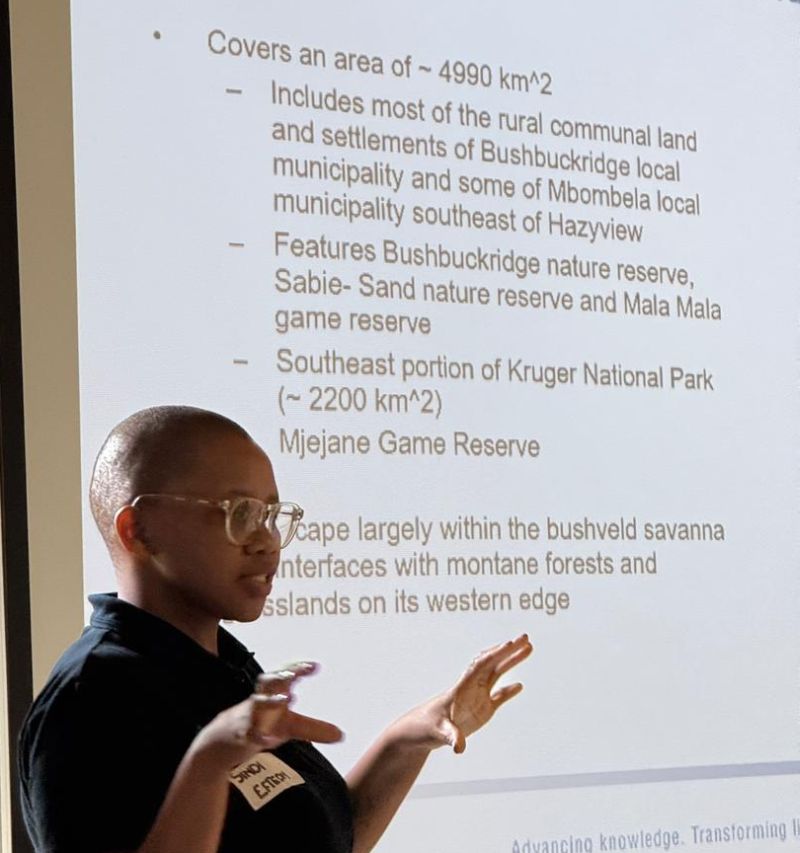
Dr Nolusindiso Ndara presenting development updates in the Lowveld landscape.
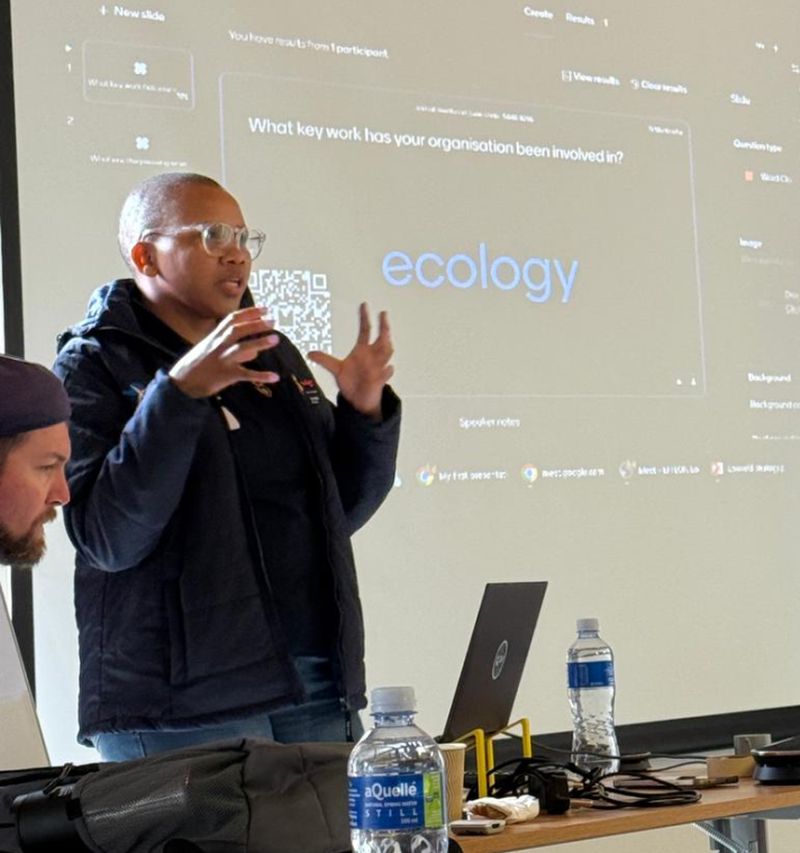
Strategic roadmap discussion facilitated by Dr Nolusindiso Ndara.
The overview presentations were followed by a discussion of the strategic roadmap for enhancing collaboration. The session focused on exploring ways in which stakeholders could collaborate more effectively, the value of data generated by different organisations, and how data collected using varying methods can continue to be useful and comparable to data collected using newer techniques. This discussion was facilitated by Dr Sindi Ndara.
Based on the operations strategy shared, stakeholders engaged on the following two key questions through mentimeter responses:
The mentimeter responses indicated cross-cutting environmental themes, centred within long-term ecology, biodiversity and hydrology work that the participating organisations have been involved in, with some maintaining footprints in the landscape stretching to more than 30 years. The contributions from the stakeholders in shaping how EFTEON continues to operate in the landscape were found to be vital in the aim towards enhancing collaboration.
Key points raised included issues surrounding the sharing of data across multiple stakeholders – highlighting the value of standard protocols and data standardisation towards improving interoperability and the ability to synthesise across datasets. While the suggestion of having a landscape-based data dictionary was a key consideration, stakeholders were also made aware of EFTEON’s nationwide footprint that aims to maintain standard measurements across its six landscapes. Therefore, the idea of scaling measurements and instruments to an agreed standard was expressed as a more appropriate intervention by Dr Gregor Feig.
Ultimately, there was consensus among the attendees that having a centralised data repository would greatly improve and strengthen the means of developing research questions and analysis techniques that can speak directly to some of the pressing environmental issues listed in the landscape.
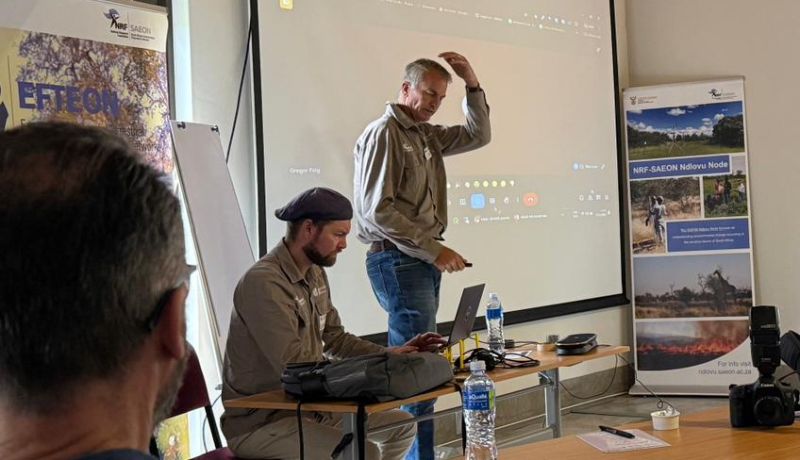
Dr Anthony Swemmer, manager of SAEON’s Ndlovu Node, presenting an overview of the node. EFTEON is hosted by the Ndlovu Node in the Lowveld landscape.
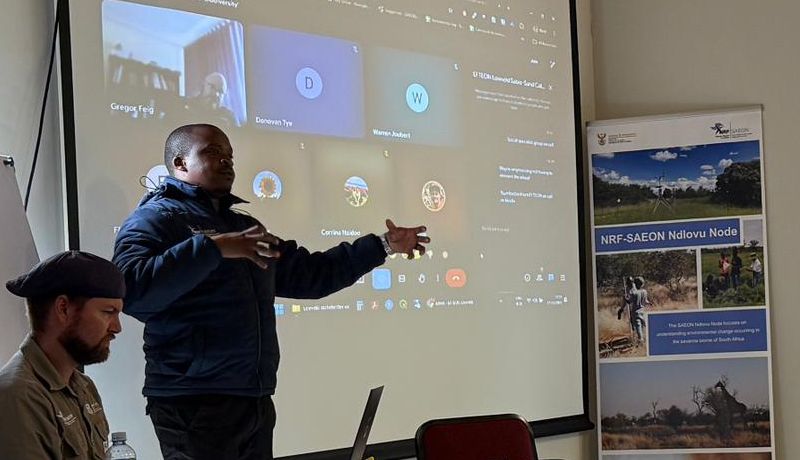
The Biodiversity breakout session, facilitated by Tsumbedzo Ramalevha.
Following the discussions, Dr Amukelani Maluleke, EFTEON’s Lowveld instrumentation technician, led a tour of the weather station located at Wits Rural Campus. He took the attendees through the various instruments of the Automatic Weather Station, explained their functions and demonstrated the live data being generated.
Additionally, Dr Anthony Swemmer explained the isotope sampler attached to the rain gauge, which is used by his postdoctoral researcher, Dr Retang Mokua.
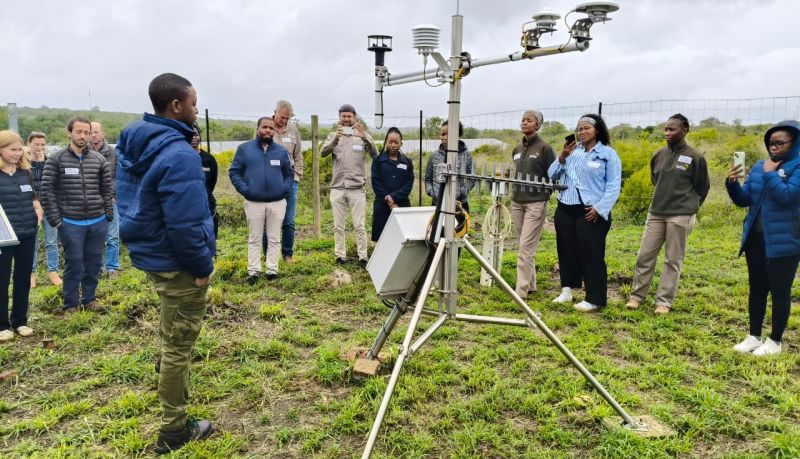
Dr Amukelani Maluleke, EFTEON’s Lowveld instrumentation technician, led a tour of the weather station located at Wits Rural Campus.
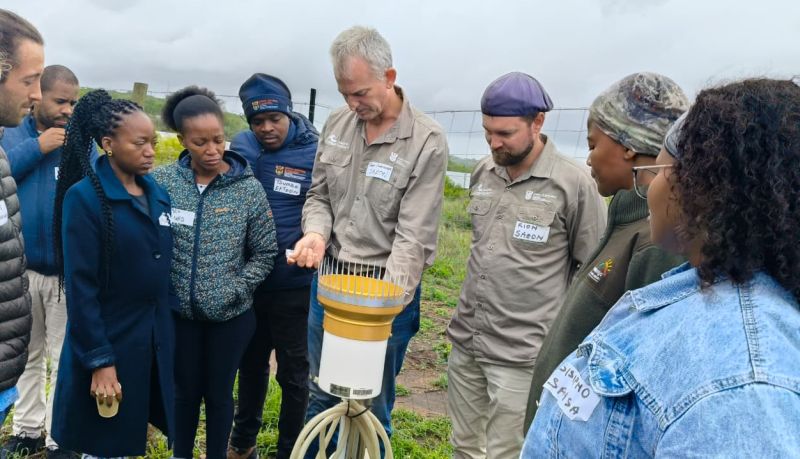
Dr Anthony Swemmer explaining the isotope sampler which is used by his postdoctoral researcher, Dr Retang Mokua.
After lunch, the programme director introduced the breakout sessions. The aim of these sessions was to continue the discussions from earlier in the day, but with a focused engagement on specific thematic areas.
The breakout session themes were Biogeochemistry and Hydrology, facilitated by Drs Sindi Ndara and Amukelani Maluleke, Biodiversity, facilitated by Tsumbedzo Ramalevha, and Socio-ecology, facilitated by Dr Neo Mathinya, a lecturer at the University of the Free State (UFS) and a researcher with an active project in the EFTEON Lowveld landscape.
Feedback from the Biogeochemistry and Hydrology session
The session opened with participant introductions to establish who was present and their areas of interest. Dr Sindi Ndara then raised a central question: given that organisations like the Inkomati-Usuthu Catchment Management Agency (IUCMA) already monitor water quality in the Sabie–Sand catchment, how can EFTEON add value without duplicating their work? Participants suggested that EFTEON should concentrate on emerging or understudied contaminants, align its efforts with existing monitoring programmes, and prioritise less-studied areas within the landscape. They highlighted the importance of generating data that can support remote-sensing calibration and noted the limited number of streamflow gauging stations across the catchment.
To address gaps, they proposed incorporating citizen science in ungauged areas and exploring isotope analysis to trace pollution sources and improve understanding of groundwater–surface water interactions. The possibility of refurbishing certain boreholes within the landscape, installing level loggers, and conducting water quality monitoring in these boreholes was one of the suggested short-term interventions that EFTEON can explore.
Feedback from the Biodiversity session
The Biodiversity session, which included representatives from the Mpumalanga Tourism and Parks Agency (MTPA), SAEON’s Ndlovu Node, Organization for Tropical Studies, North-West University and the Southern African Wildlife College (SAWC), culminated in a firm commitment by participants to improve data sharing among relevant stakeholders, acknowledging that siloed information hinders effective biodiversity monitoring.
The participants indicated that wide-scale deployment of rapid assessment plots across the Lowveld landscape to accelerate data collection without sacrificing quality or coverage will require collaboration to tackle complex ecological challenges jointly. Crucially, the participants agreed that there is a need to expand our monitoring scope beyond just plants by including other taxa besides vegetation (such as insects, small mammals and birds). This multi-taxa approach will require standardising of survey methods for other taxa to ensure data comparability and methodological rigour across all sites in the Lowveld. Participants emphasised that stakeholders should sample on the same plots and that EFTEON should focus on detailed sampling.
The participants also suggested that EFTEON should create a spatial map on which all the plots across the landscape are indicated, as well as a spreadsheet where everyone could add the details of their plots and what they sample. EFTEON was also urged to compile a list of priority questions that can be shared with stakeholders so that they can assist in answering some of the questions.
Feedback from the Socio-ecology session
The session, facilitated by Dr Neo Mathinya (UFS) and attended by representatives from the South African National Space Agency (SANSA), MTPA, HANS/UP and WITS, centred on several emerging themes: science communication, the ethics of participatory research, and the integration of ecological and sociological perspectives. Participants shared the types of data they are working on or are seeking, including community engagement ethics, perspectives on ecological phenomena, strategies for adaptation to ecological change, digital platforms for sustained collaboration, and partnerships that integrate scientific and Indigenous Knowledge Systems.
Key questions raised concerned the urgency of climate change in the landscape, rapid urbanisation in Bushbuckridge, socio-economic drivers of natural resource use, environmental education for youth, resource competition and the observed variability in livelihood gradients in communities. The group emphasised the need to consolidate findings into guidelines for socio-ecological research – such as requiring stakeholder feedback sessions – and to establish a community of practice. They proposed that EFTEON initially adopt a facilitation role in the landscape, with the intention of later contributing directly to socio-ecological data collection and driving science engagement activities.
Following the workshop, the EFTEON team supported Prof. Fhumulani Mathiva and Dr Neo Mathinya from the University of Limpopo and the University of the Free State, respectively, who had planned community engagement activities for the remainder of the week. They aimed to introduce their research projects to community representatives and seek permission in preparation for planned data collection.
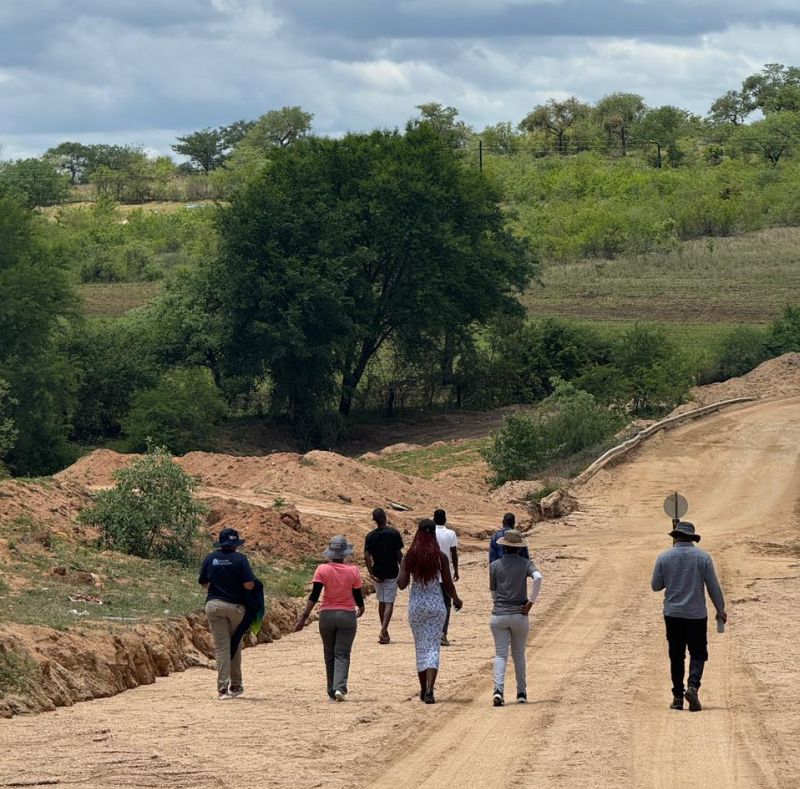
Over three days, Dr Sindi Ndara, Prof. Fhumulani Mathiva and Dr Neo Mathinya visited three villages within the landscape, where meetings were held with local leadership composed of either the ward councillor or induna alongside several Community Development Forum (CDF) members.
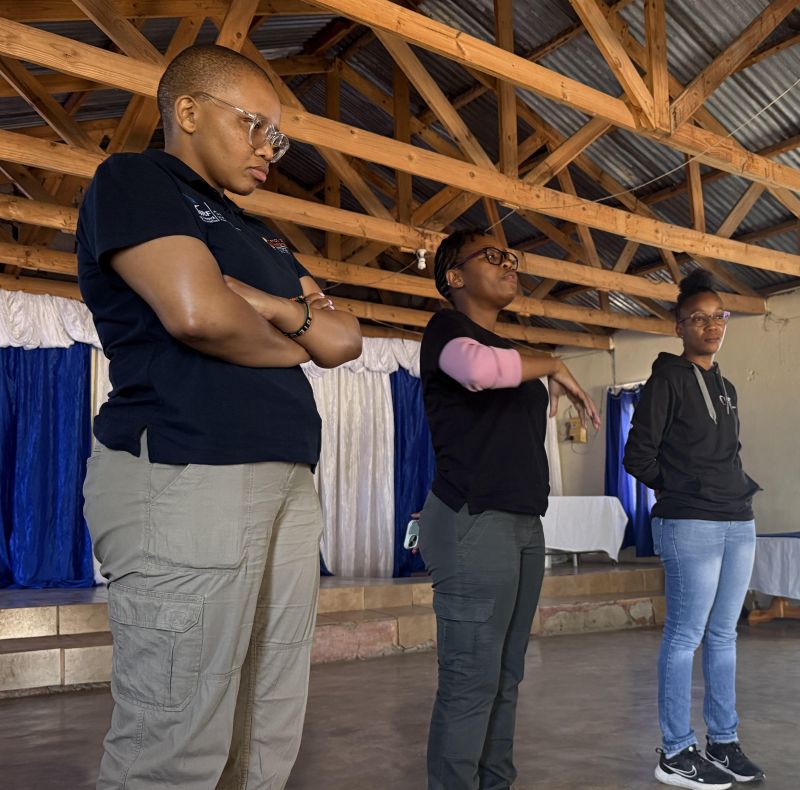
The EFTEON team supported Prof. Fhumulani Mathiva and Dr Neo Mathinya who aimed to introduce their research projects to community representatives and seek permission for planned data collection.
Over three days, we visited three villages within the landscape (Justicia, Lilydale and Somerset), where meetings were held with local leadership composed of either the ward councillor or induna alongside several Community Development Forum (CDF) members to discuss the planned research and obtain the necessary approvals.
The local leadership were also given an opportunity to map out some of the environmental challenges they experienced in their communities, with many highlighting issues surrounding water availability and quality, fertility of their croplands and woody encroachment affecting the quality of their grazing lands.
This eventful week highlighted the vital work that EFTEON is already doing and can achieve in the landscape through sustained collaboration and optimising networks to leverage existing datasets. The feedback from stakeholders provided key contributions to the continued rollout of EFTEON instrumentation in the landscape.
Importantly, working together with partners in the landscape will ensure that EFTEON’s mandate remains to facilitate research by creating a targeted research platform for a research community that already carries a deep understanding of the core EFTEON themes, and more critically, how they intersect in time and space.
To keep up this newly created momentum in the landscape, the EFTEON Lowveld team is committed to hosting this stakeholder workshop annually, with a WhatsApp group created to facilitate timely communication and collaboration on landscape activities.
