eNews
#04 2025
FLUXNET 2025 – A network of networks
By Amukelani Maluleke, Kathleen Smart and Gregor Feig, EFTEON

#04 2025
By Amukelani Maluleke, Kathleen Smart and Gregor Feig, EFTEON
In the development of the Expanded Freshwater and Terrestrial Environmental Observation Network (EFTEON) as a research infrastructure, much of its instrumentation rollout has revolved around the eddy covariance flux tower. This provides vital measurements of the cycling of carbon, water and energy between the biosphere and the atmosphere at the ecosystem scale and has been replicated across landscapes that are currently operational.
Subsidiary measurements relating to vegetation dynamics, air pollution and hydrology at multiple scales over the long term strengthen this essential research infrastructure’s ability to provide platforms that enable the understanding of ecosystem functioning across multiple spatiotemporal scales. This is an approach best suited to keep track of regional ecosystem responses to anthropogenic effects such as a climate change.
The way in which this research infrastructure is structured and its resulting contribution to global scientific efforts could not have come at a more crucial time, especially in view of the underrepresentation and misclassification of African ecosystems in many global studies. It is therefore vital that SAEON-EFTEON maintains its presence on international platforms to present its multidisciplinary work stretching across the length and breadth of our beautiful landscapes and oceans through its growing networks and research infrastructures.
FLUXNET is an international network of networks which intends to deepen ties between regional networks of earth system scientists. Scientists within the FLUXNET community predominantly use the eddy covariance technique to measure the cycling of carbon, water and energy between the biosphere and the atmosphere.
Researchers working within regional networks such as the Integrated Carbon Observation System (ICOS), AmeriFlux, AsiaFlux and OzFlux, process and analyse eddy covariance data and then offer their data to FLUXNET, which then links these regional networks together and create processed and harmonised eddy covariance data products.
In July this year, Dr Amukelani Maluleke, EFTEON instrumentation technician in the Lowveld Landscape, attended the FLUXNET 2025 Meeting at the University of Queensland’s St Lucia campus in Brisbane. The theme for this year’s meeting was “Expanding International Collaboration Through FLUXNET”. The talks, posters and breakout discussions, along with ample time for informational discussions with colleagues, resulted in a fruitful week.
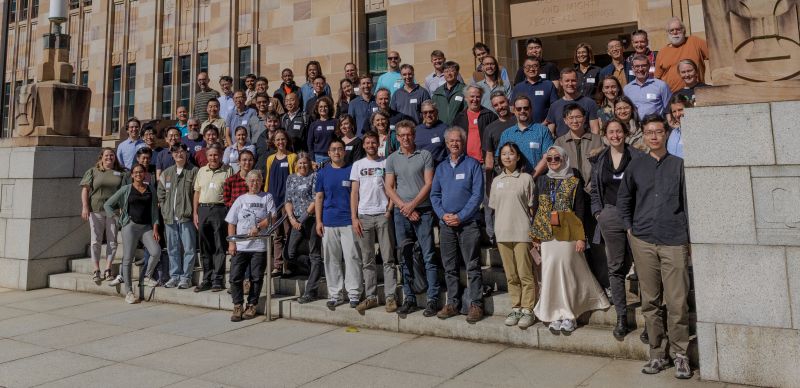
FLUXNET 2025 participants at the University of Queensland’s St Lucia Campus in Brisbane.
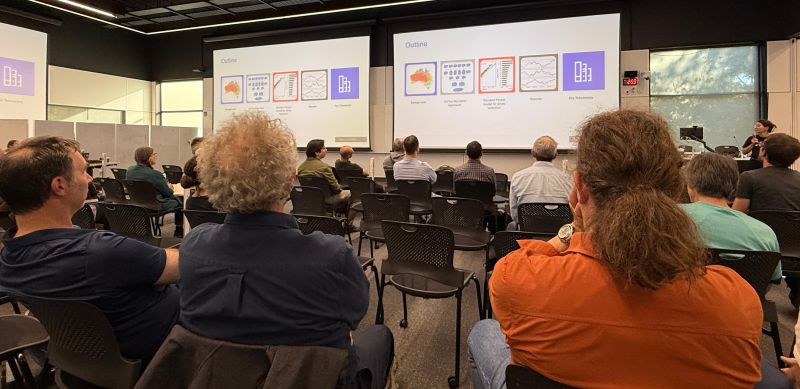
Attendees listen attentively during one of the keynote addresses.
Noteworthy themes across the three days of keynote speeches and science talks:
The field trip to Springbrook National Park, which is part of the Shield Volcano Group of the UNESCO World Heritage-listed Gondwana Rainforests of Australia, offered a view of the subtropical, warm temperate and cool temperate rainforests as well as eucalypt forest and heathlands on the last day of the meeting. A hike was led by researchers at Queensland University during which the participants were able to see ecohydrological measurements of sap flow and climatic variables such as rainfall, temperature and fog being measured across a gradient in the national park in this important ecosystem.
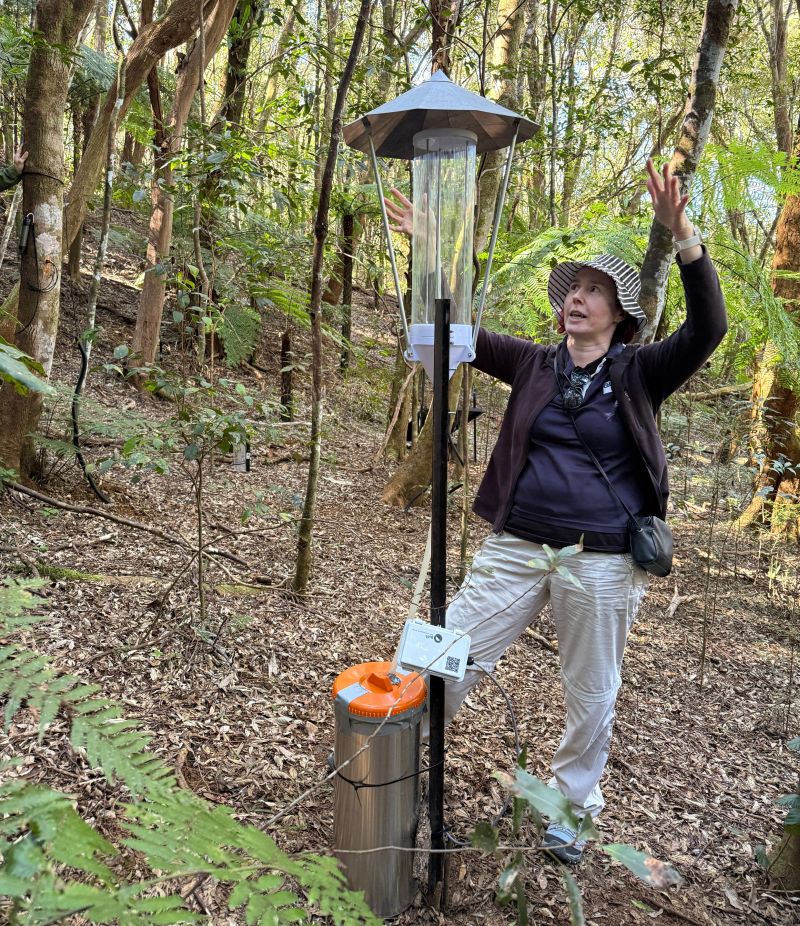
Associate Professor Lucy Reading explaining the fog measurements at Springbrook National Park. (Photo: Amukelani Maluleke)
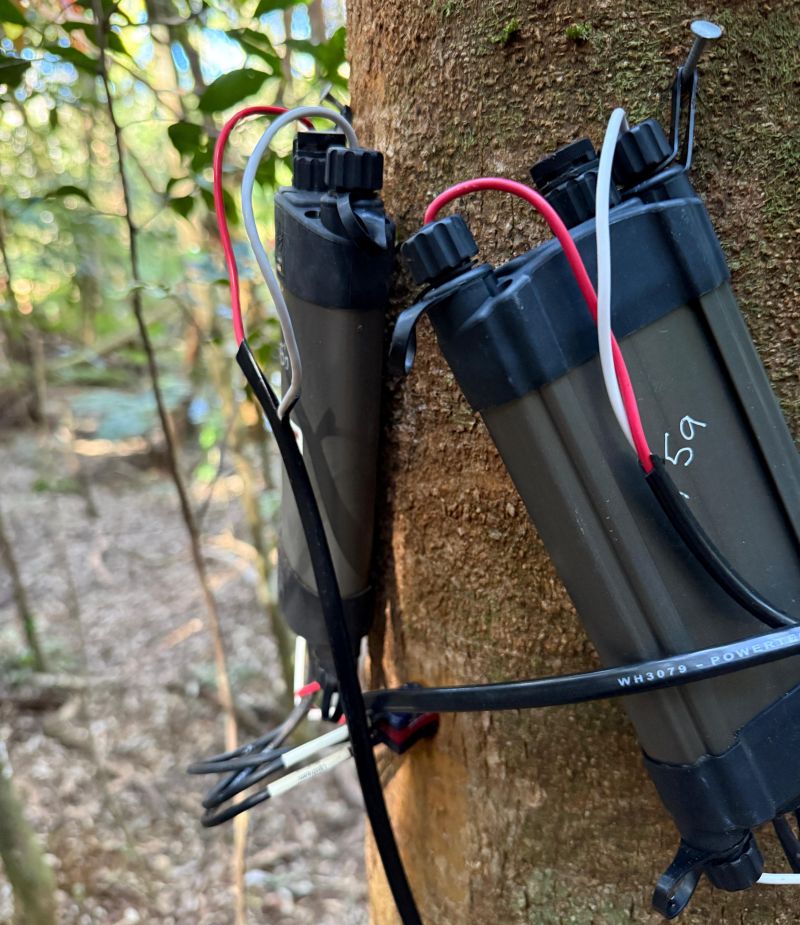
Ongoing sapflow measurements at the Springbrook National Park. (Photo: Amukelani Maluleke)
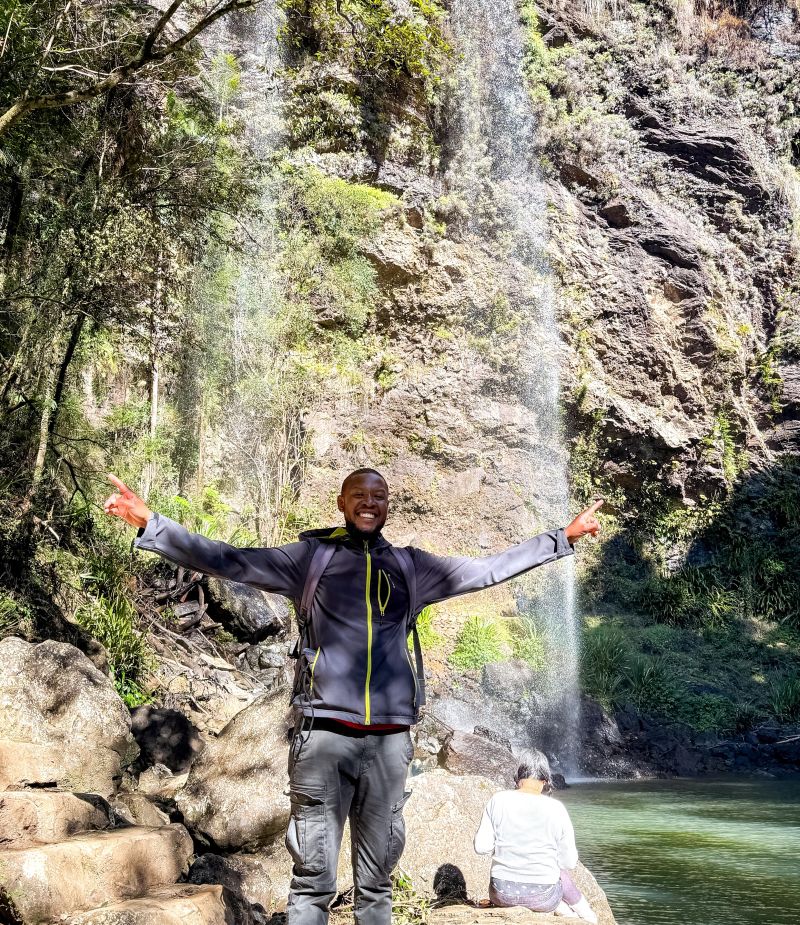
Amukelani Maluleke at the Twin Falls during the hike at Springbrook National Park.
Apart from the networking with colleagues and instrument manufacturers from far and wide, there are exciting FLUXNET developments that SAEON-EFTEON has been working to be a part of. Since the release of the FLUXNET2015 dataset (which included the Skukuza flux tower, now under CSIR and SAEON co-management), which featured measurements of carbon dioxide, water vapor and energy exchange from 212 sites across ~30 countries, encompassing more than 1 500 site‑years, regional flux networks such as AmeriFlux, ICOS, NEON and OzFlux are now regularly producing and updating FLUXNET data products, significantly expanding data availability across more sites and recent years. These efforts are supported by improvements in metadata, variable coverage, data quality control and the widespread adoption of open data policies under the CC-BY license.
To streamline access, the FLUXNET Shuttle – a new tool enabling automated, on-demand compilation of FLUXNET-like datasets from regional network outputs – has been developed. This tool allows users to access the most current data while maintaining version control for reproducibility. SAEON-EFTEON has been gradually involved through the FLUXNET committee to start preparing processes that will enable contribution to the FLUXNET Shuttle.
Ultimately, SAEON-EFTEON eddy covariance sites would be part of FLUXNET as one of the largest ecosystem networks in the world, where the high level of collaboration among FLUXNET scientists would ensure the robustness of data, and optimise the usefulness of this resource through long-term collaboration.
