eNews
#04 2025
Climate Change Scenario workshops in support of South Africa’s National Adaptation Strategy
By Caroline Mfopa, Junior Data Scientist, uLwazi Node

#04 2025
By Caroline Mfopa, Junior Data Scientist, uLwazi Node
The Department of Forestry, Fisheries and the Environment (DFFE), in collaboration with SAEON and the South African Weather Service (SAWS), organised a series of Climate Change Scenario Consultation Workshops from August 11 to 13. The workshops took place in three provinces – the Western Cape, Eastern Cape and KwaZulu-Natal.
The objective of these consultations was to inform South Africa’s climate adaptation strategy. The workshops began with a presentation by Dr Andries Kruger from SAWS, who provided an overview of the current climate trends observed across the country. Following him, Innocent Mbokodo, also from SAWS, shared seasonal climate trends generated from the CORDEX dynamically downscaled model.
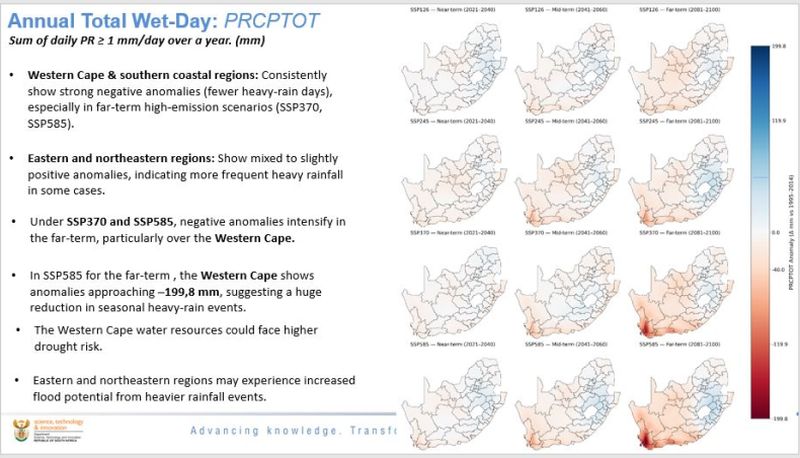
The technical presentations concluded with insights from Caroline Mfopa of SAEON, who presented on extreme rainfall and temperature trends from NASA’s CMIP6 statistically downscaled model. The primary aim of these sessions was to inform the DFFE’s National Adaptation Strategy and to provide solid scientific evidence to support the implementation of the Climate Change Act 22 of 2024.
The consultations gathered researchers, technical experts, municipal representatives and members of the public to assess the accuracy and relevance of the downscaled climate projections for their regions. Stakeholders provided valuable feedback on what would be useful for provincial and municipal adaptation and mitigation planning. The workshops facilitated productive discussions, with participants offering actionable insights to improve the climate scenario development process.
These engagements represent a significant advancement in ensuring that there is co-development between the sciences and the public.
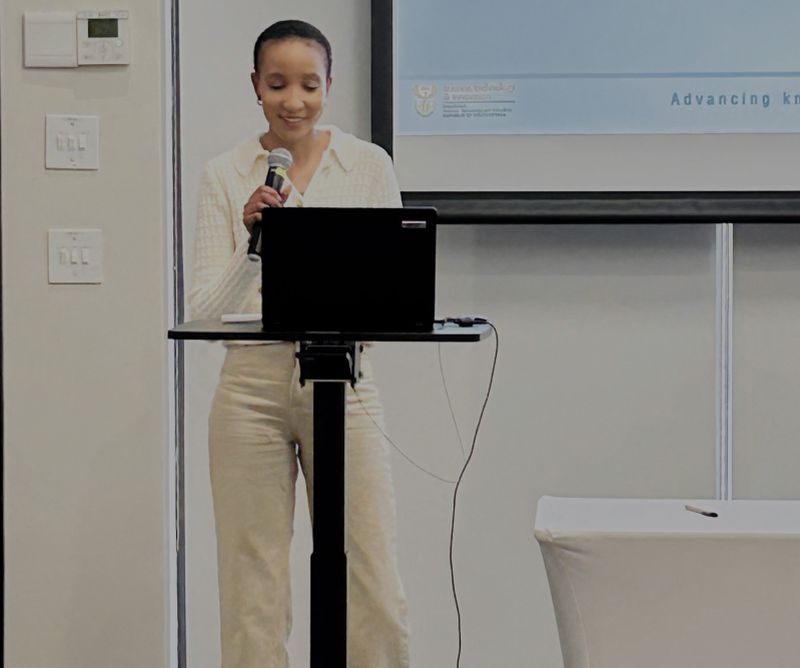
Above and below: Caroline Mfopa, a data scientist at SAEON’s uLwazi Node, presenting on extreme rainfall and temperature trends from NASA’s CMIP6 statistically downscaled model.
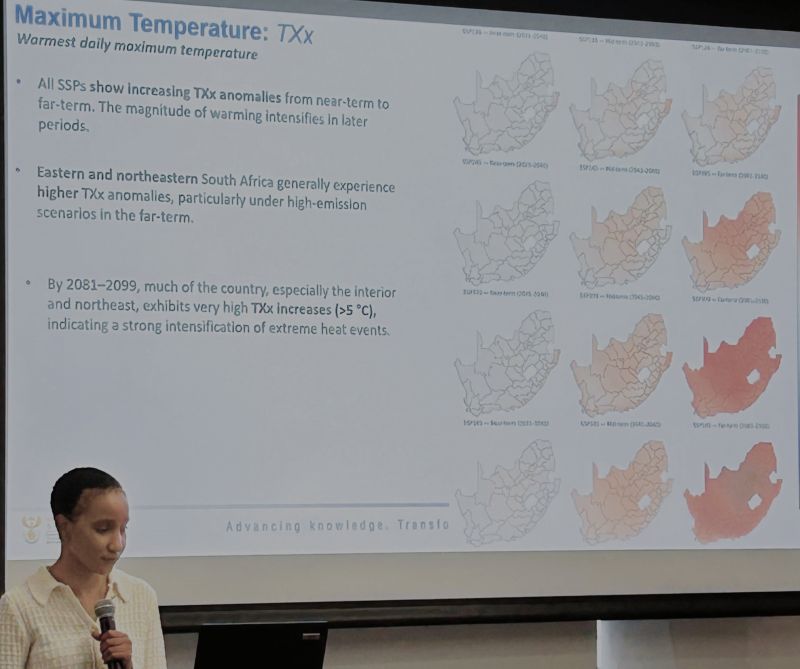
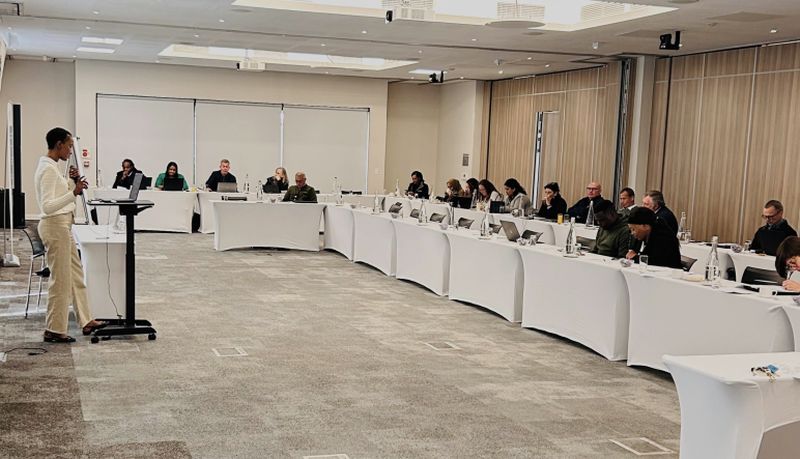
Above and below: The primary aim of these sessions was to inform the National Adaptation Strategy and to provide solid scientific evidence to support the implementation of the Climate Change Act 22 of 2024.