eNews
#04 2025
SAEON at sea: South African scientists join One Ocean expedition
By Dr Kathryn Morrissey, PDP Postdoctoral Fellow, SAEON Egagasini Node
#04 2025
By Dr Kathryn Morrissey, PDP Postdoctoral Fellow, SAEON Egagasini Node
This year, the Norwegian tall ship Statsraad Lehmkuhl served not only as a vessel for exploration but also as a floating classroom, research station and international meeting point for the next generation of ocean scientists. From 22 April to 3 June 2025, the ship sailed from Tromsø, Norway to Nice, France, as part of the European Space Agency (ESA) Ocean Training Course 2025 (OTC25), a flagship initiative of the ESA in support of the UN Decade of Ocean Science for Sustainable Development.
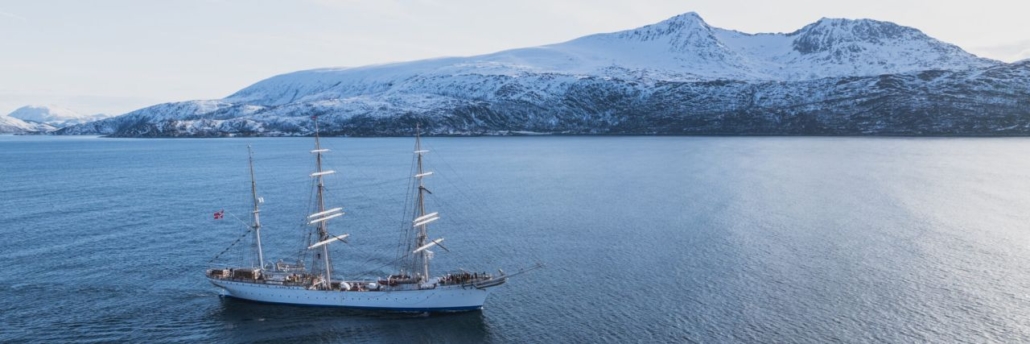
Shot from a drone of Statsraad Lehmkuhl just after leaving Tromsø. (Image courtesy of ESA/Ocean Media Lab)
This unique expedition brought together early-career researchers and students from across the world, alongside international experts in oceanography, Earth observation and marine science. The goal – to bridge the gap between in-situ ocean observations and satellite remote sensing, while fostering global collaboration and building capacity in ocean science.
Representing South Africa were Dr Kathryn Morrissey, postdoctoral researcher at SAEON, and Brishan Kalyan, a PhD student affiliated with SAEON and Nelson Mandela University. Their participation highlights not only South Africa’s growing contributions to international ocean science, but also the importance of investing in research and training opportunities that combine hands-on fieldwork with advanced data analytics.
Dr Morrissey was invited by ESA to join the lecture and management team for the Ocean Training Course onboard the Statsraad Lehmkuhl, contributing her expertise in marine microbial ecology, in-situ sampling approaches and genetics. Her role included mentoring students, leading sampling activities and fostering interdisciplinary dialogue among the ship’s scientific community.
“While the voyage came with its challenges, it was an incredibly rewarding and inspiring experience,” she shares. “Living at sea for six weeks, learning to sail a tall ship and working so closely with such a passionate international group of students and researchers, was a once-in-a-lifetime opportunity. You don’t just study the ocean on a voyage like this; you feel it in your heart and soul.”
Throughout the expedition, Dr Morrissey worked with participants to collect biological samples and contextualise microbial biodiversity in relation to oceanographic conditions and satellite data. The experience also underscored the value of real-time, cross-disciplinary collaboration at sea, where physical, chemical and biological data could be collected and discussed as a team.
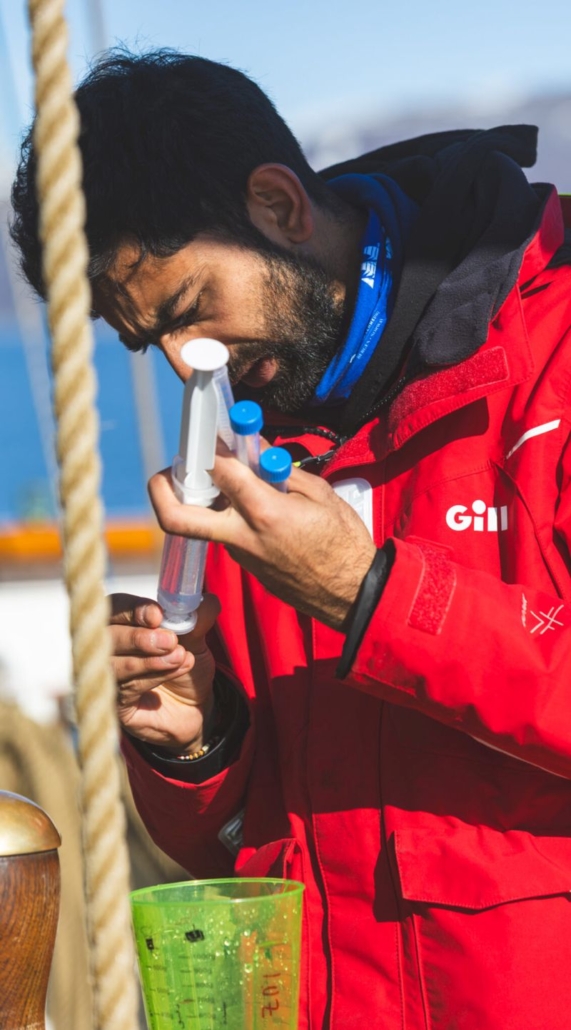
Brishan Kalyan on deck filtering his nutrient samples. (Image courtesy of ESA/Ocean Media Lab)
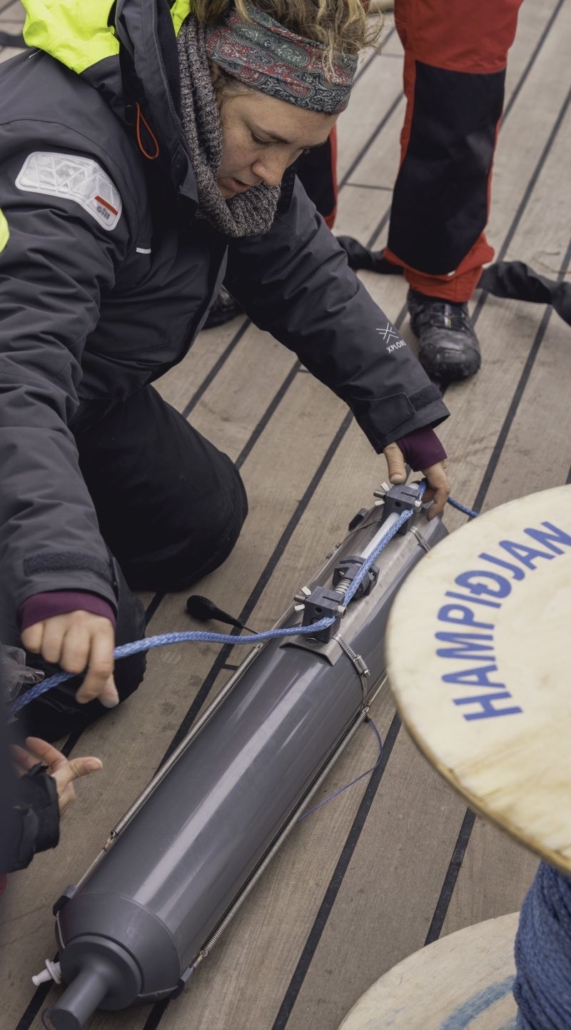
Dr Kat Morrissey assembling the handheld niskin bottle for water sampling. (Photo: Mateo Baratella, Statsraad Lehmkuhl)
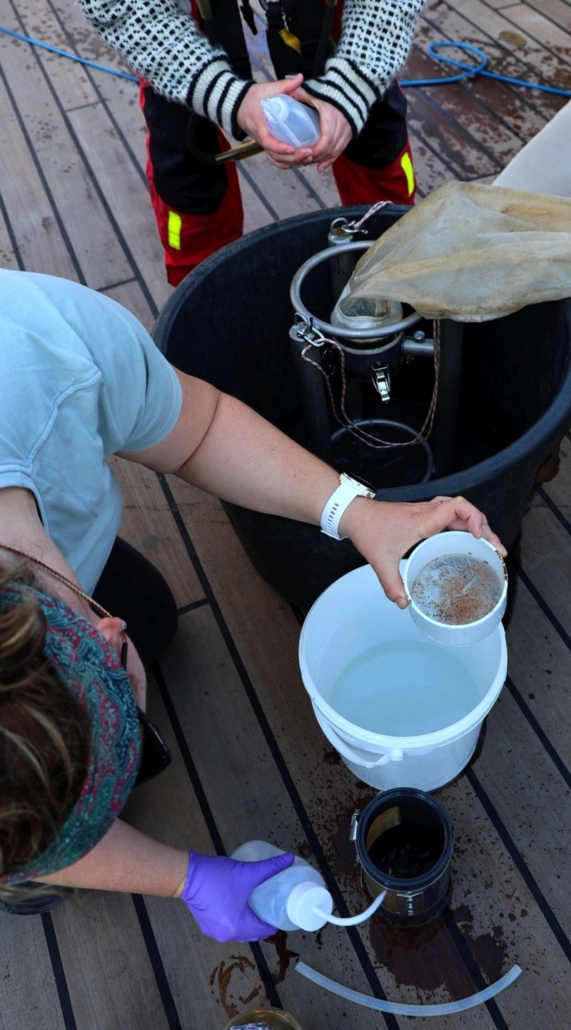
Dr Kat Morrissey taking zooplankton samples from the WP2 net. (Photo: Joël Marc/ESA)
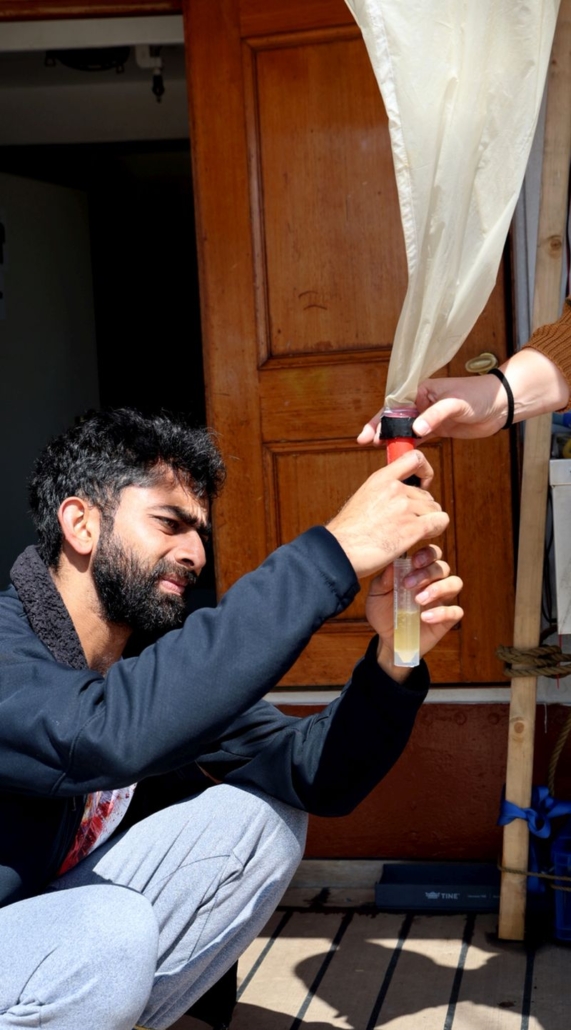
Brishan Kalyan sampling phytoplankton. (Photo: Joël Marc/ESA)
Brishan Kalyan contributed to the multidisciplinary sampling effort using field data to ground-truth satellite-based measurements. From nutrient sampling to phytoplankton net sampling, his work contributed to advancing our understanding of phytoplankton distribution and validating ocean colour remote sensing, a vital tool for monitoring global ocean health.
“We were able to cross-reference satellite imagery with real-time data collected at sea,” Brishan explains. “This helps refine our understanding of phytoplankton dynamics and supports the development of more accurate satellite models for the future.”
His work demonstrates the critical role that emerging researchers from South Africa play in advancing global observation systems, and how in-field experiences like OTC25 equip them with the practical and technical skills needed to lead ocean research in the decades ahead.
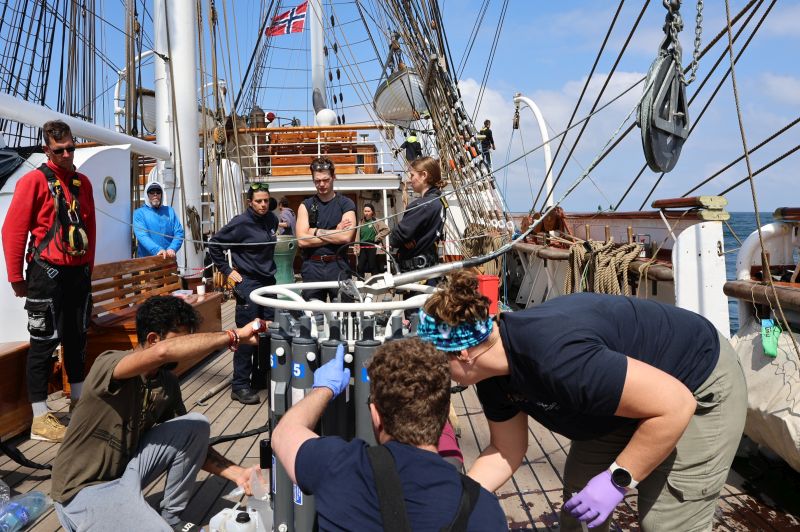
Brishan Kalyan taking nutrient samples from different depths, and Dr Kat Morrissey instructing a student how to sample from a niskin rosette. (Credit: Joël Marc/ESA)
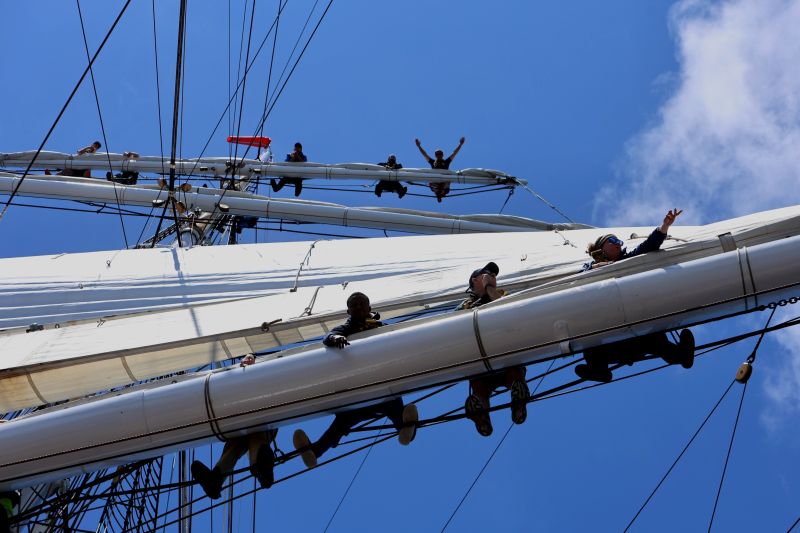
Dr Kat Morrissey and others in the rigging. (Credit: Joël Marc/ESA)
Beyond the technical accomplishments, the expedition was a rare chance to build deep connections between disciplines, between countries, and between people and the ocean itself. The ESA campaign blogs reflect on the powerful impact of shared routines at sea, from standing watch on deck to late-night data discussions, and the joy of seeing science come alive under sail.
“What made the experience so powerful was the fusion of people, place and purpose,” says Dr Morrissey. “The relationships built onboard will outlast the voyage and continue to shape international collaborations for years to come.”
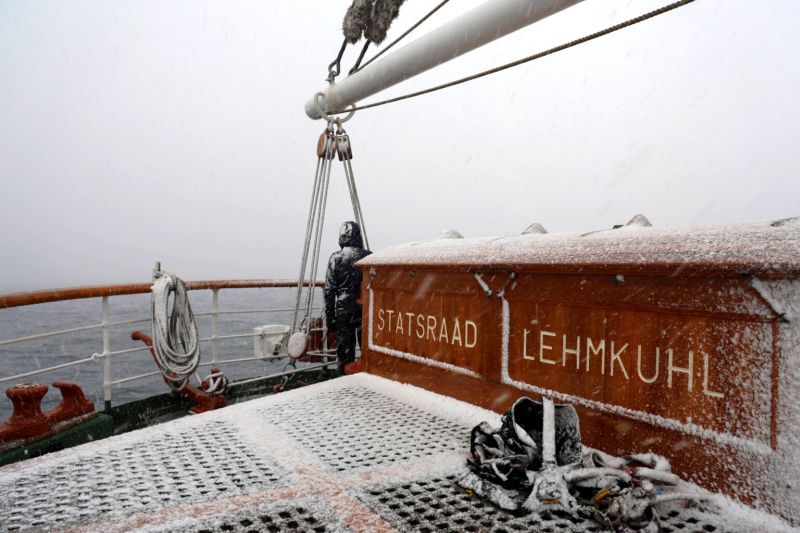
The Buoy Watch in the snow – looking for anything in the water, and eyes open in case of a “man overboard”. (Credit: ESA/Ocean Media Lab)
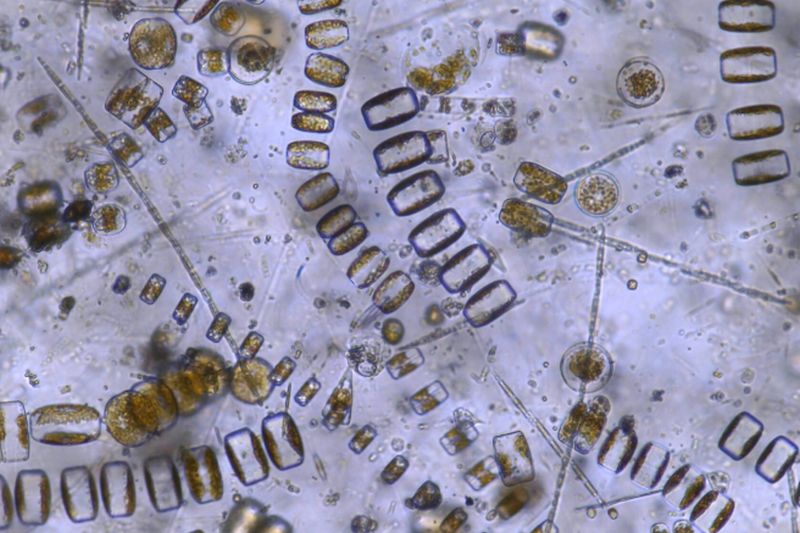
Phytoplankton seen with the Curiosity microscope – phytoplankton inside a fjord. (Credit: Brishan Kalyan)
SAEON is proud to support and celebrate the achievements of our researchers in this global initiative. Participation in initiatives like OTC25 demonstrates South Africa’s growing presence in the international marine science landscape, and the importance of interdisciplinary field training for building the capacity needed to respond to the world’s most pressing ocean challenges.
Dr Morrissey and Brishan Kaylan gratefully acknowledge the support of ESA, NASA and SAEON for making their participation in the expedition possible.
