Sub-Saharan Africa has lost nearly a quarter of its biodiversity
A new study published in Nature shows that sub-Saharan Africa has already lost about 24% of its biodiversity since pre-industrial times.
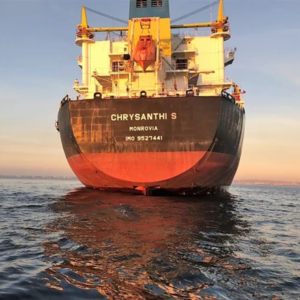
SAEON, SANCCOB, and Nelson Mandela University researchers examined the effect of ship-to-ship (STS) fuel transfers on critically endangered African Penguins in Algoa Bay. Using high-resolution ocean and oil spill modelling, the team evaluated past spills and simulated future scenarios, demonstrating how oil can remain in penguin foraging areas for days. The findings emphasise the need for stricter regulation, spill preparedness, and wildlife rescue strategies to safeguard this iconic species.
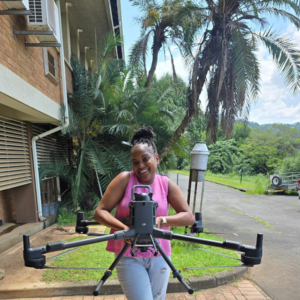
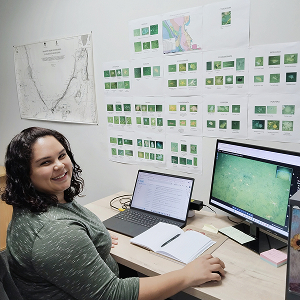
Londiwe recently completed training to become a licensed drone pilot, adding a new dimension to her environmental research work at the South African Environmental Observation Network (SAEON). The training covered flying skills, aviation law, and safety planning, enabling the use of drones for wetland mapping, land-use monitoring, and long-term ecological observation. This new capability will strengthen both scientific data collection and community engagement.
As we move further into 2026, SAEON acting managing director Professor Tommy Borman reflect on the breadth and tangible impact of NRF-SAEON’s work.
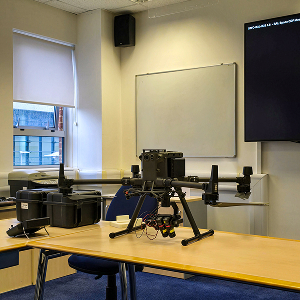
Doctoral researcher Ameera Yacoob visited RAL Space in the United Kingdom as part of her PhD with the South African Environmental Observation Network (SAEON). She worked with international collaborators to test UAV systems combining hyperspectral imaging and LiDAR.
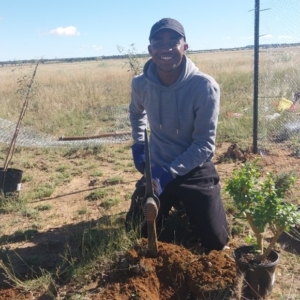
Honours student Joseph Morena Raliile investigated planting native trees in the Karoo and analysed the effects of frost and herbivory on Spekboom, Sweetthorn, and Red Karee. The study provides valuable guidance for future rehabilitation efforts in the Karoo.
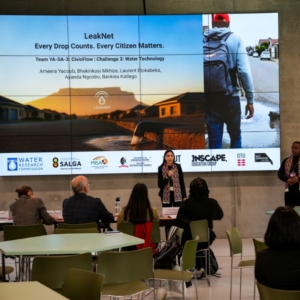
Ameera Yacoob, a PhD candidate at SAEON showcased LeakNet at the NGDA Programme in Denmark and at the AWSiSA Summit 2025.
Shandré Dreyer joined SAEON’s Egagasini Node as a Research Assistant, supporting seabed biodiversity research and the AAORIA initiative.
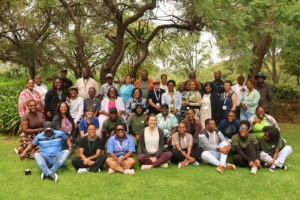
SAEON’s Marine Month community workshop at Addo in the Eastern Cape province sparked rich and meaningful discussions about the ocean, marine life and the community’s personal and cultural ties to the sea.
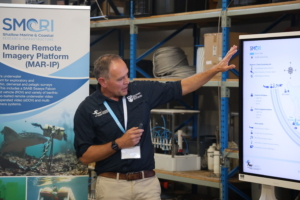
The South African Environmental Observation Network (NRF-SAEON) participated in the Marine and Coastal Educators Network Conference 2026 (MCEN 2026), sharing approaches in environmental observation, technology, and public engagement.
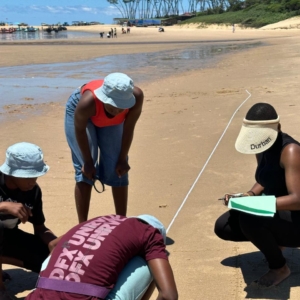
From 3–6 February 2026, 19 Grade 10 and 11 learners from Maputaland Coastal Plain schools explored the ocean at Sodwana Bay with the South African Environmental Observation Network (SAEON) Grasslands Node and Nelson Mandela University. Through hands-on science, arts, and social science activities, learners investigated plastic pollution, created artworks and stories, and deepened their understanding of how people, culture, and the environment connect to the ocean.
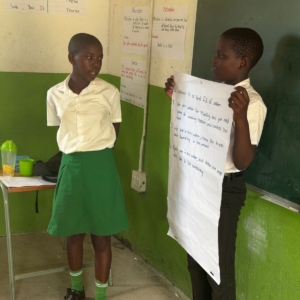
The SAEON Grasslands Node marked World Wetlands Day on the Maputaland Coastal Plain by hosting two days of activities that connected local farmers, learners, and conservation partners. Farmers shared indigenous knowledge on sustainable wetland management, while Grade 7 learners explored wetland ecology, threats, and solutions through interactive models and posters.
SAEON’s people and projects received coverage in national print, broadcast, online and social media.
Banner photo © Shutterstock